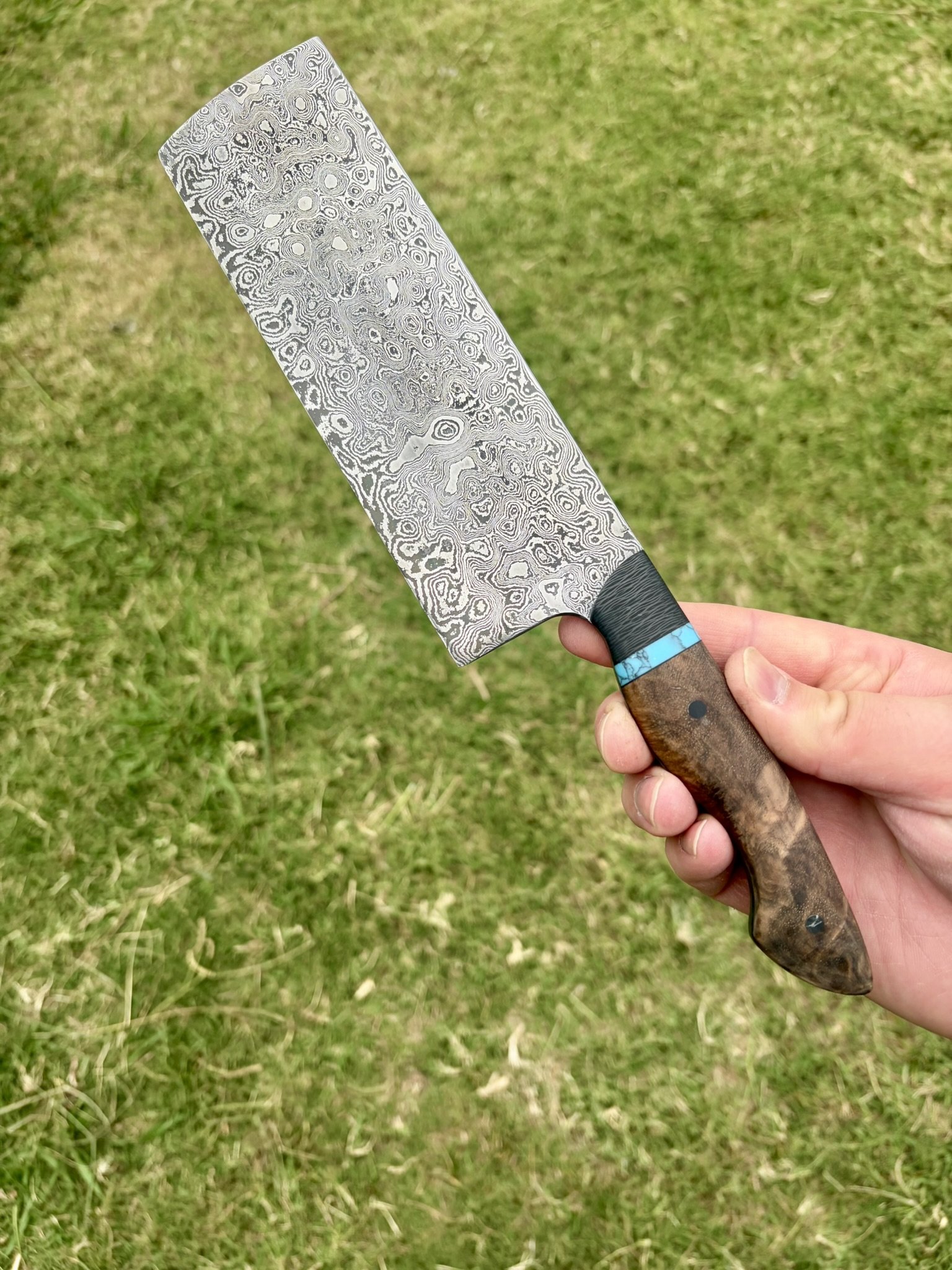
Tiffany W. - Raindrop Damascus Cleaver
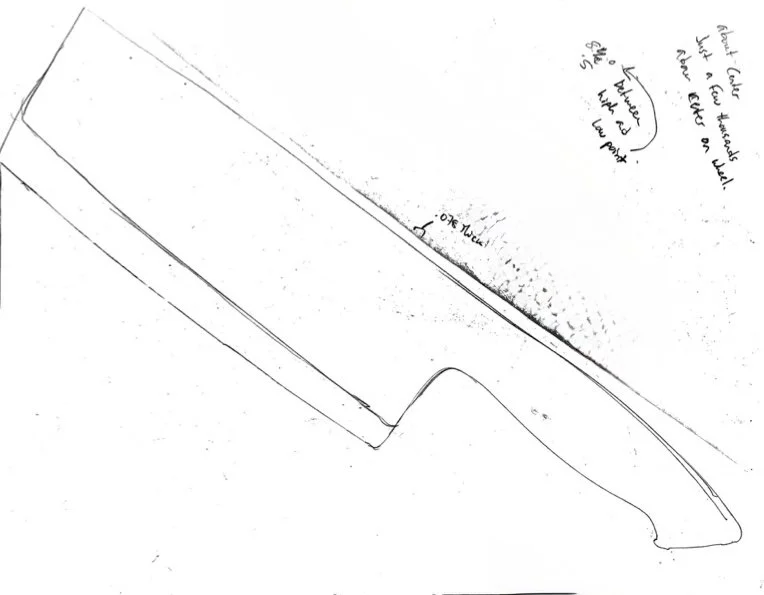
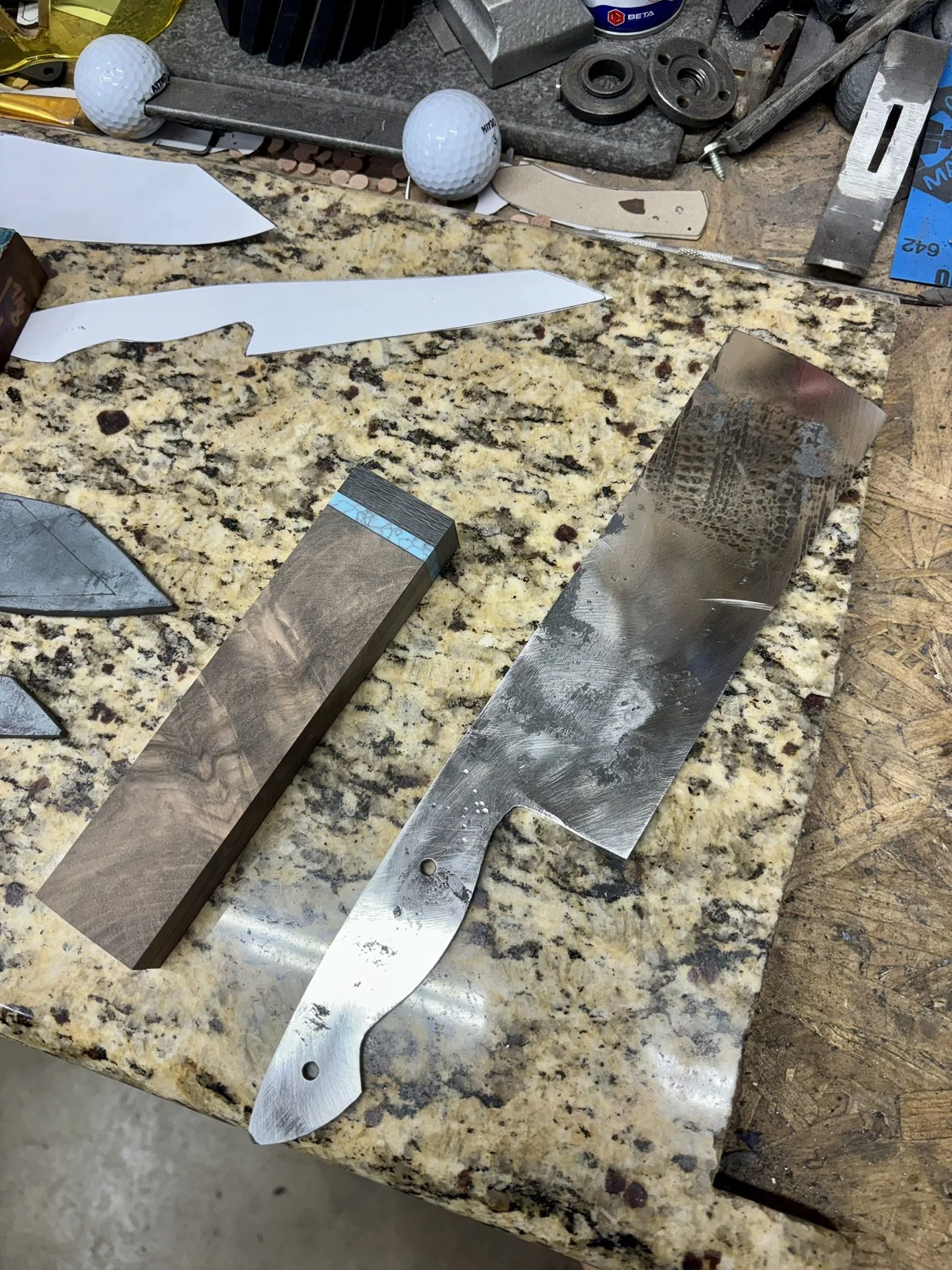
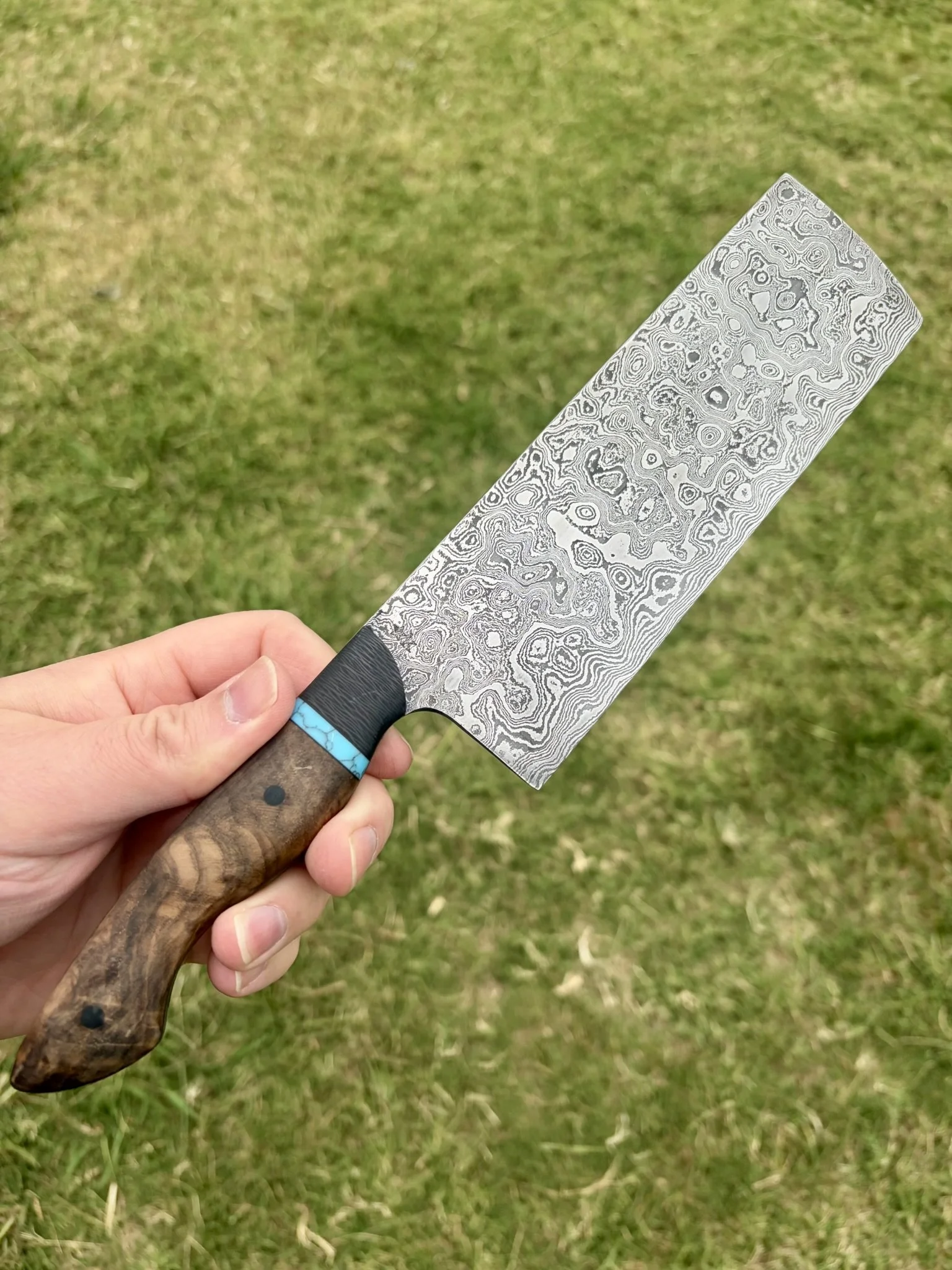
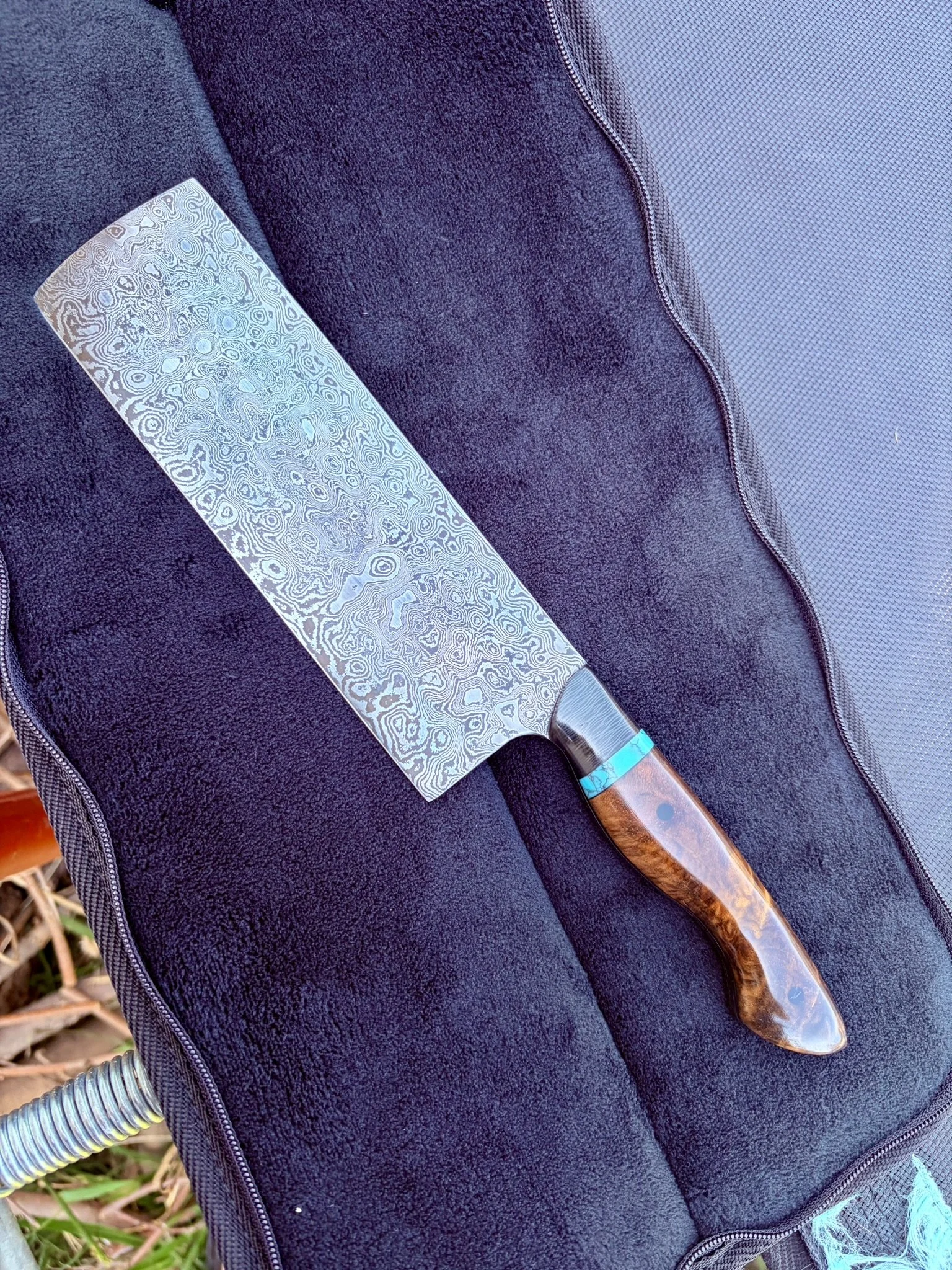
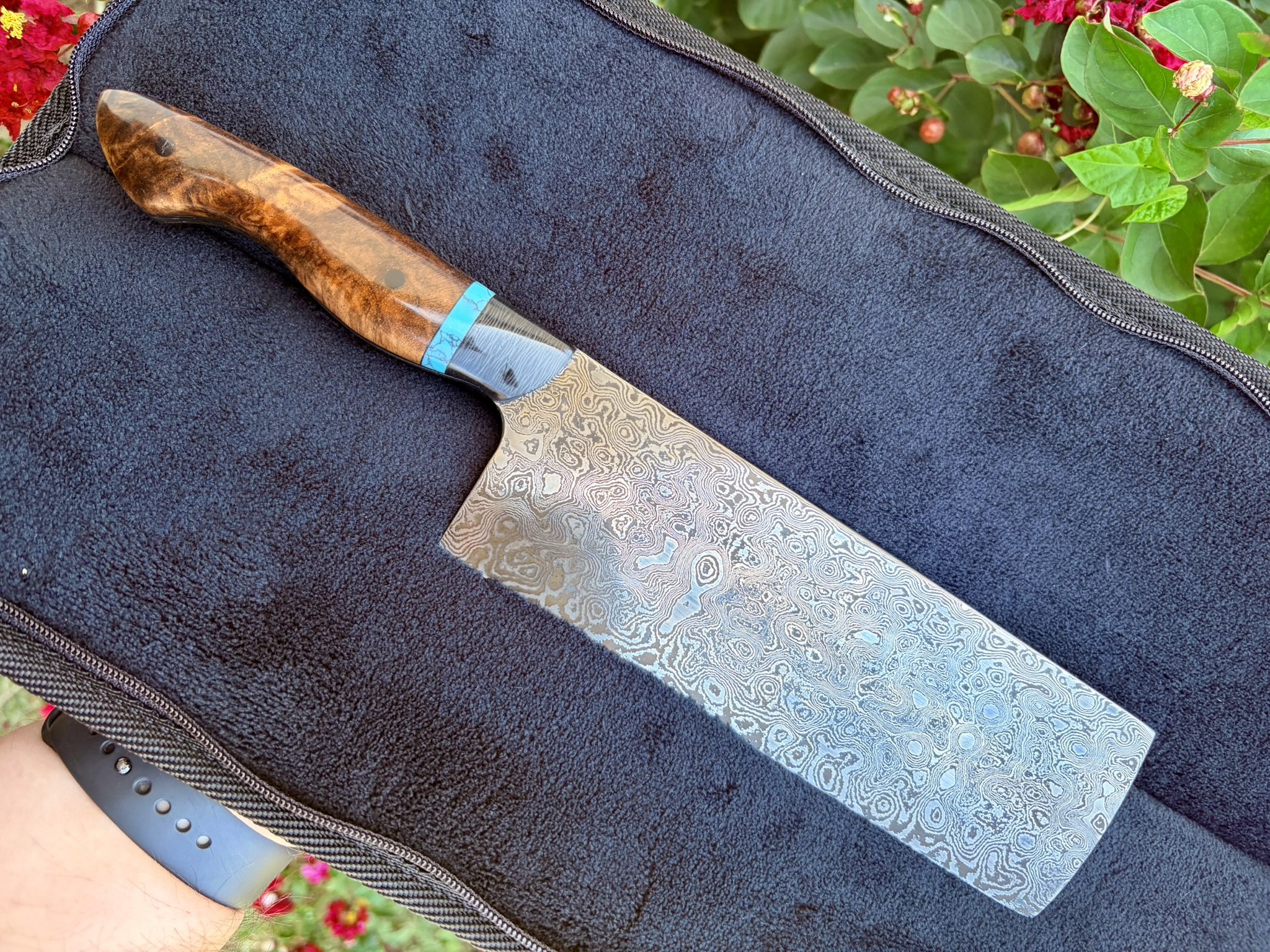
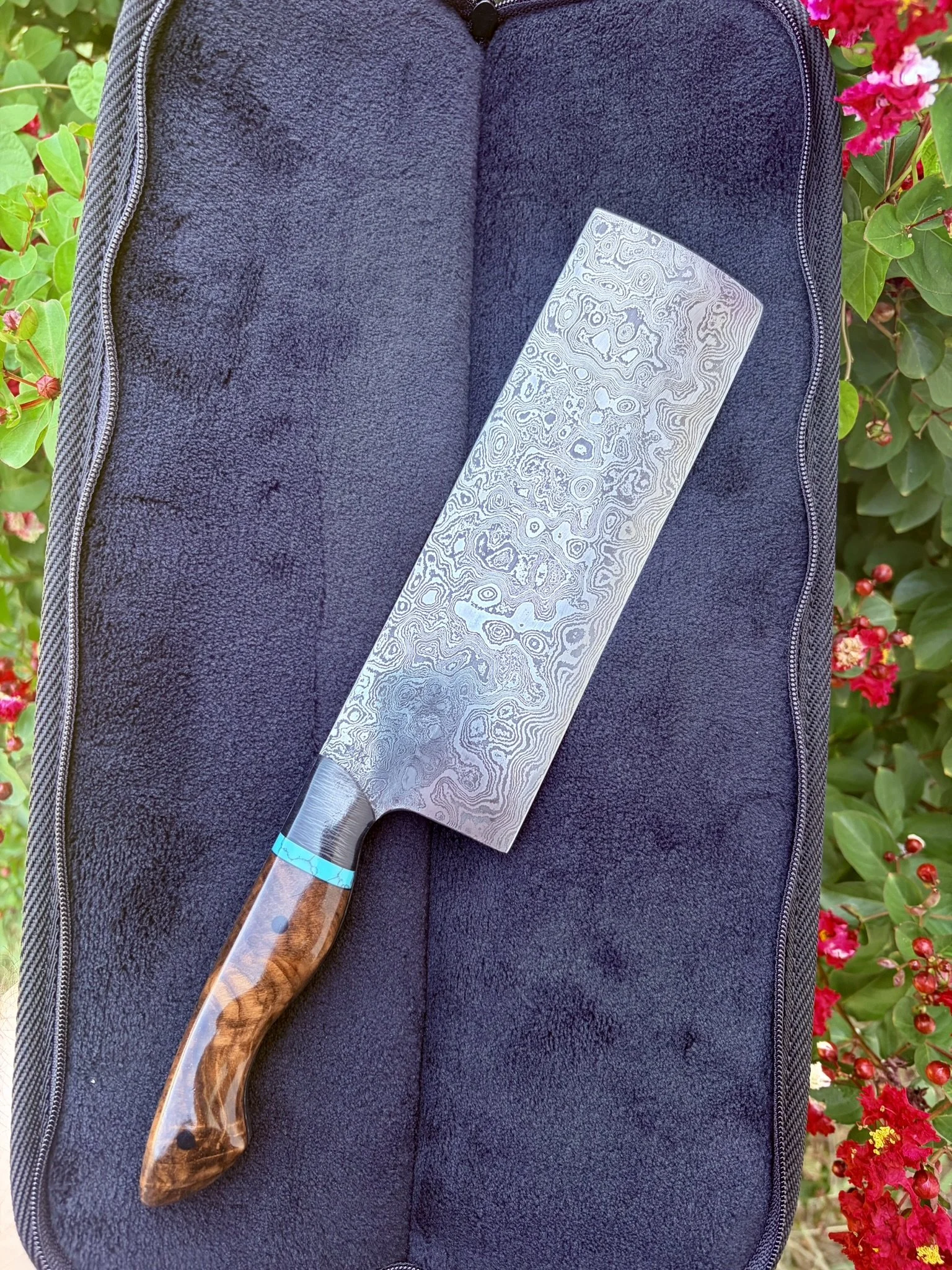
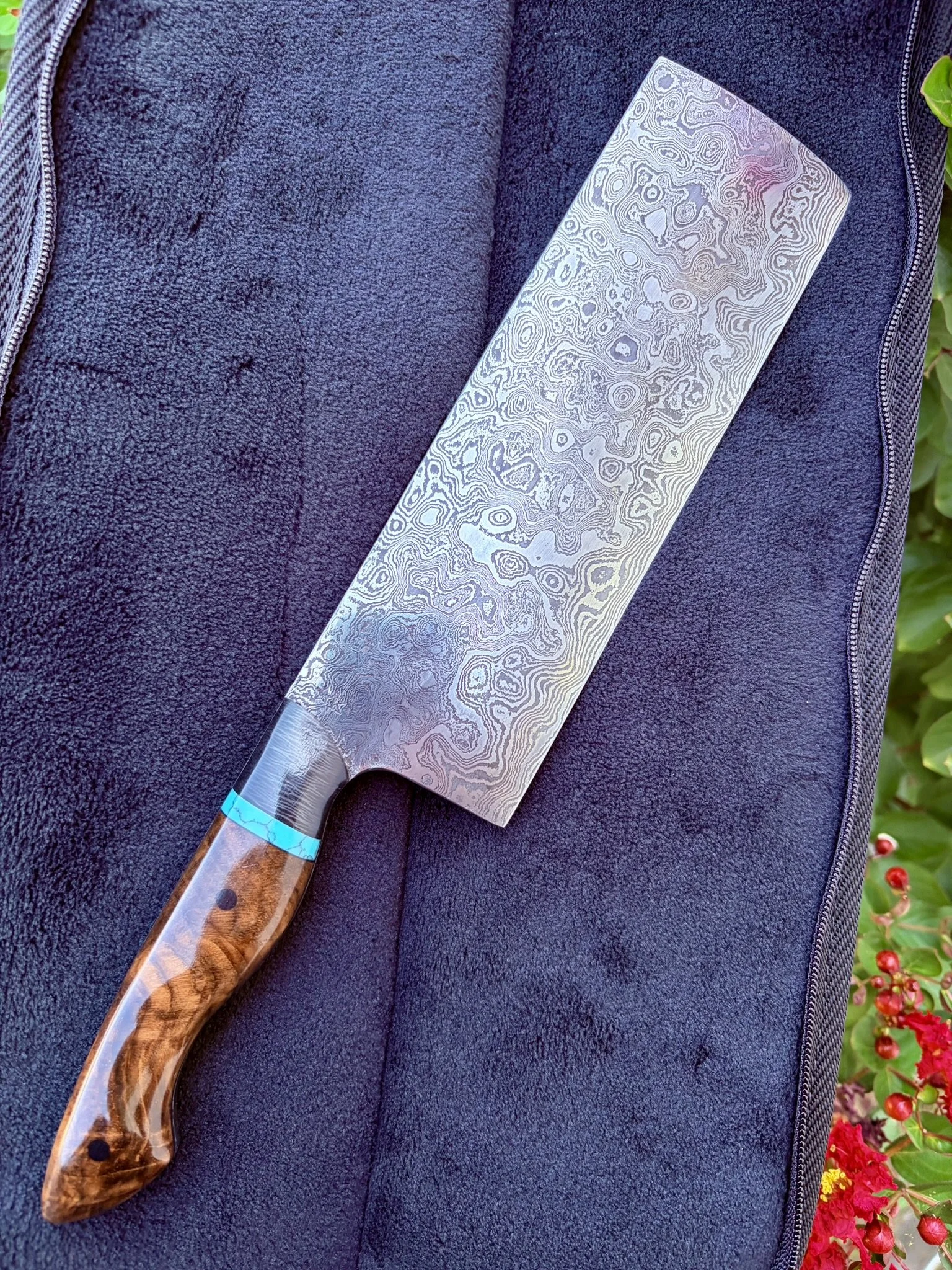
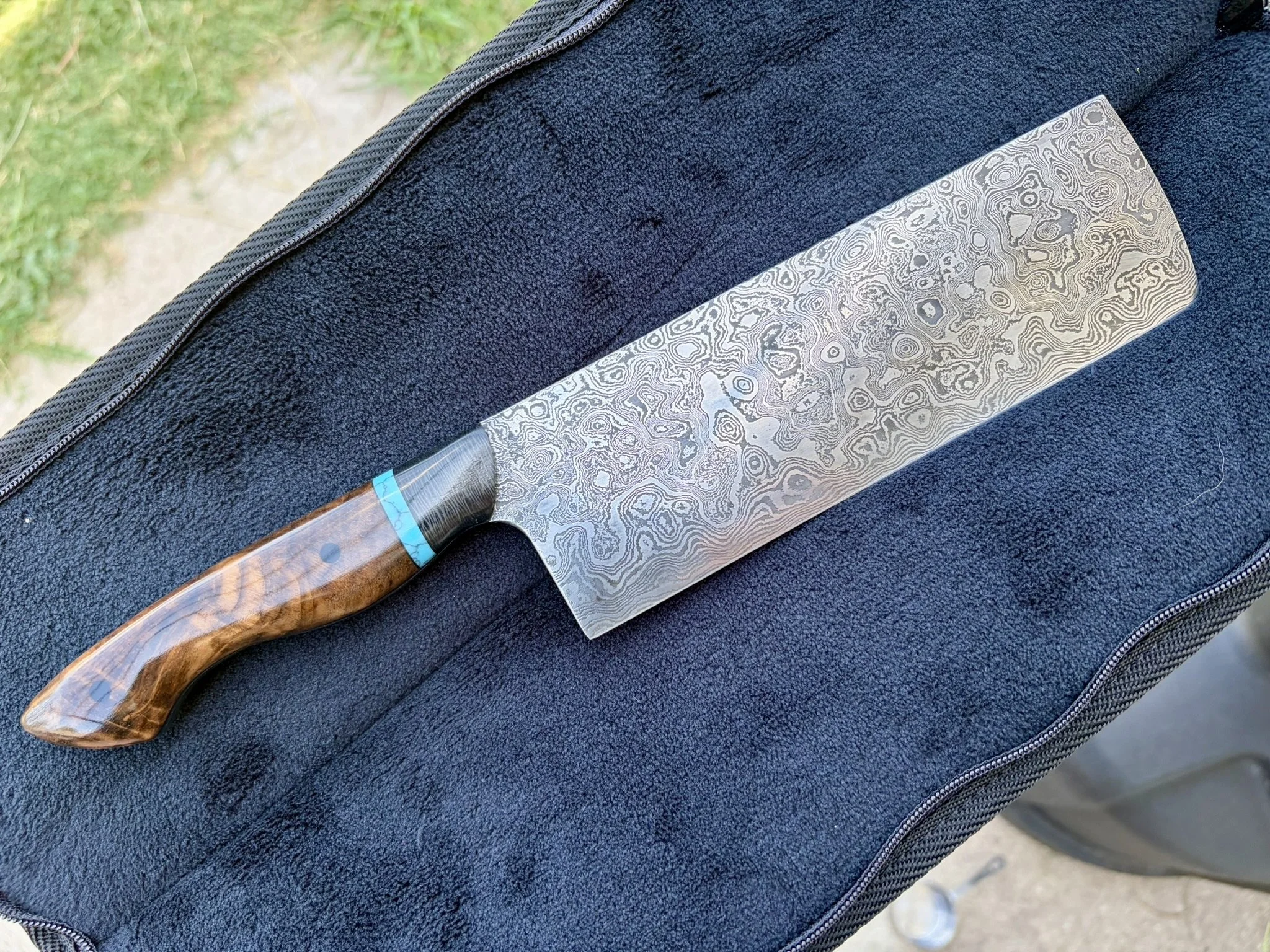
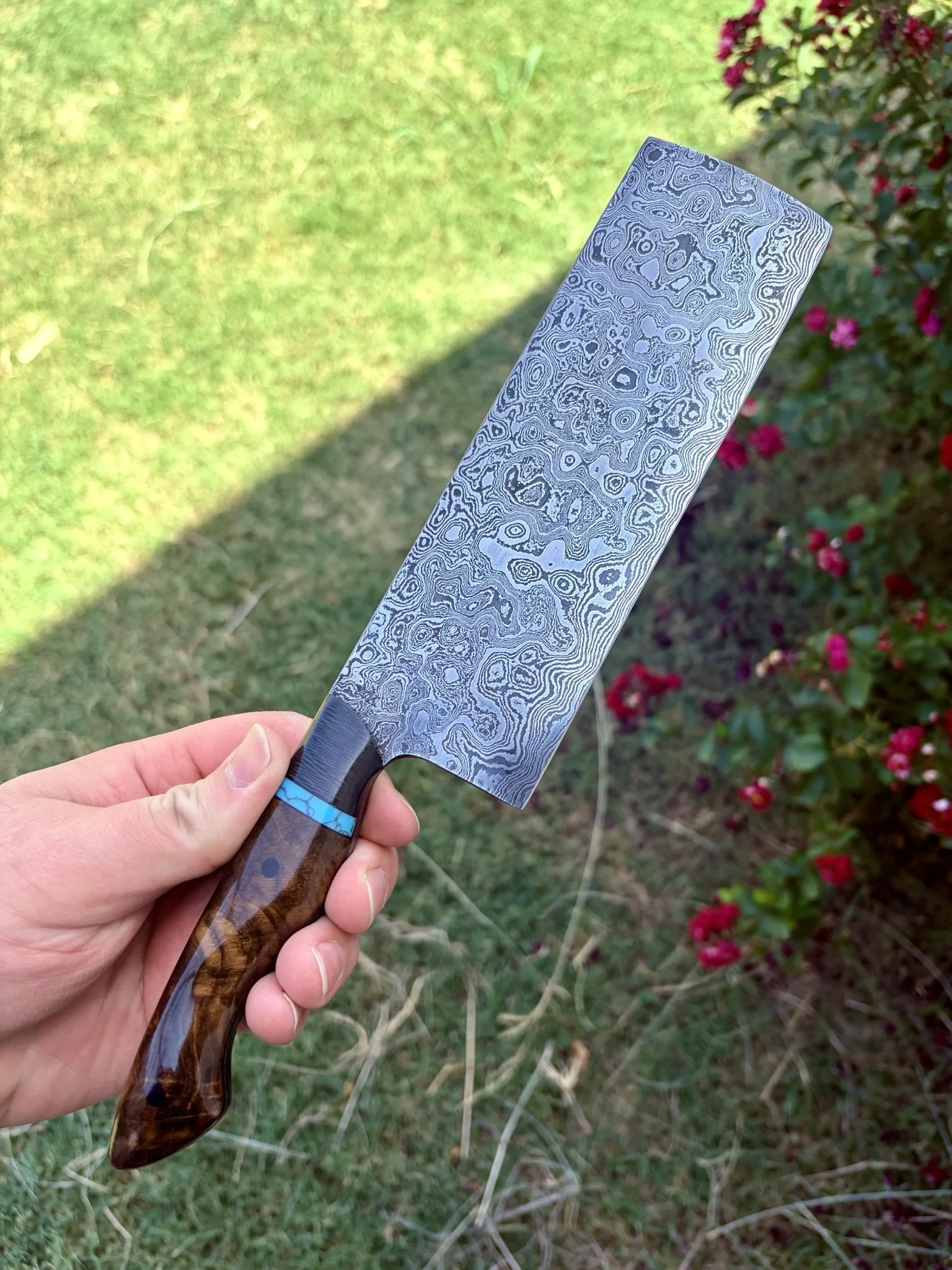
This knife began with a request from a coworker I have known for a couple of years, and whom I respect greatly. Tiffany wanted something beautiful and distinctive for her and her husband to use in their kitchen, and landed on a vegetable cleaver that would be as enjoyable to look at as it was to use. Rather than follow a traditional pattern exactly, I drew inspiration from the Japanese nakiri and developed my own interpretation around the handle profile and design language I had been refining in my chef’s knives for several years.
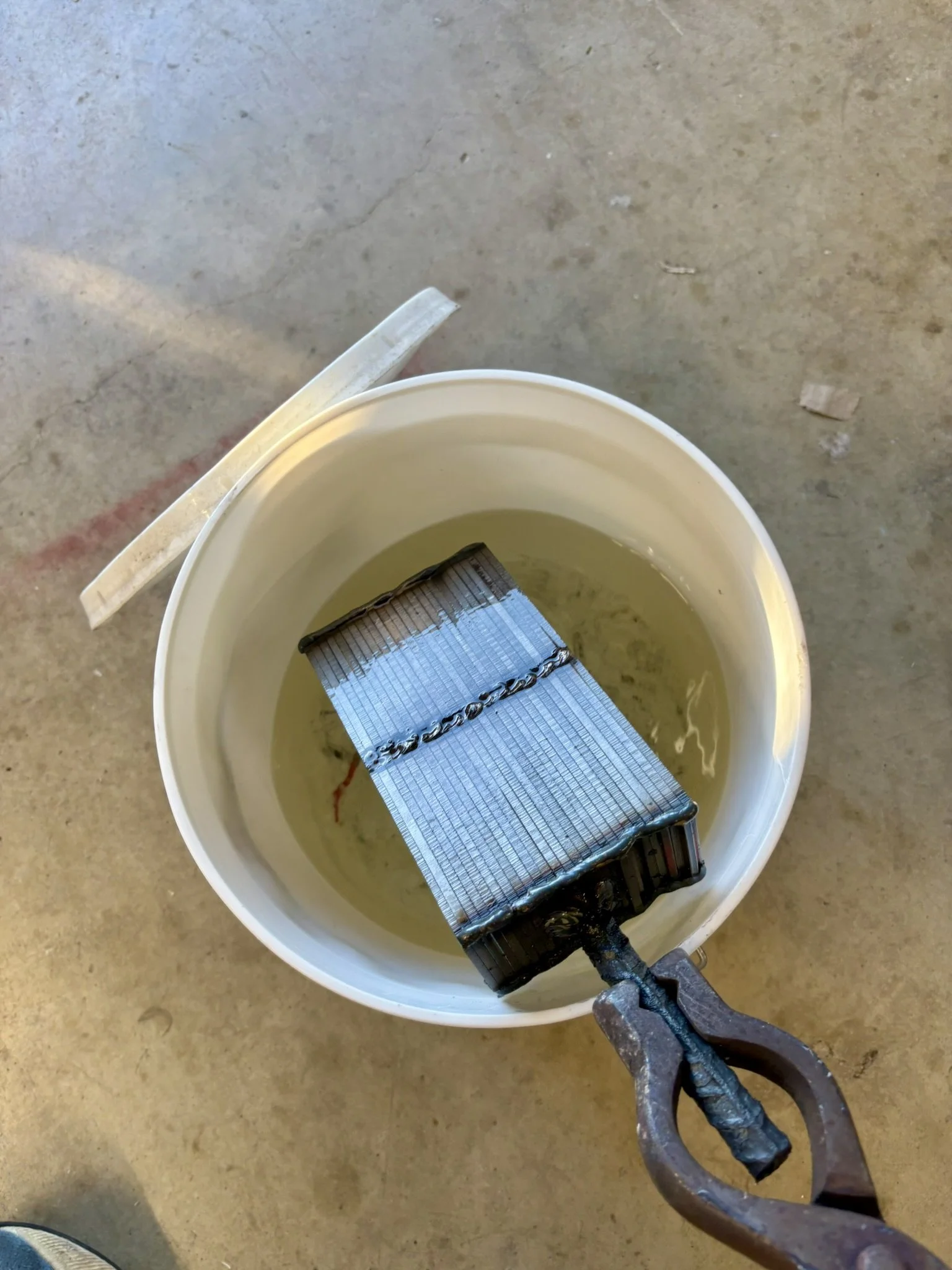
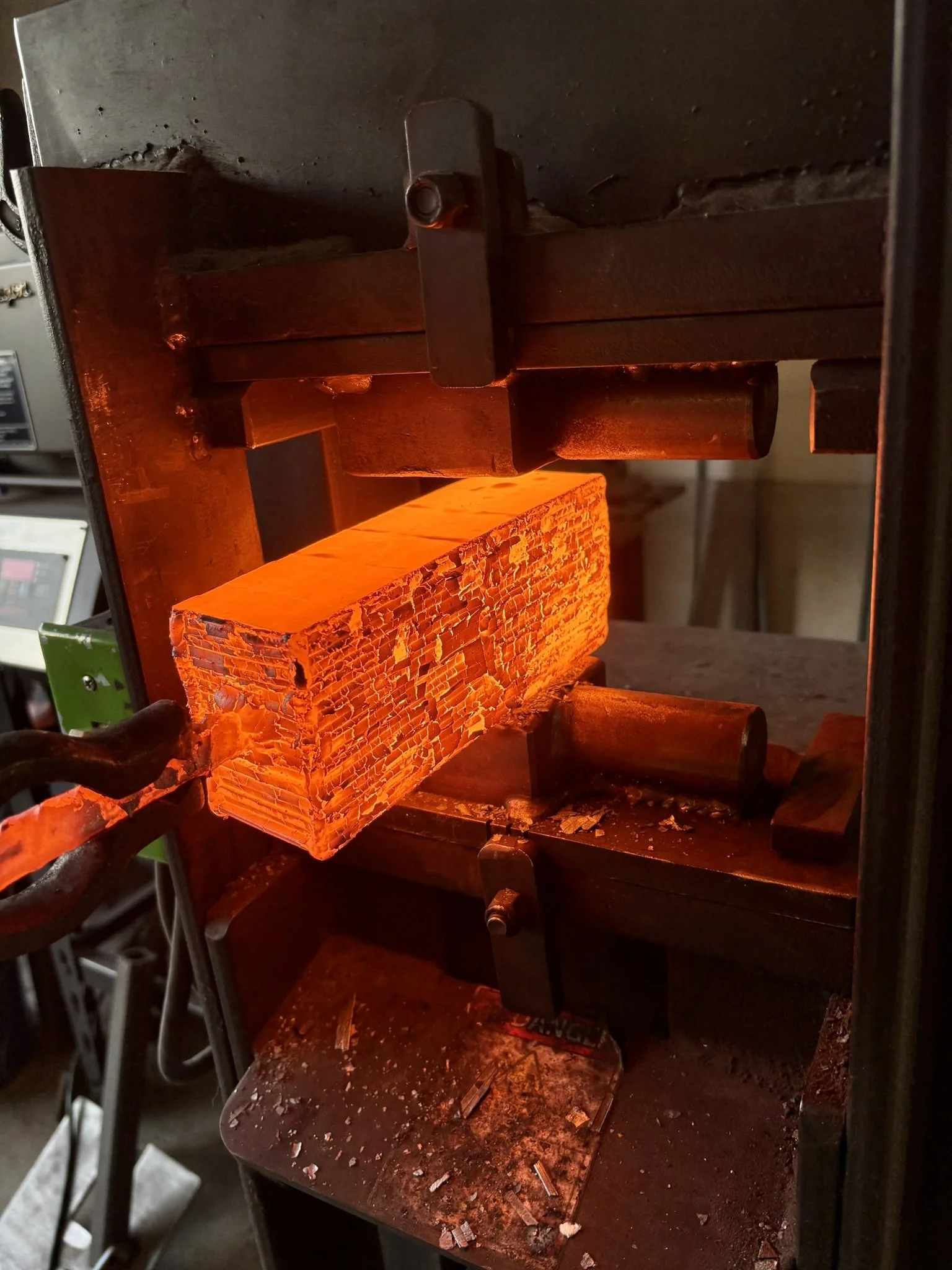
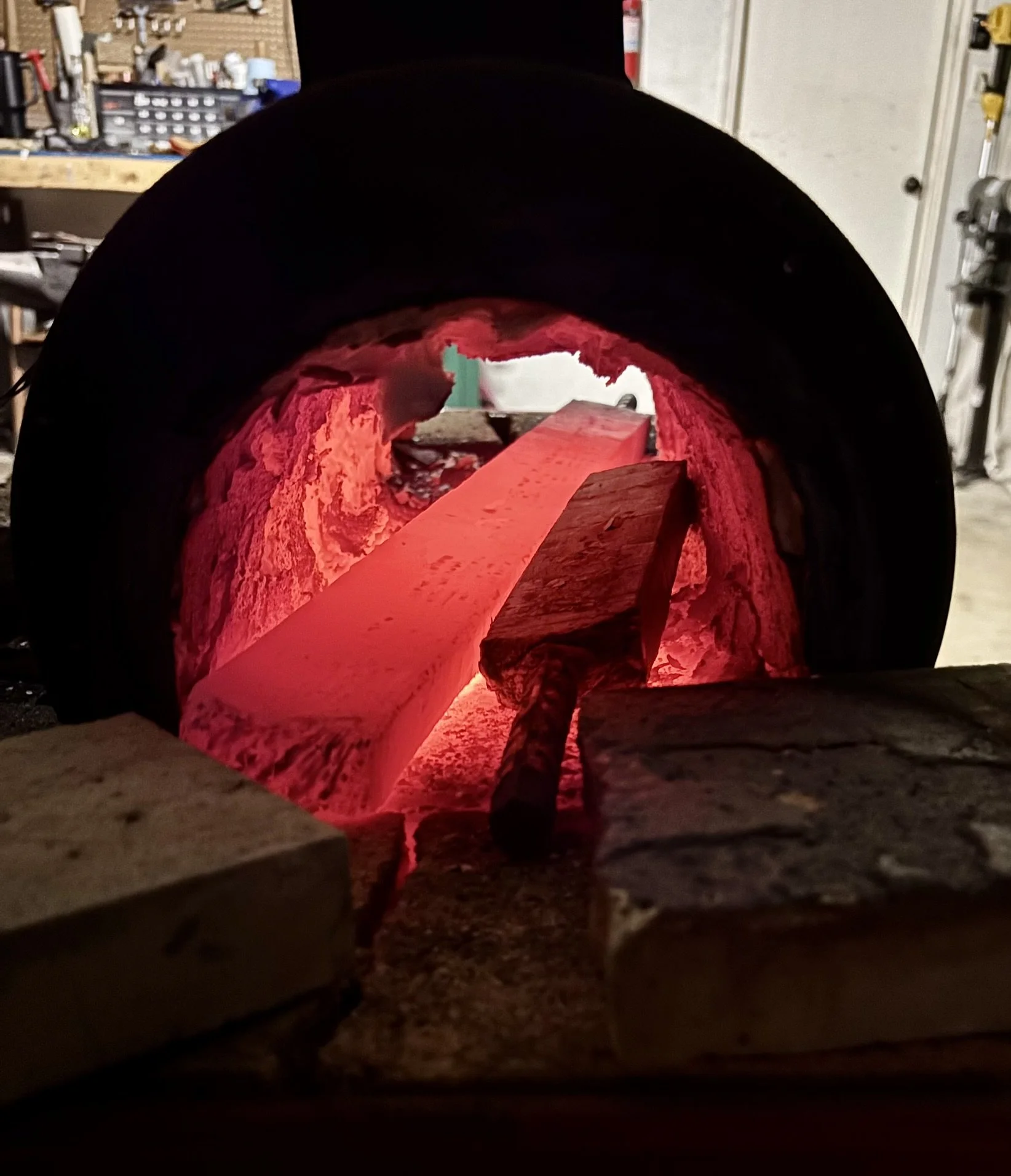
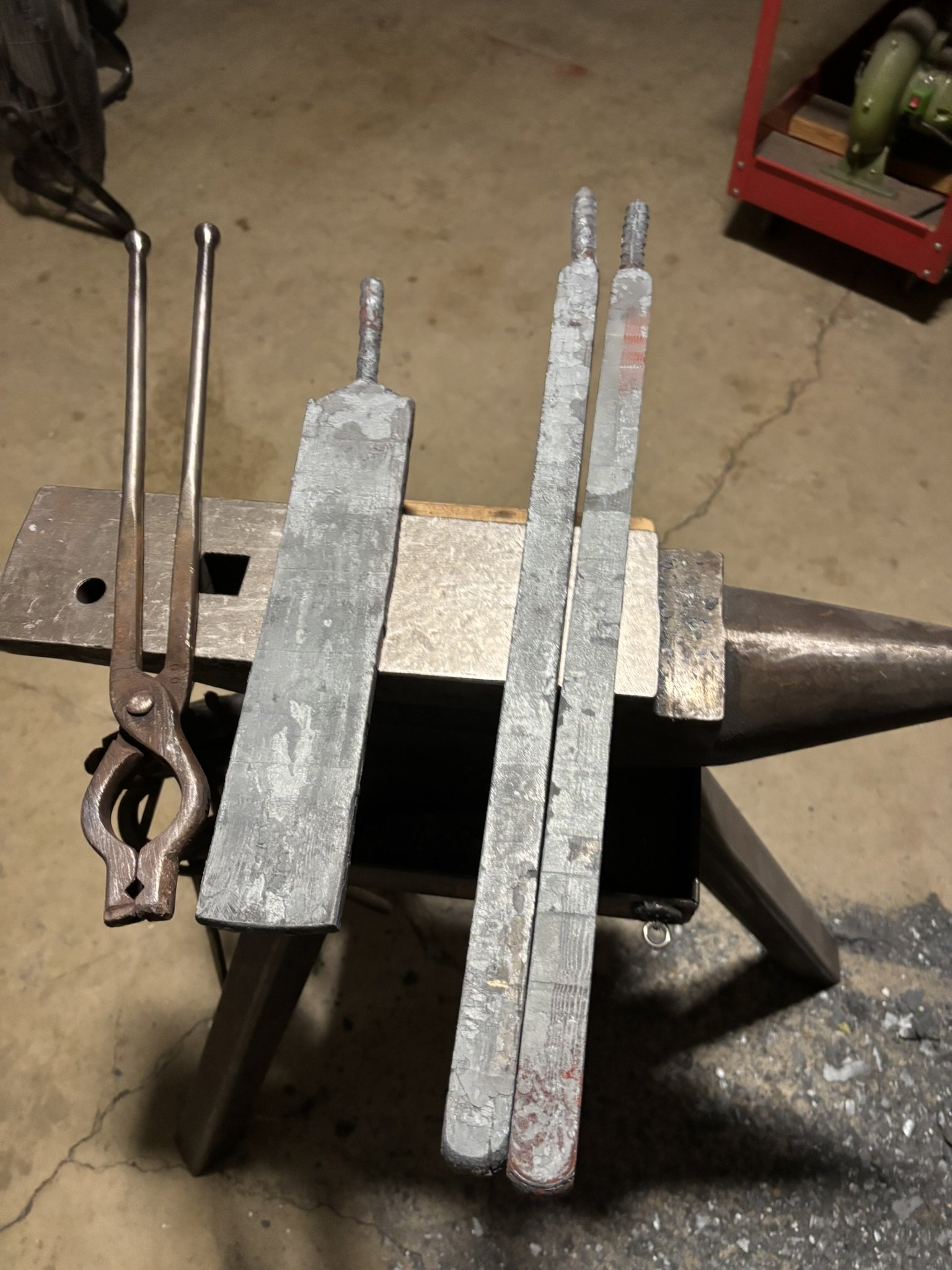
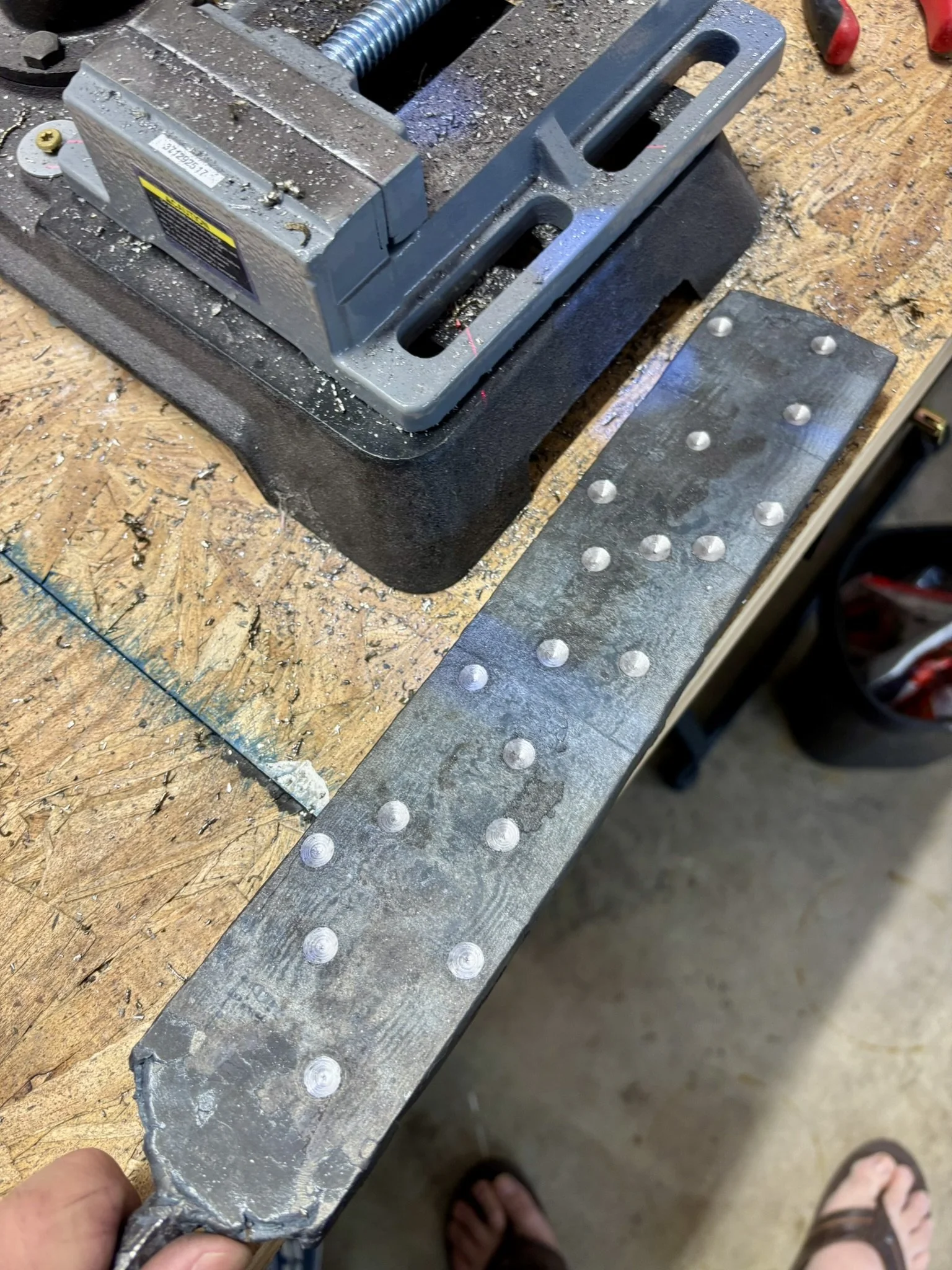
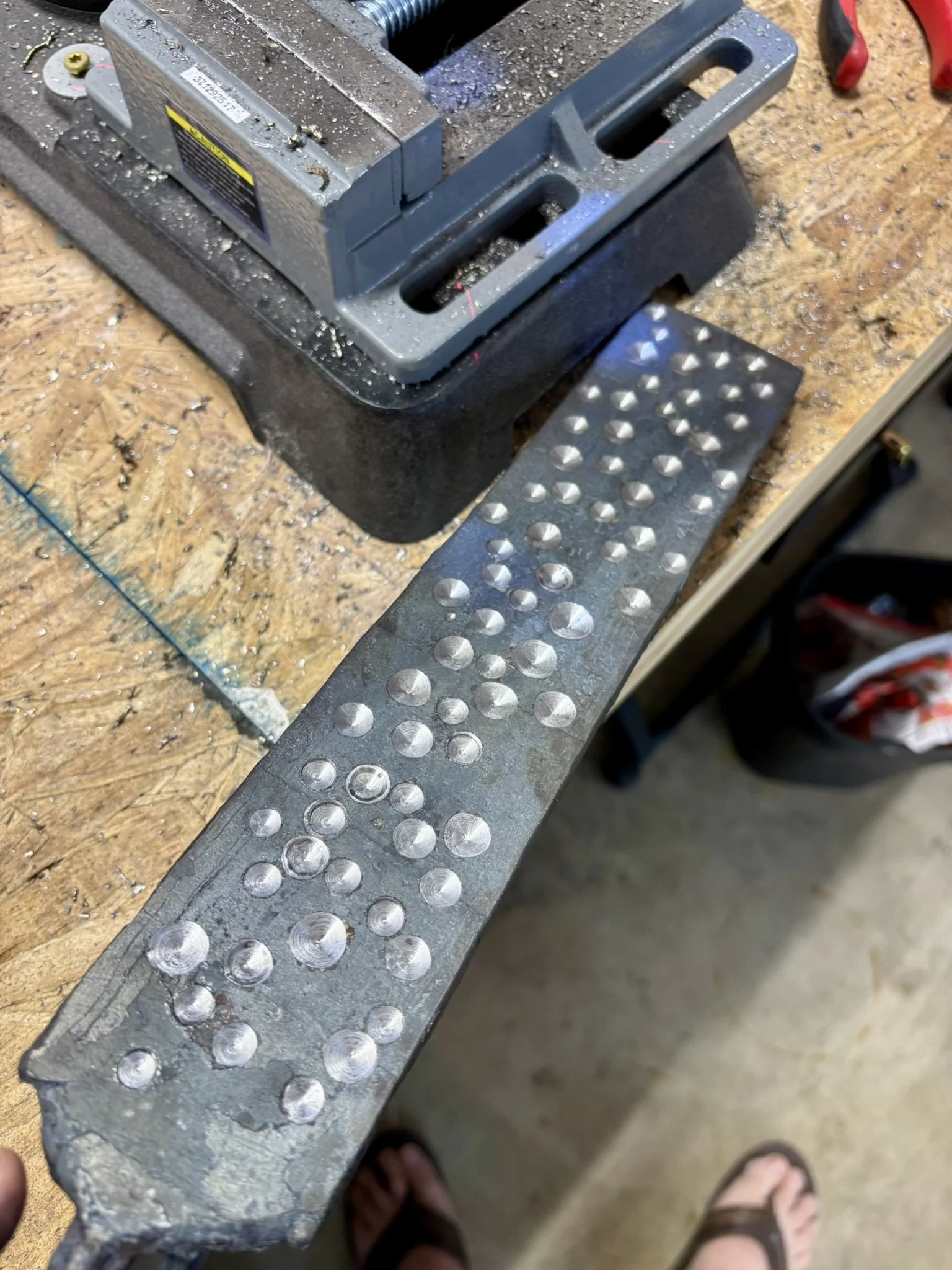
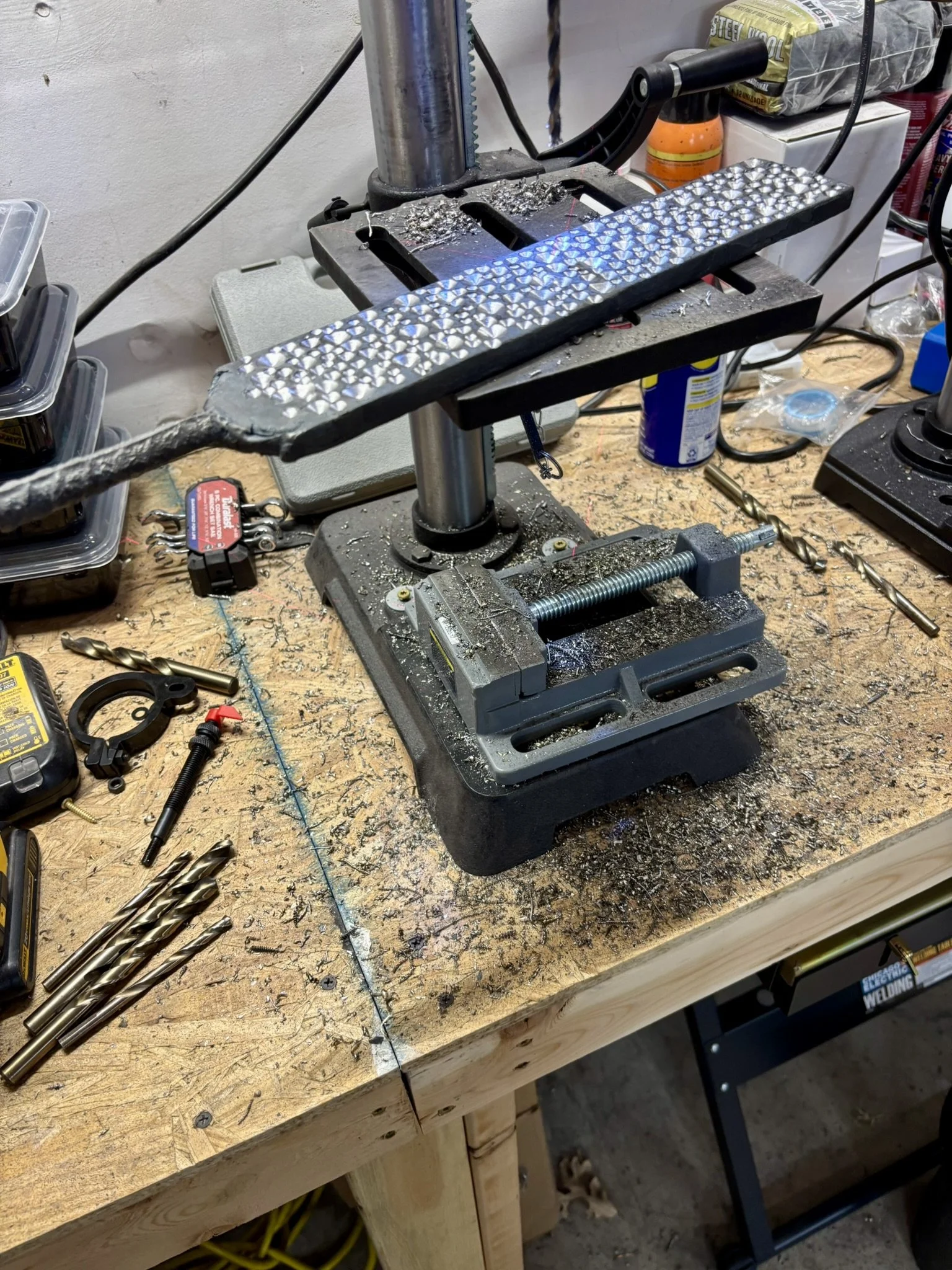
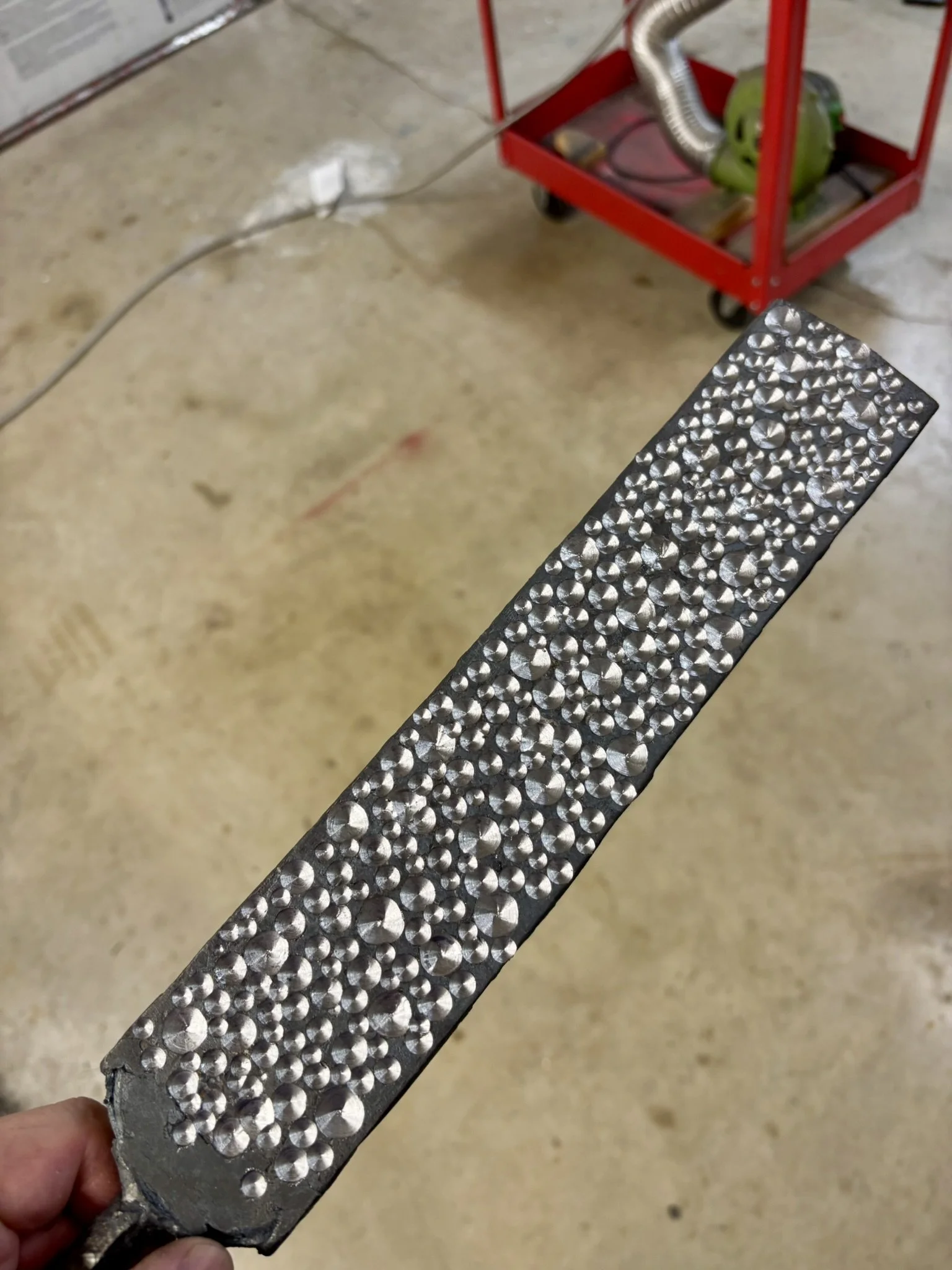
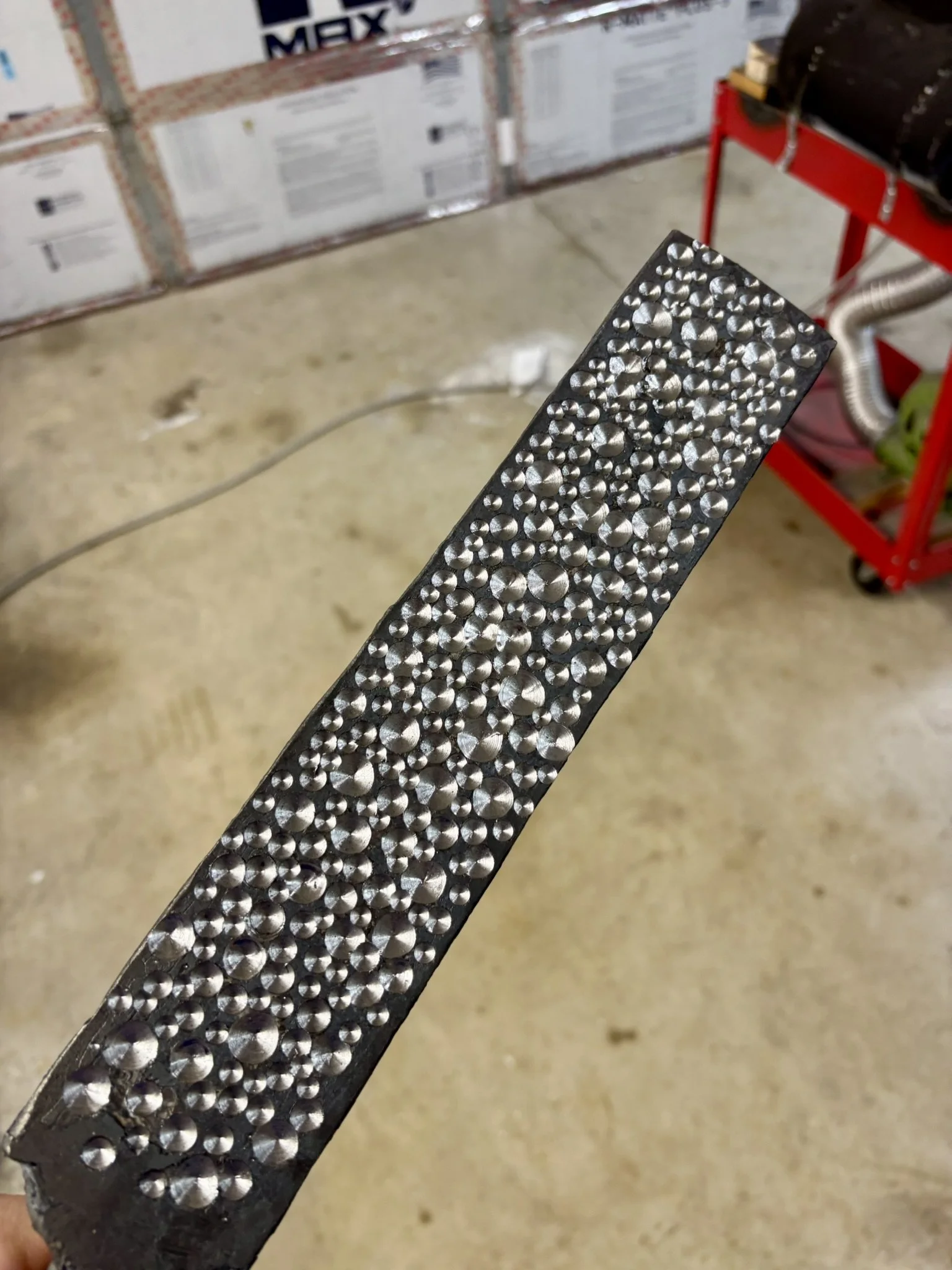
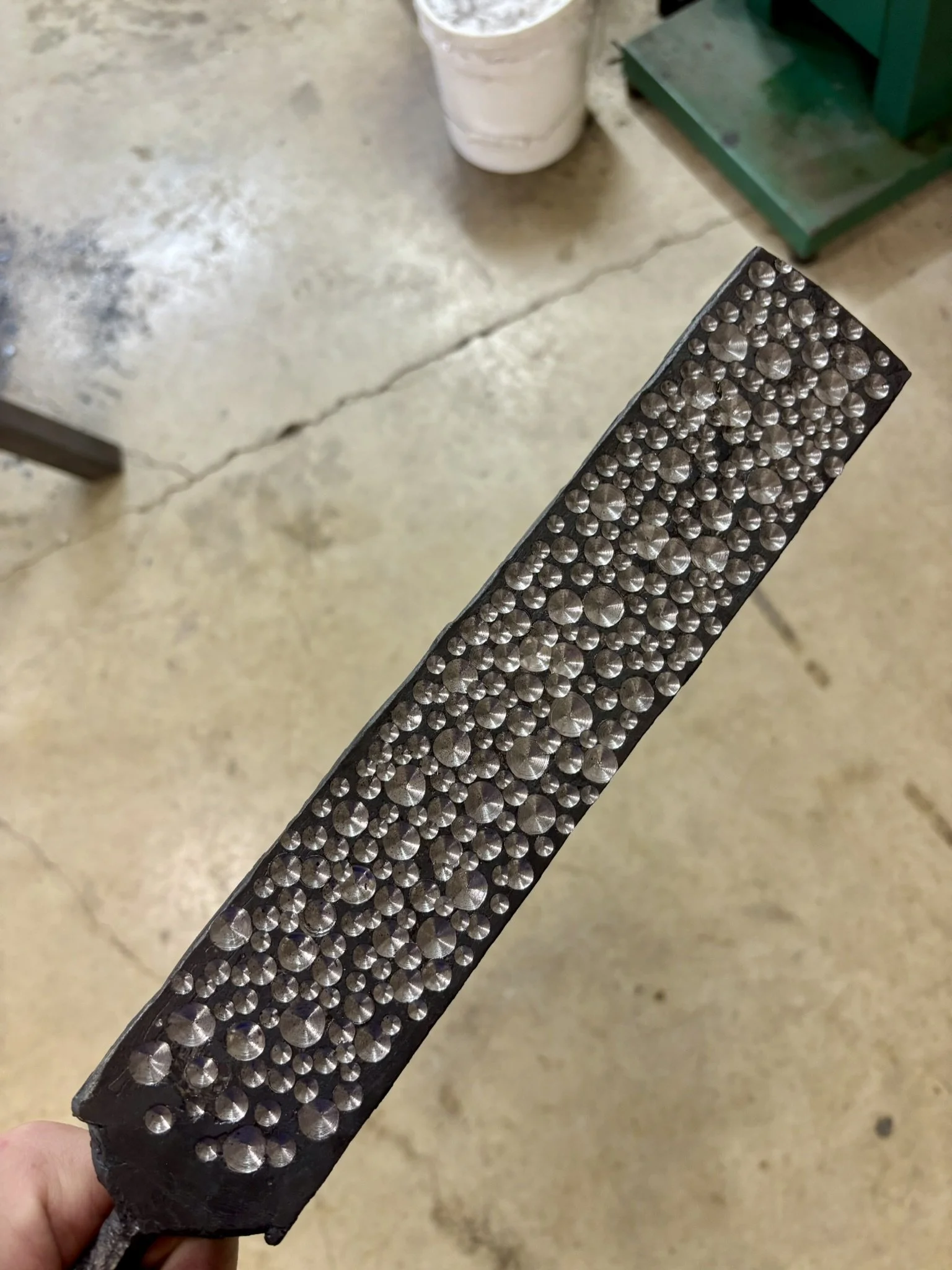
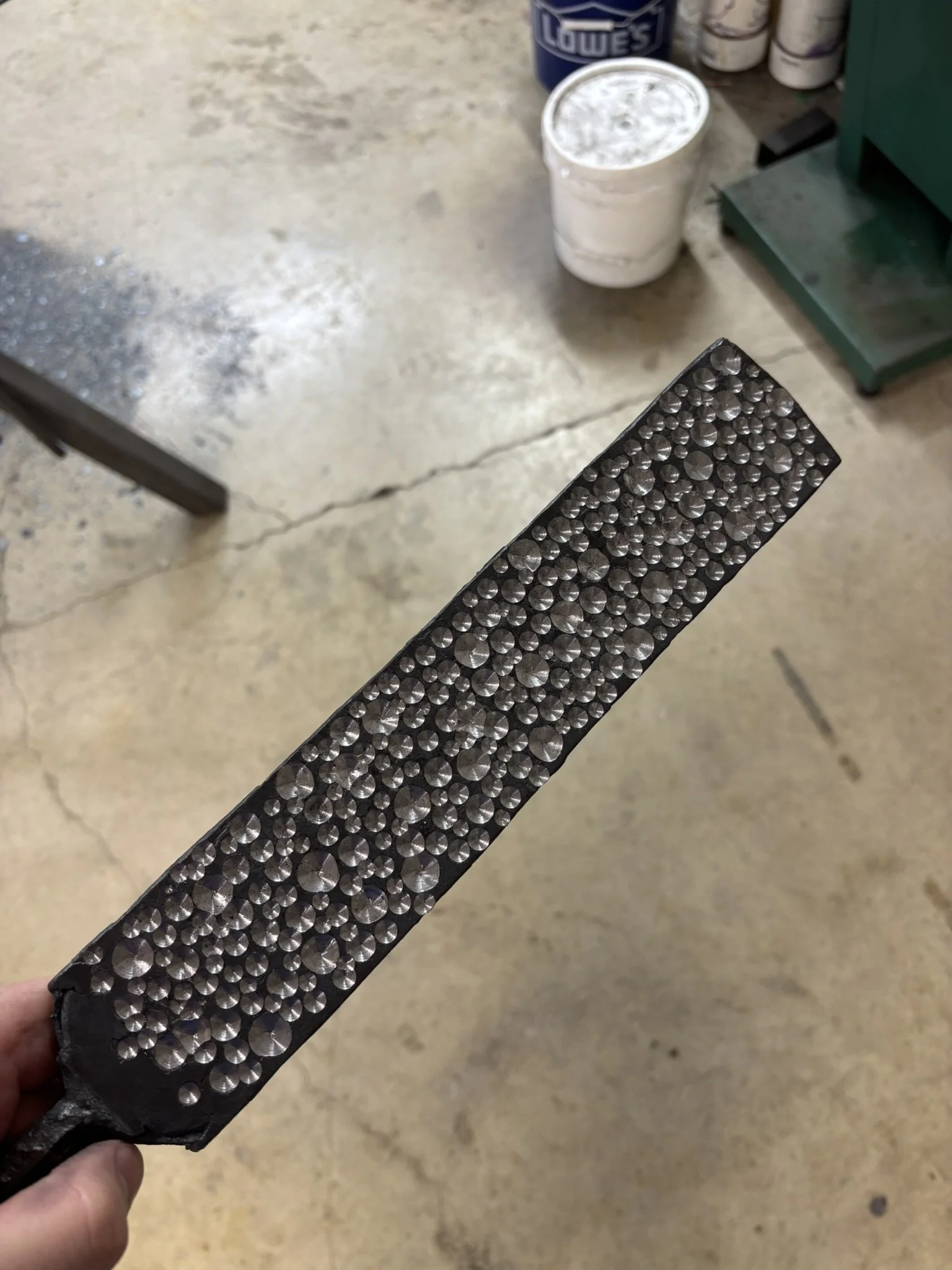
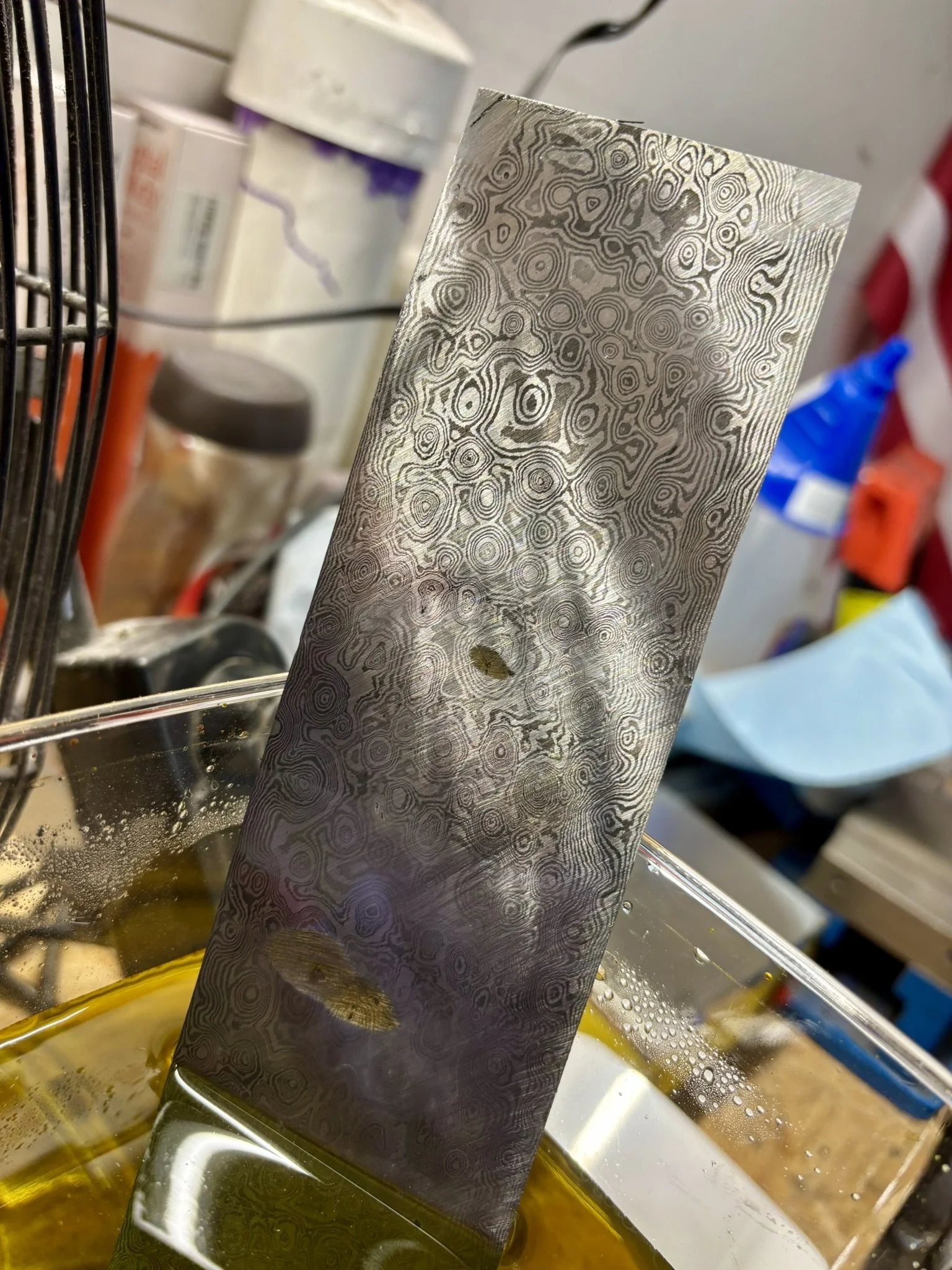
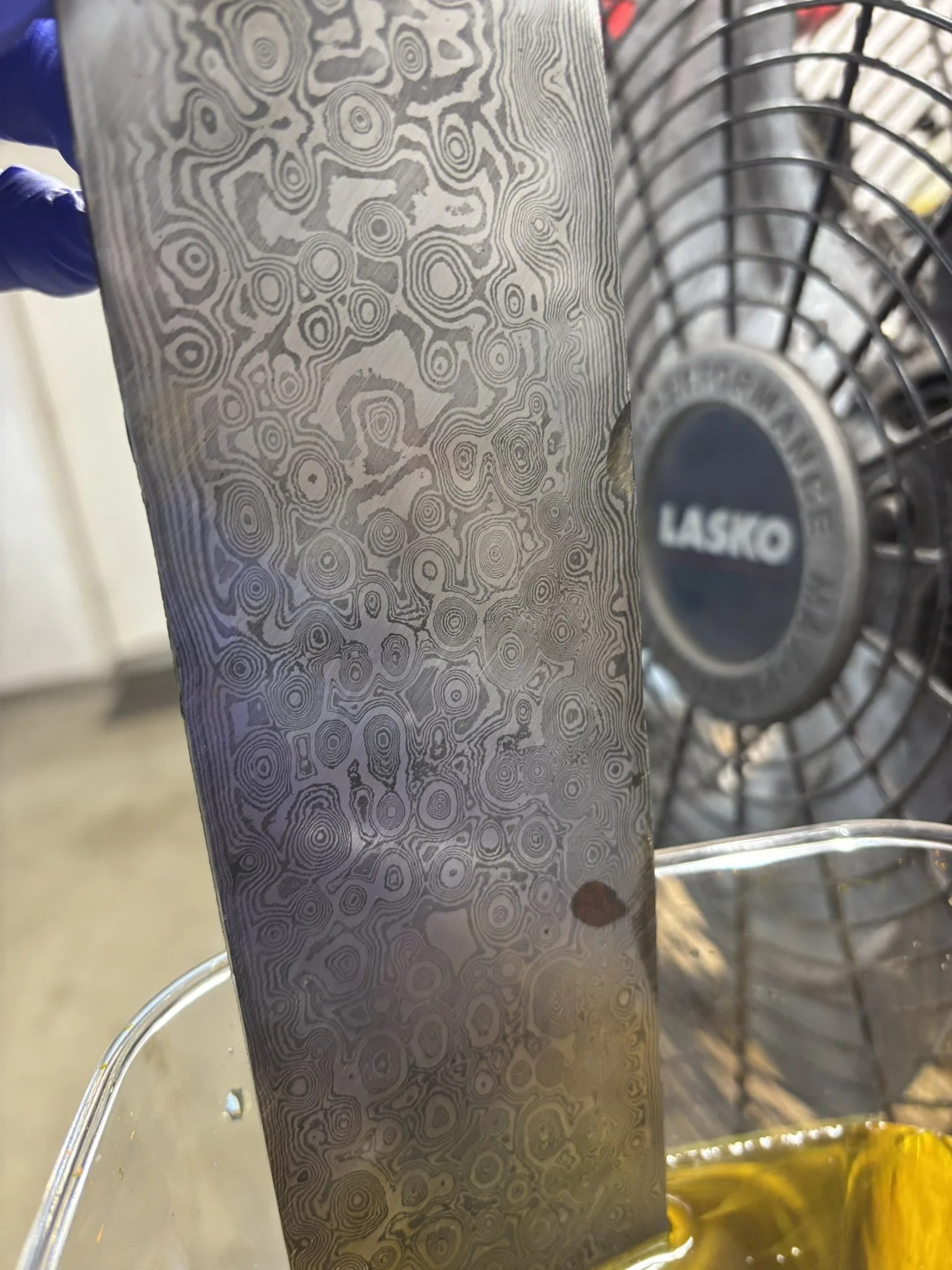
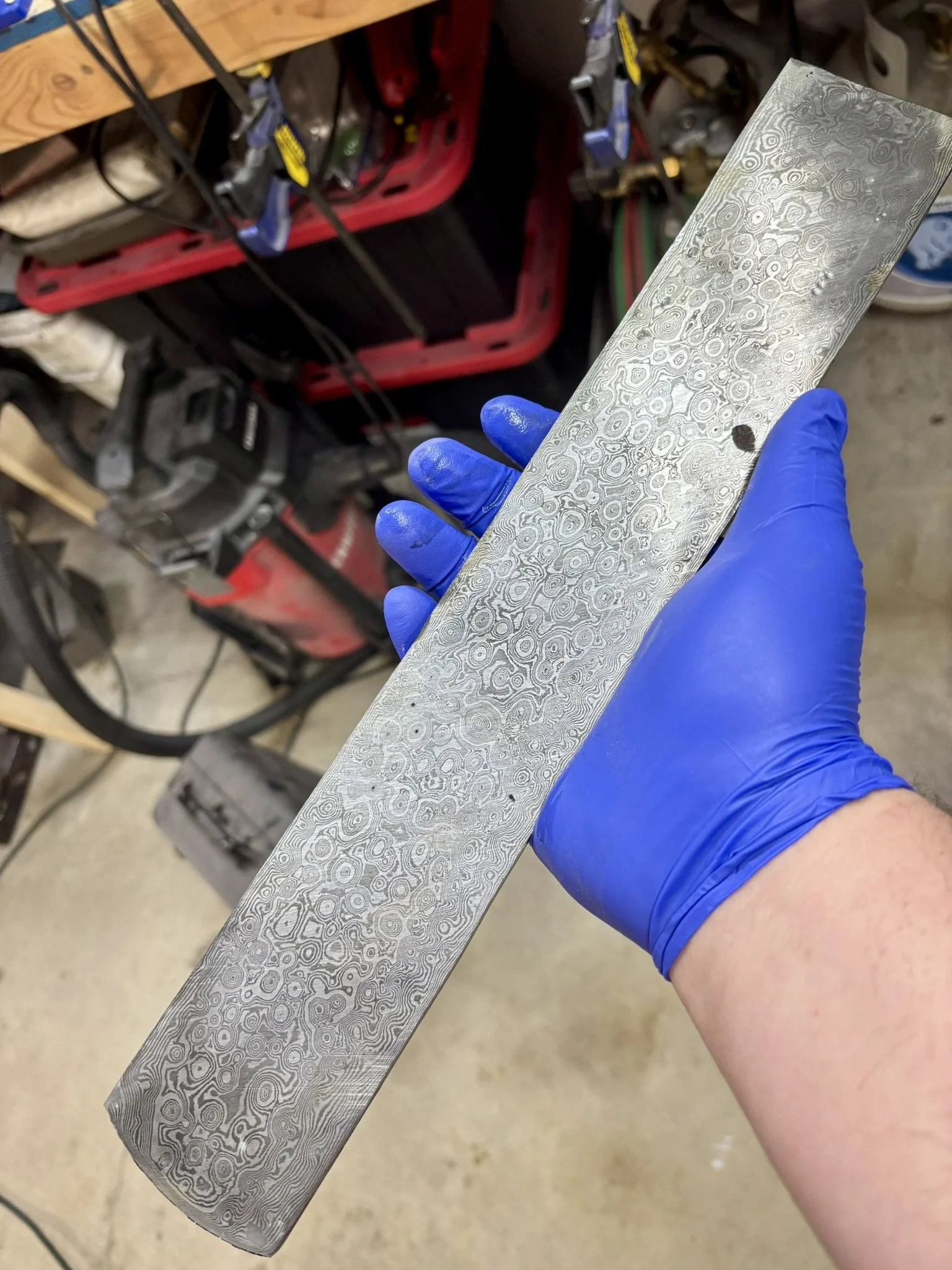
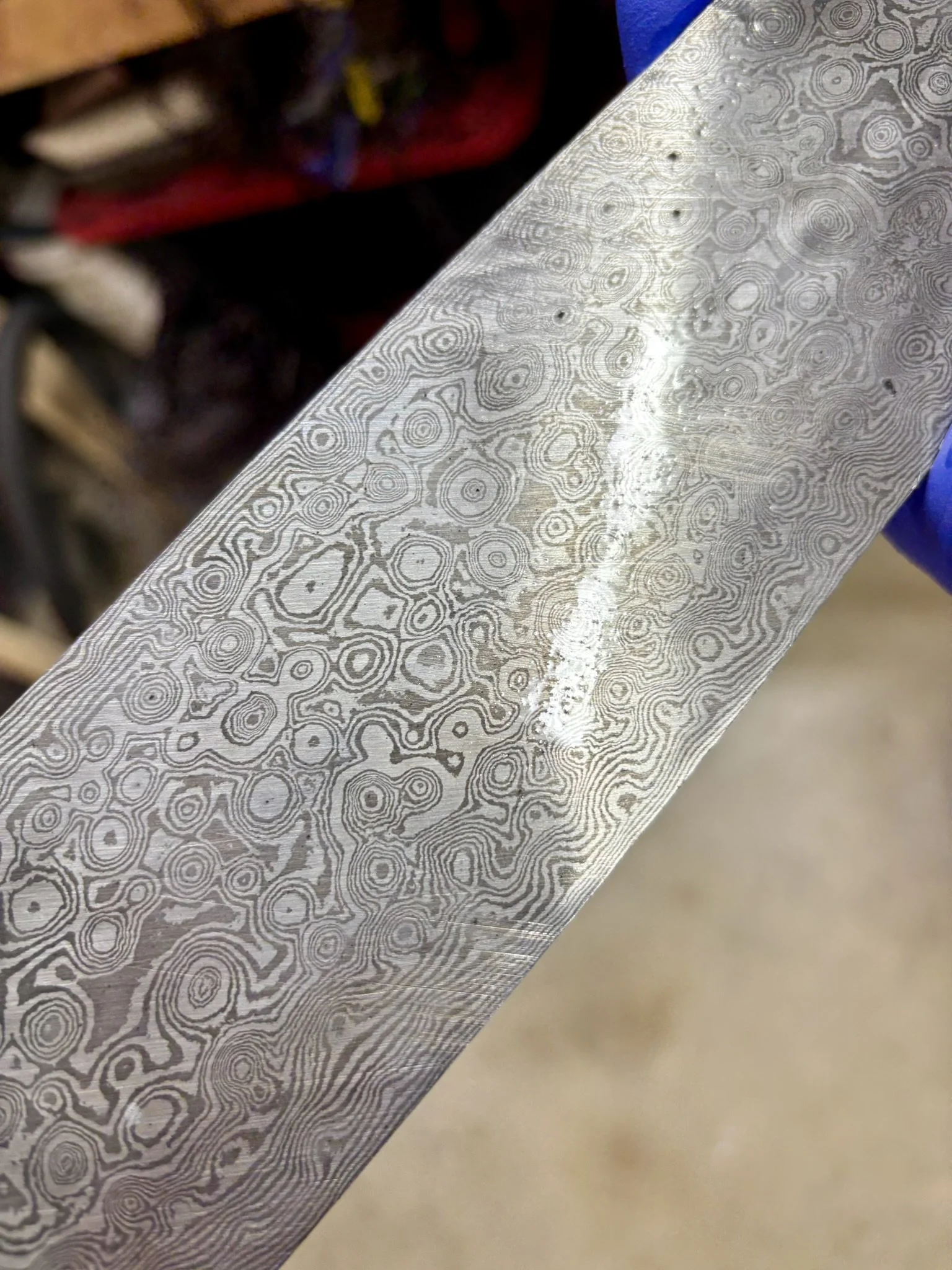
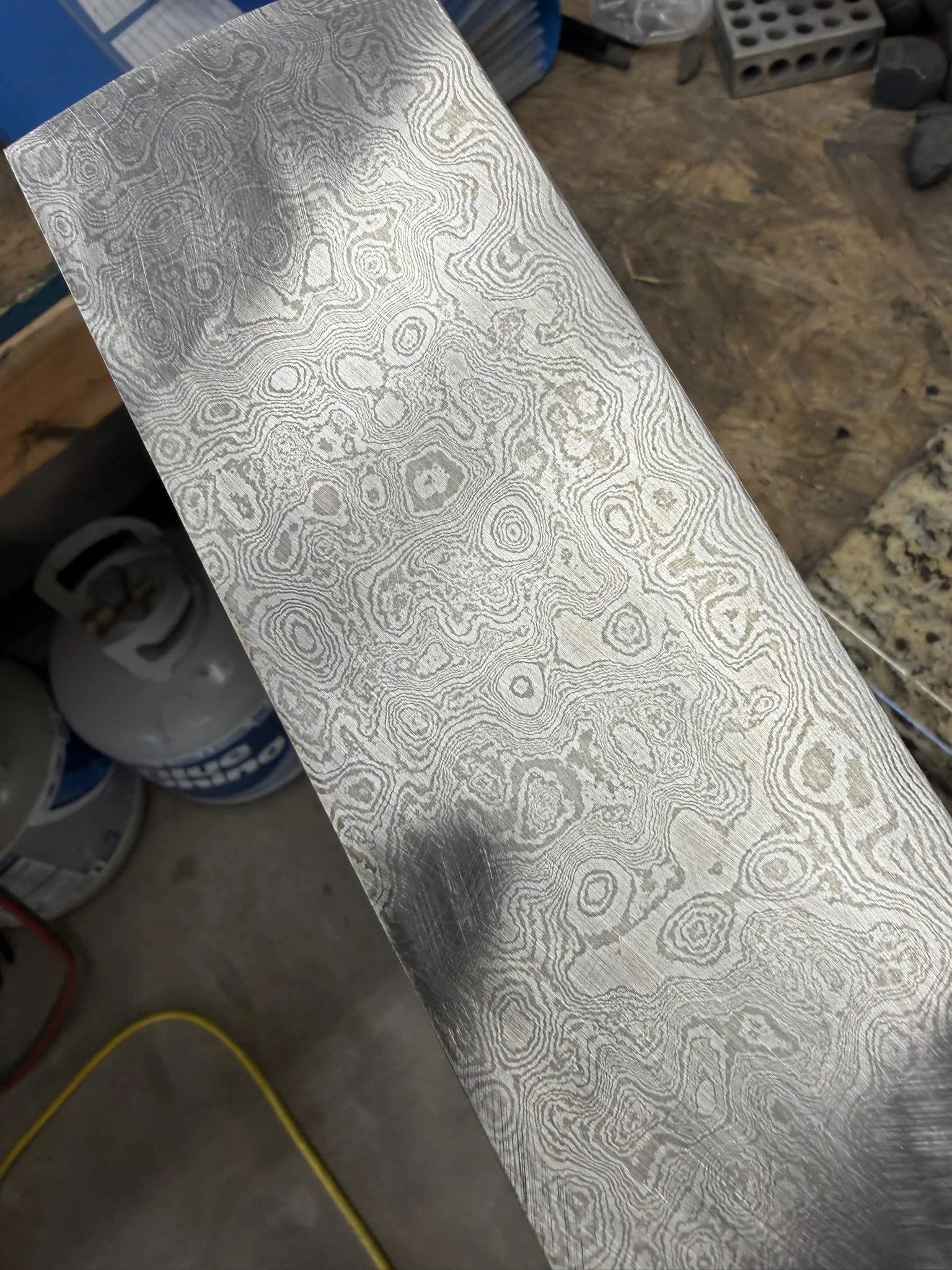
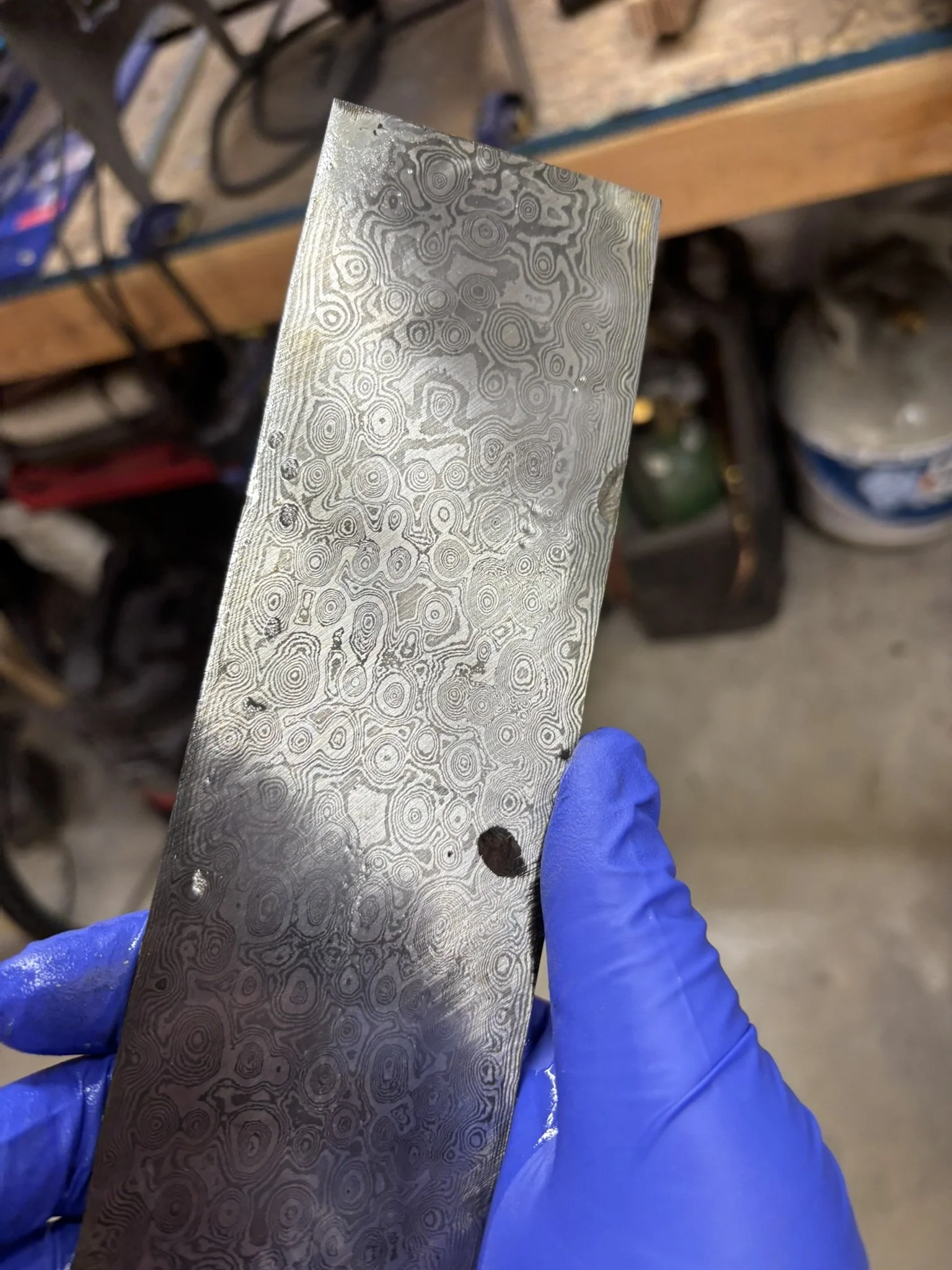
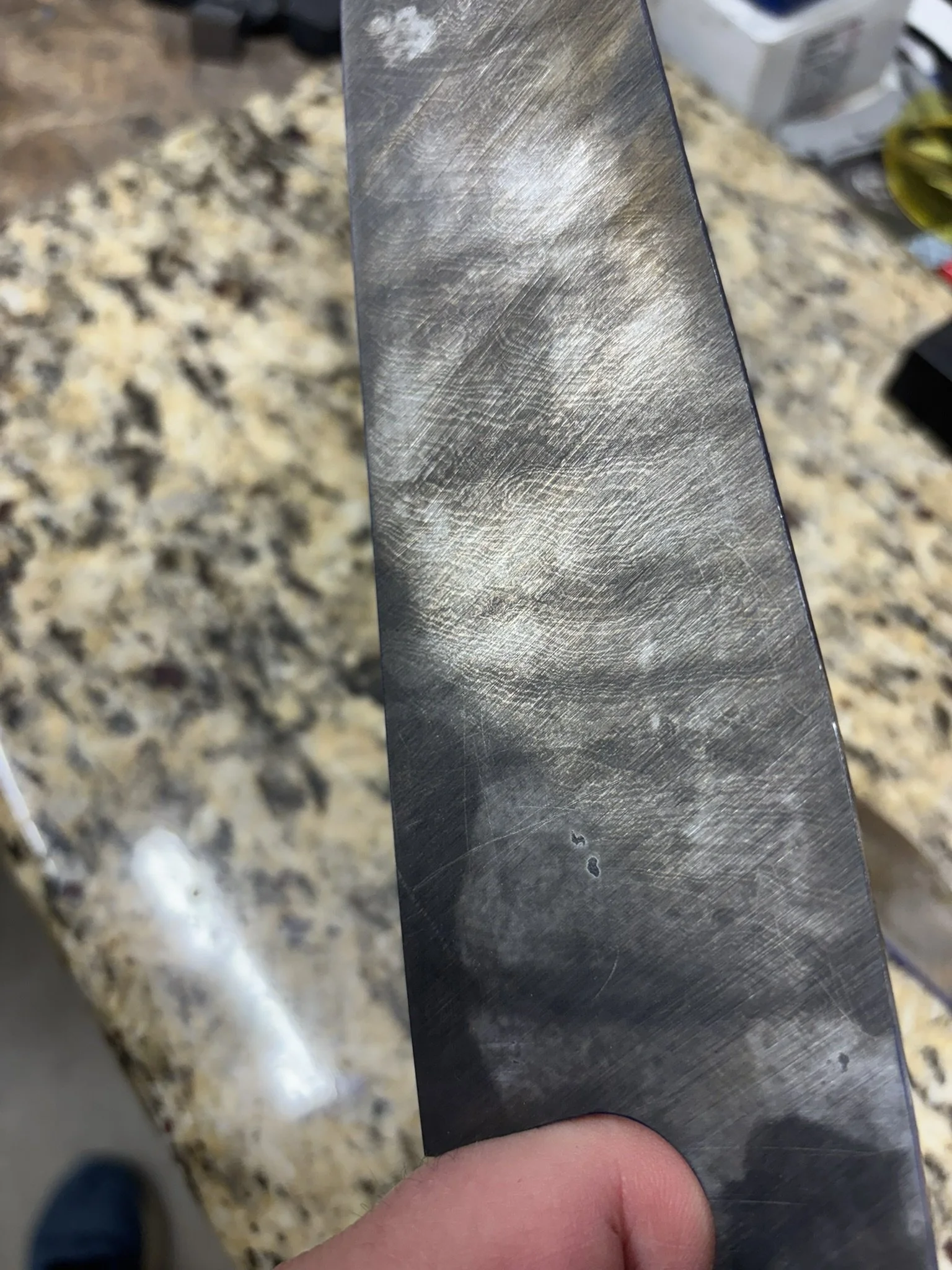
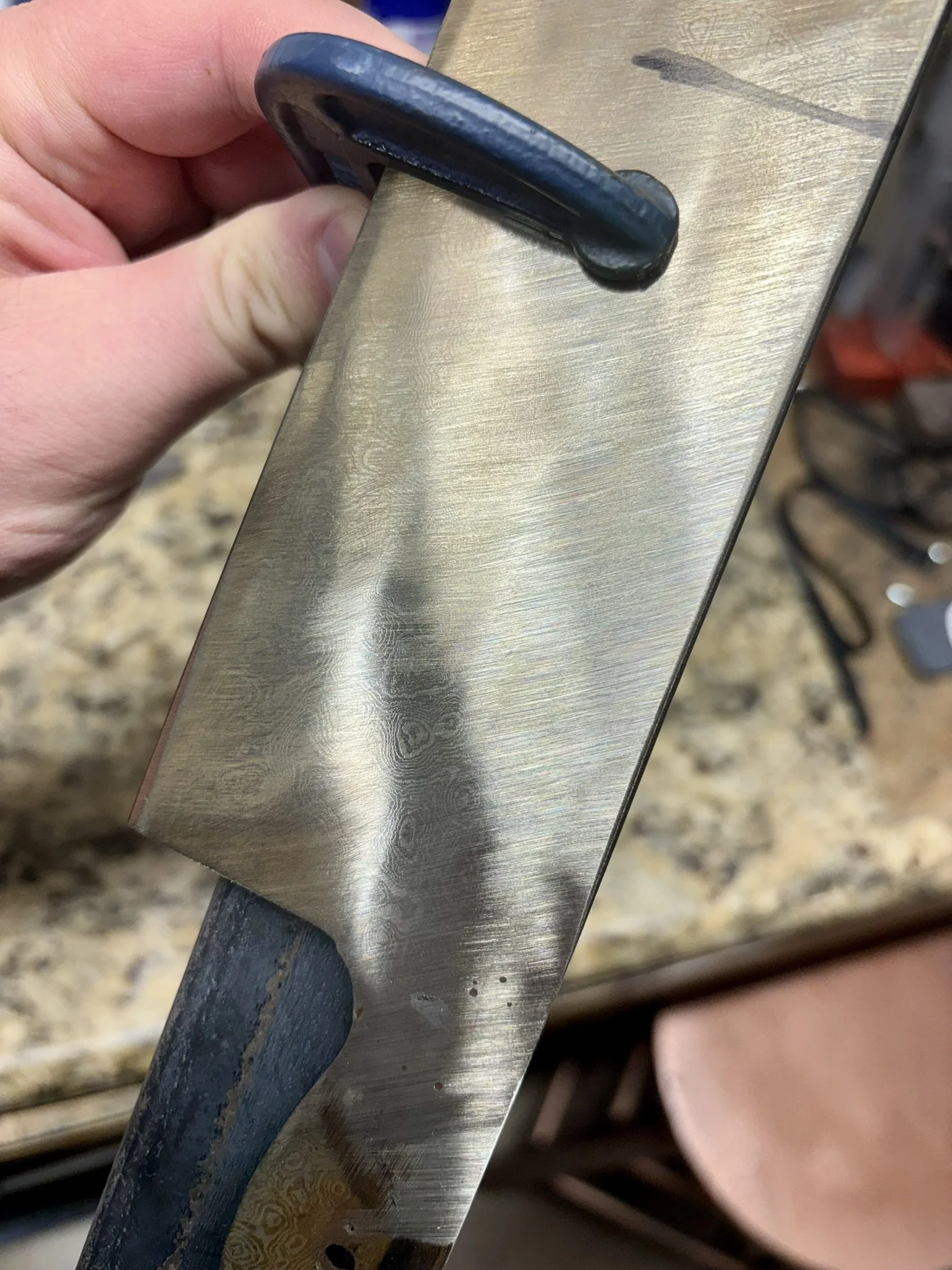
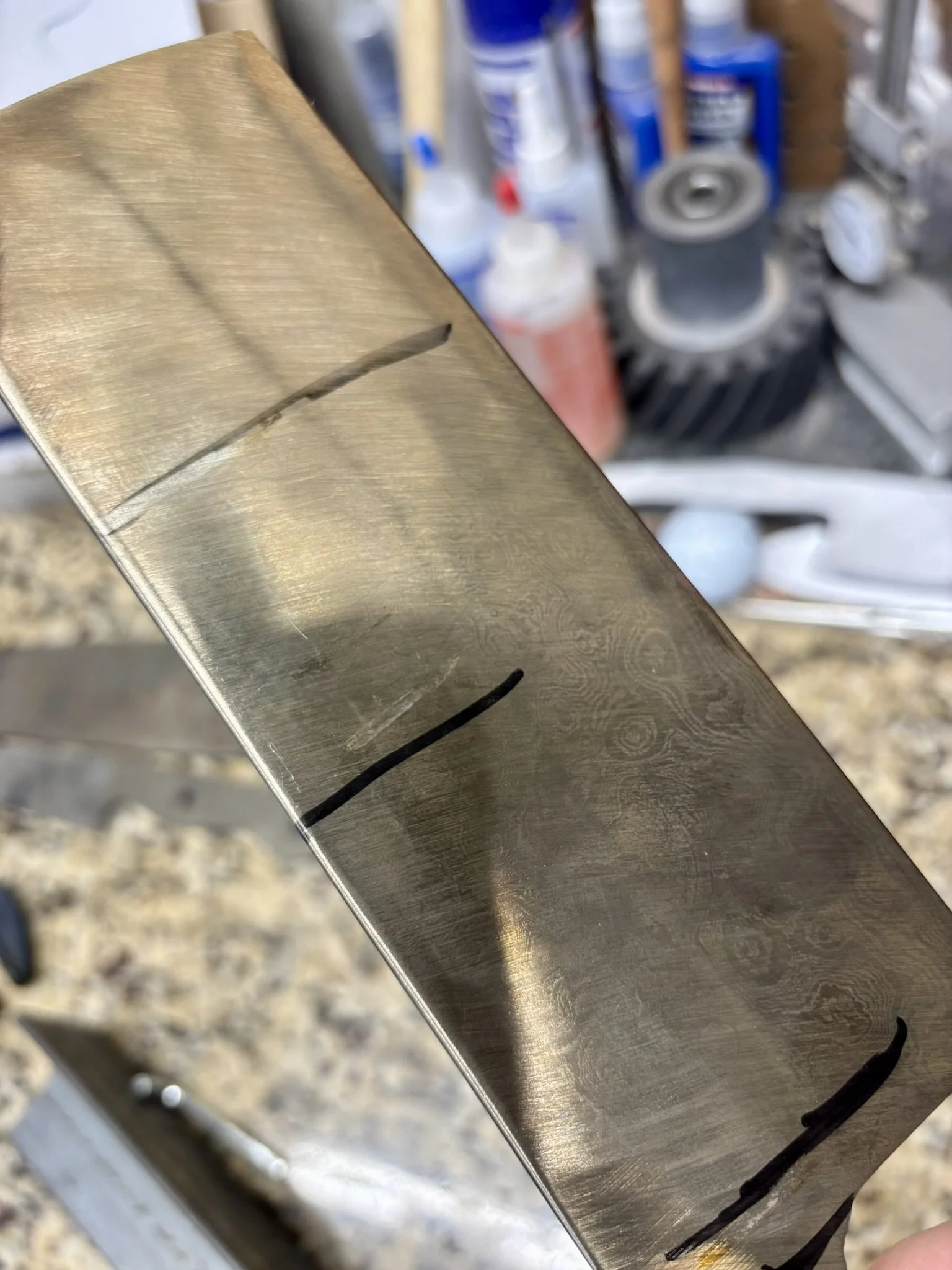
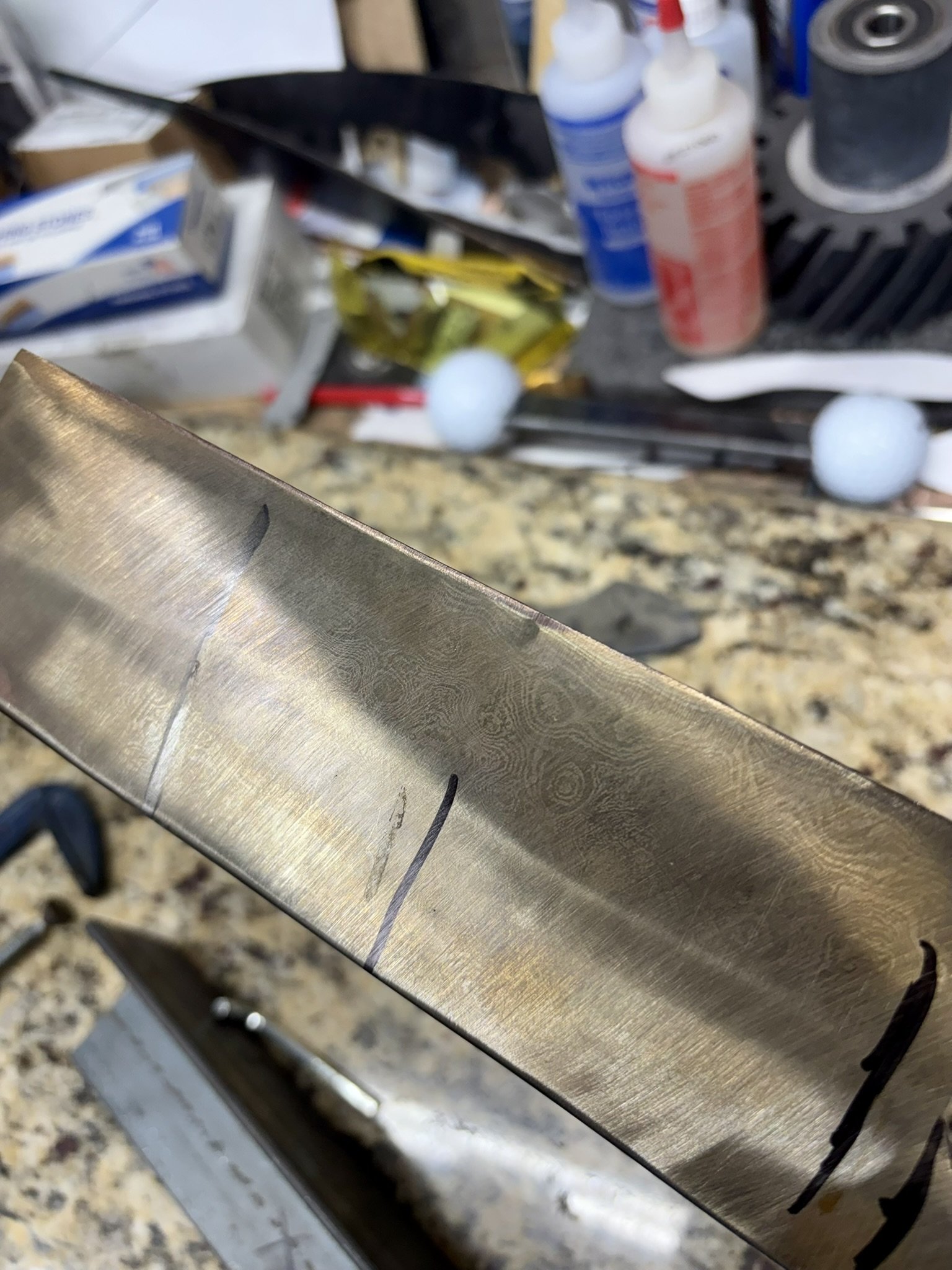
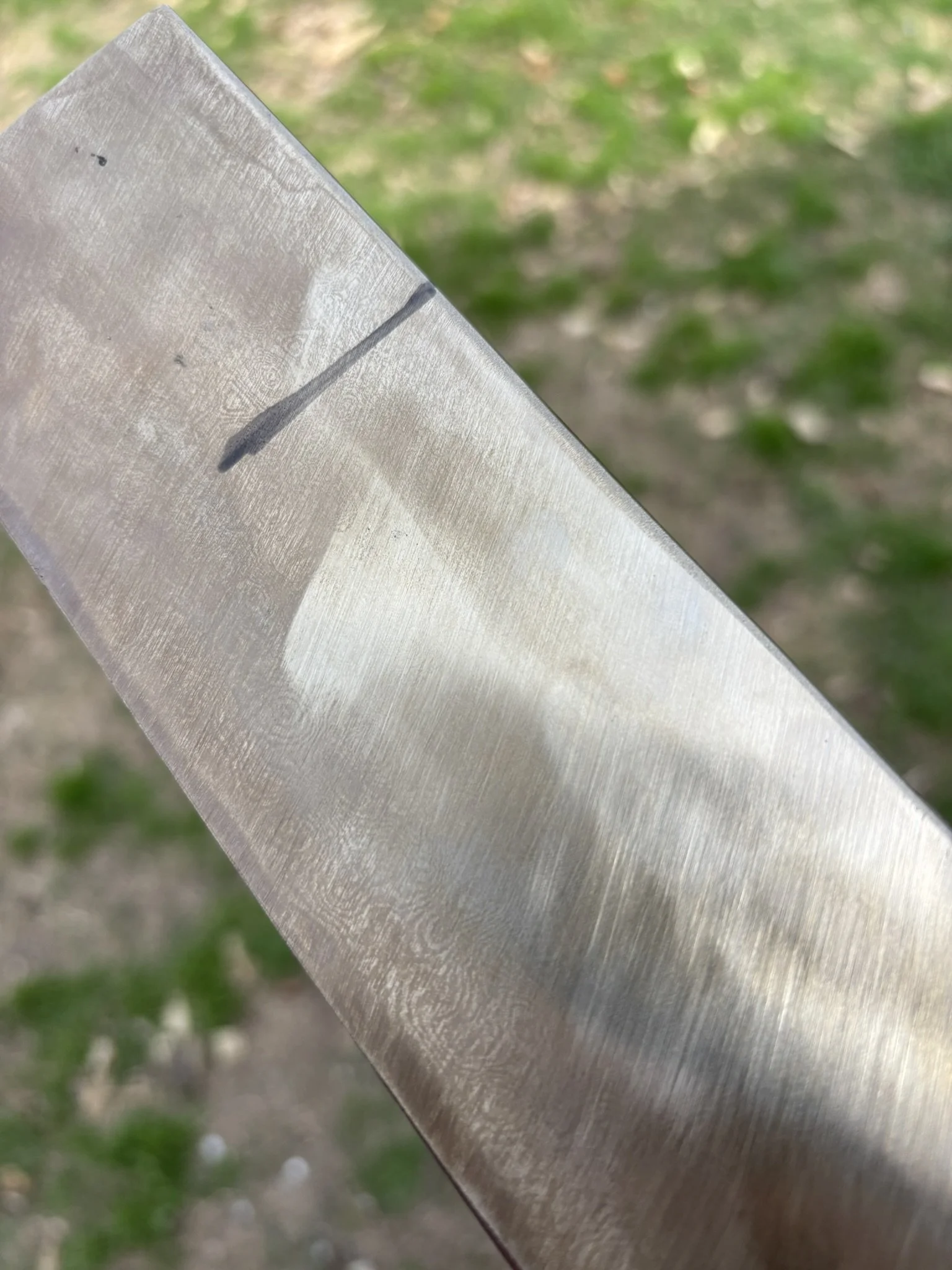
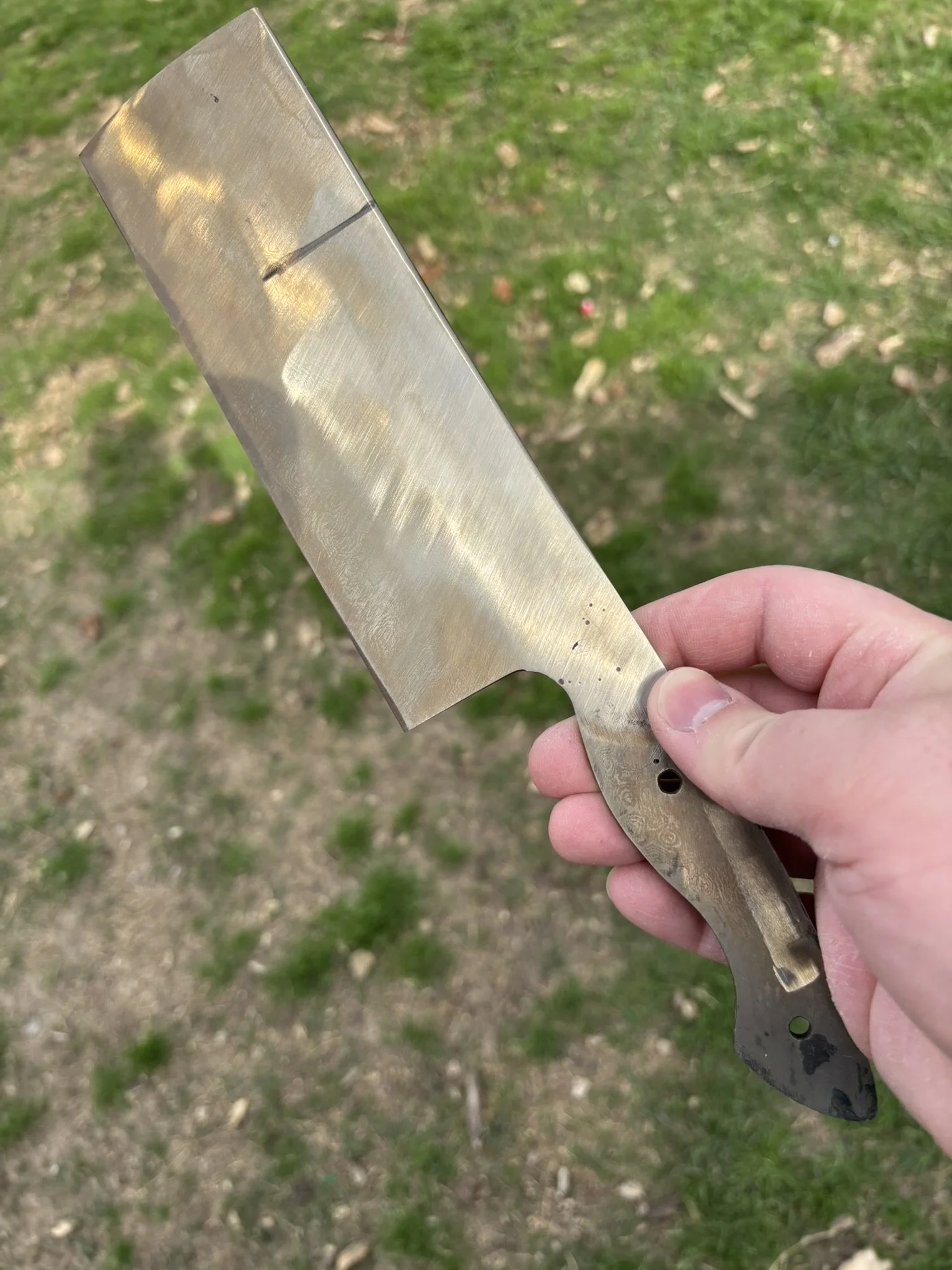
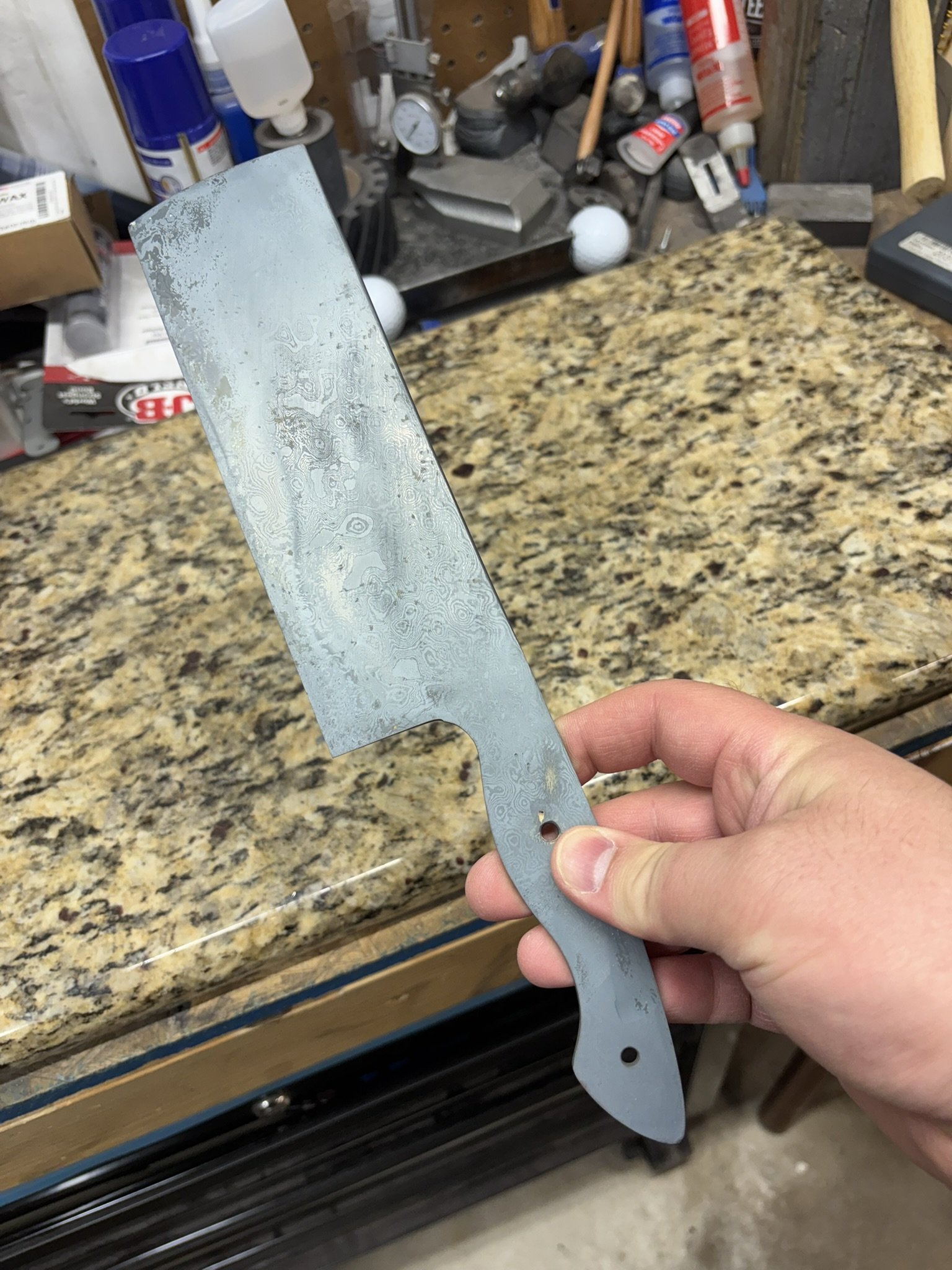
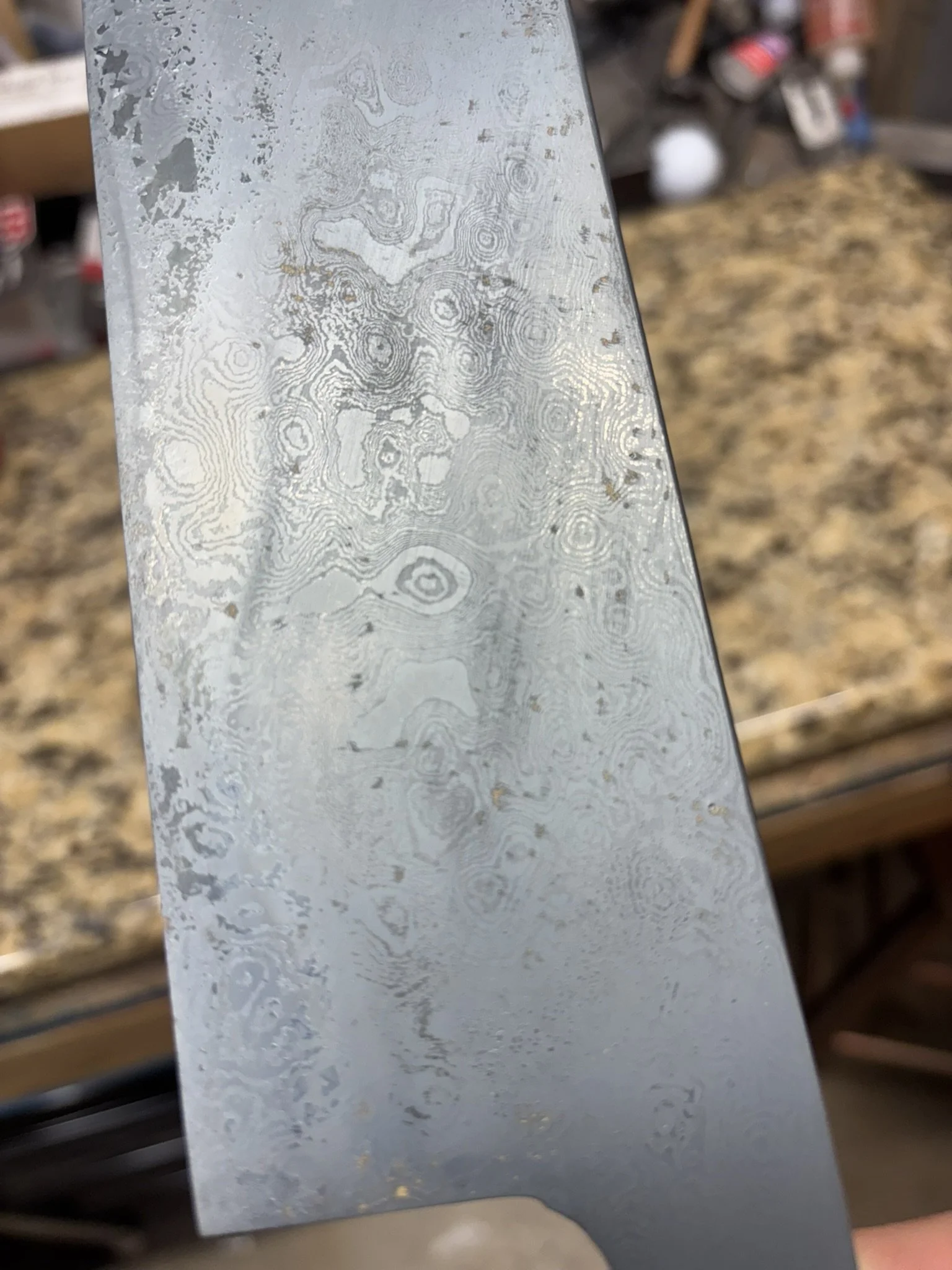
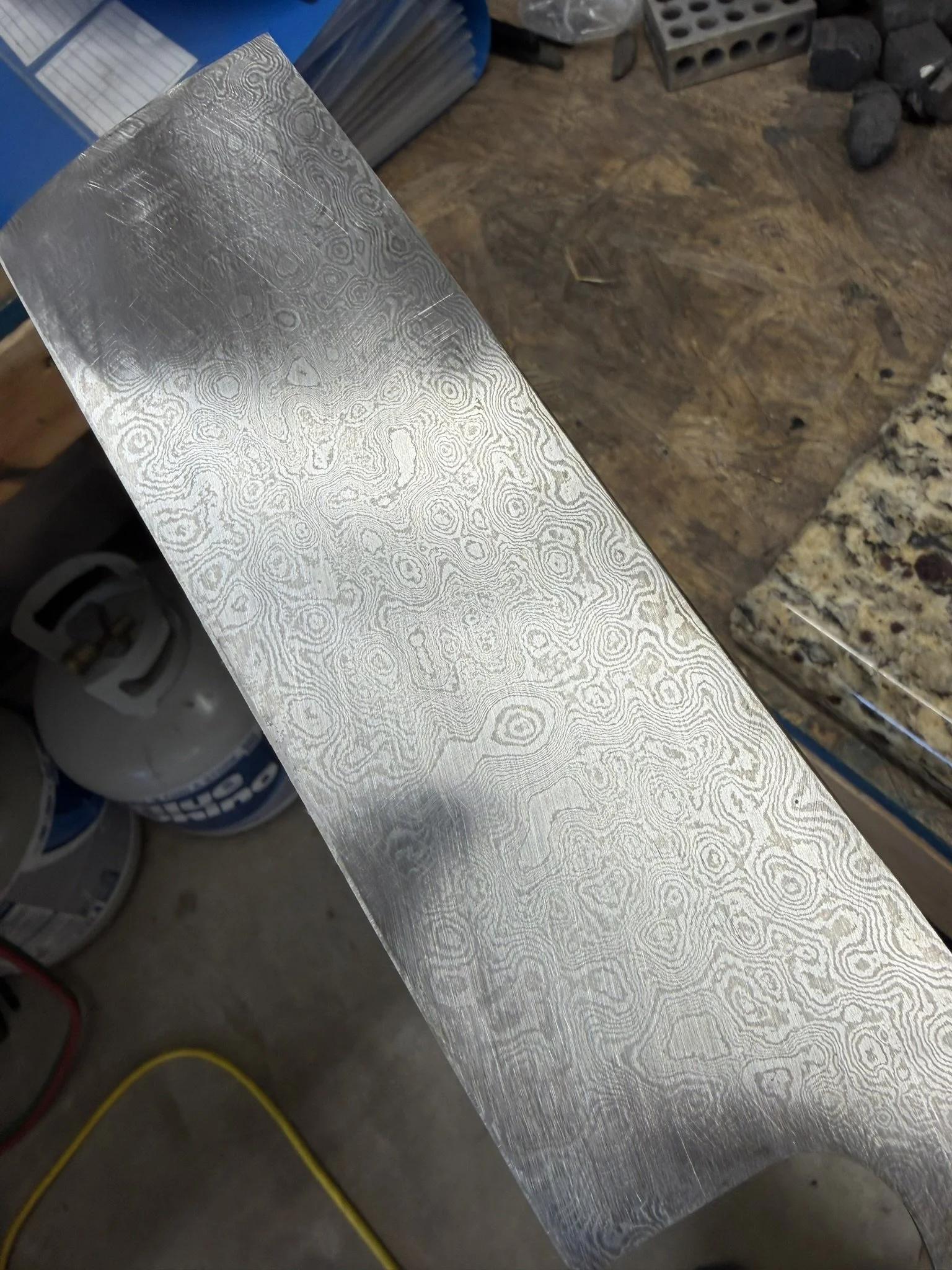
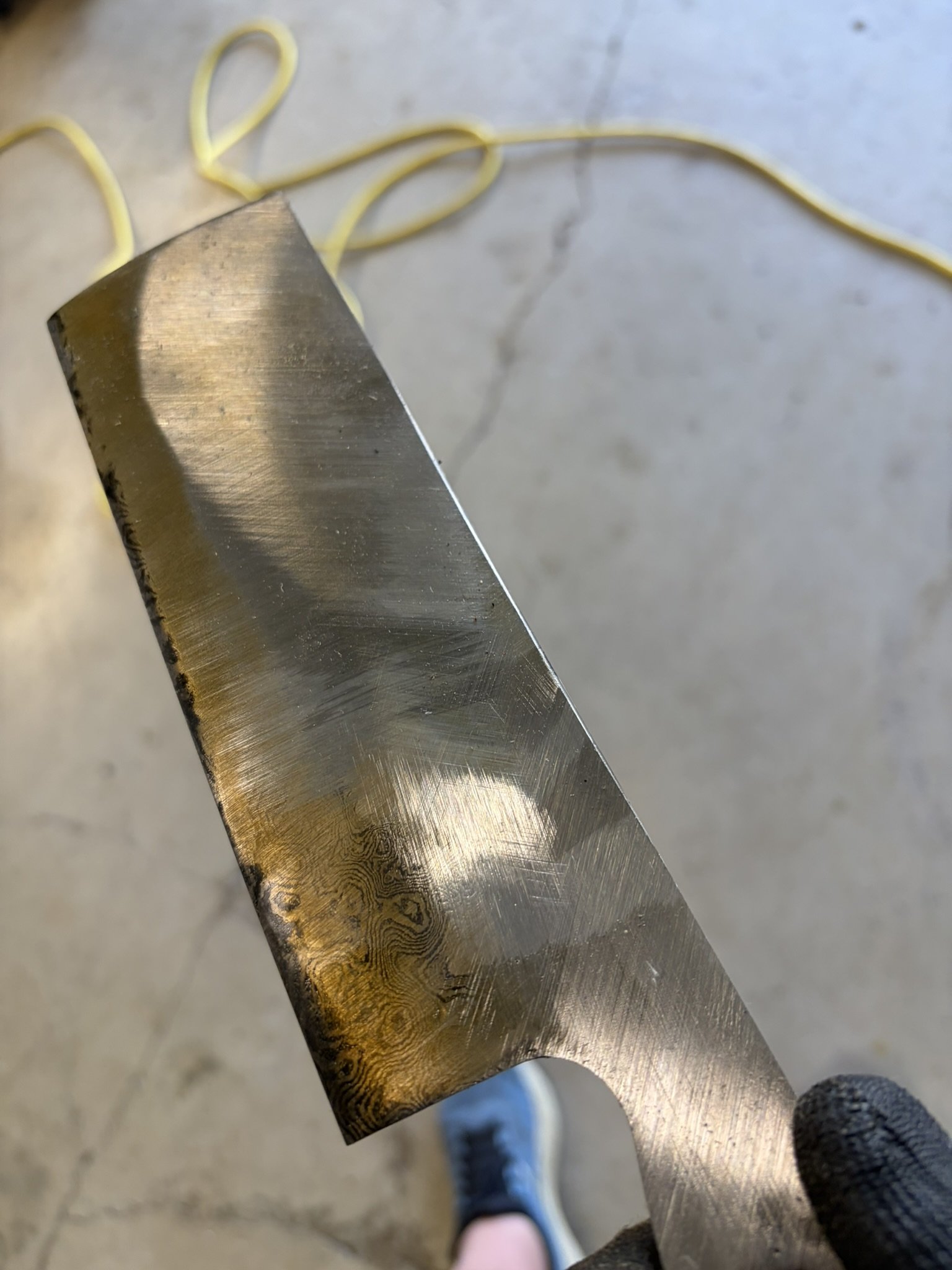
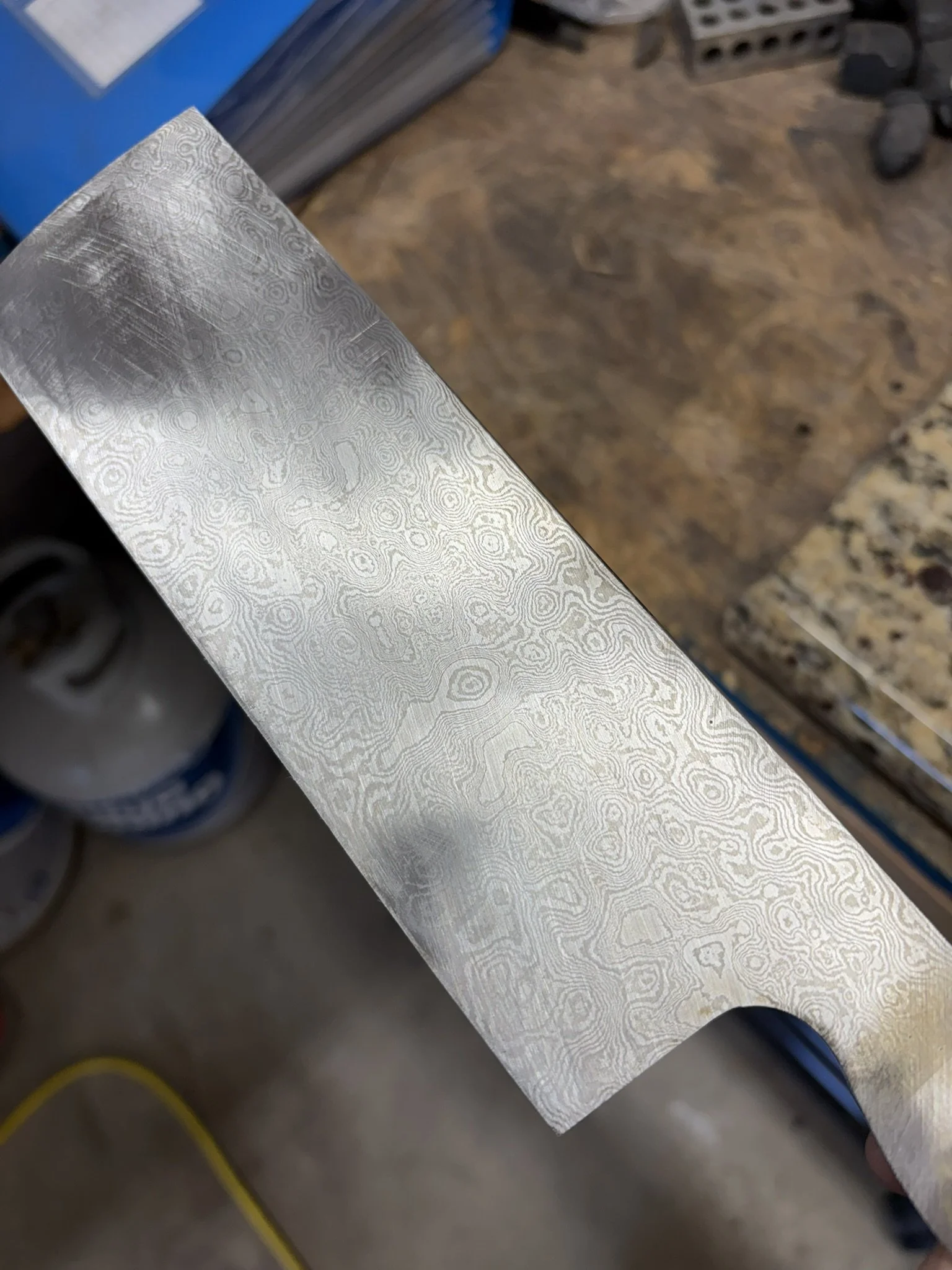
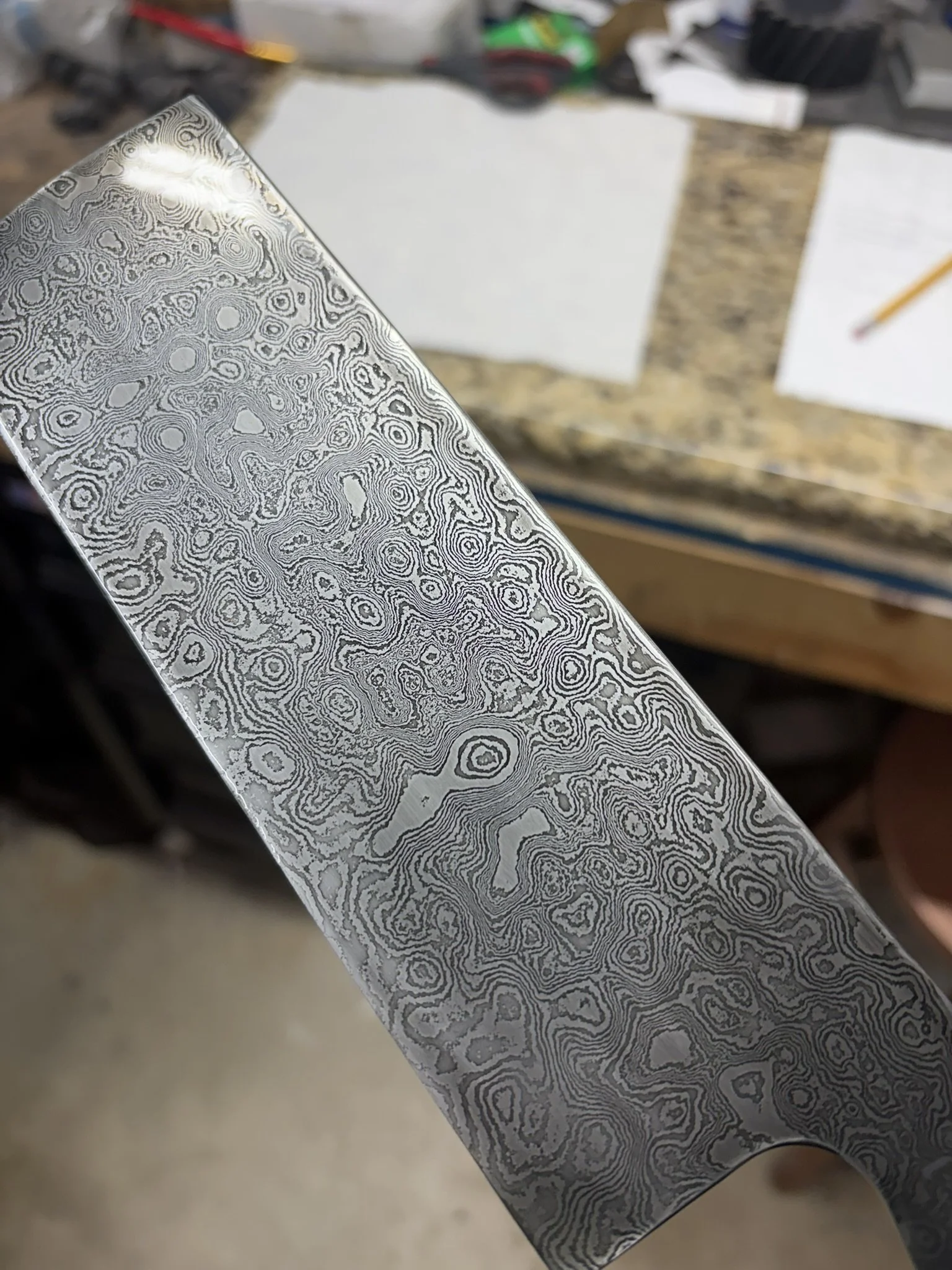
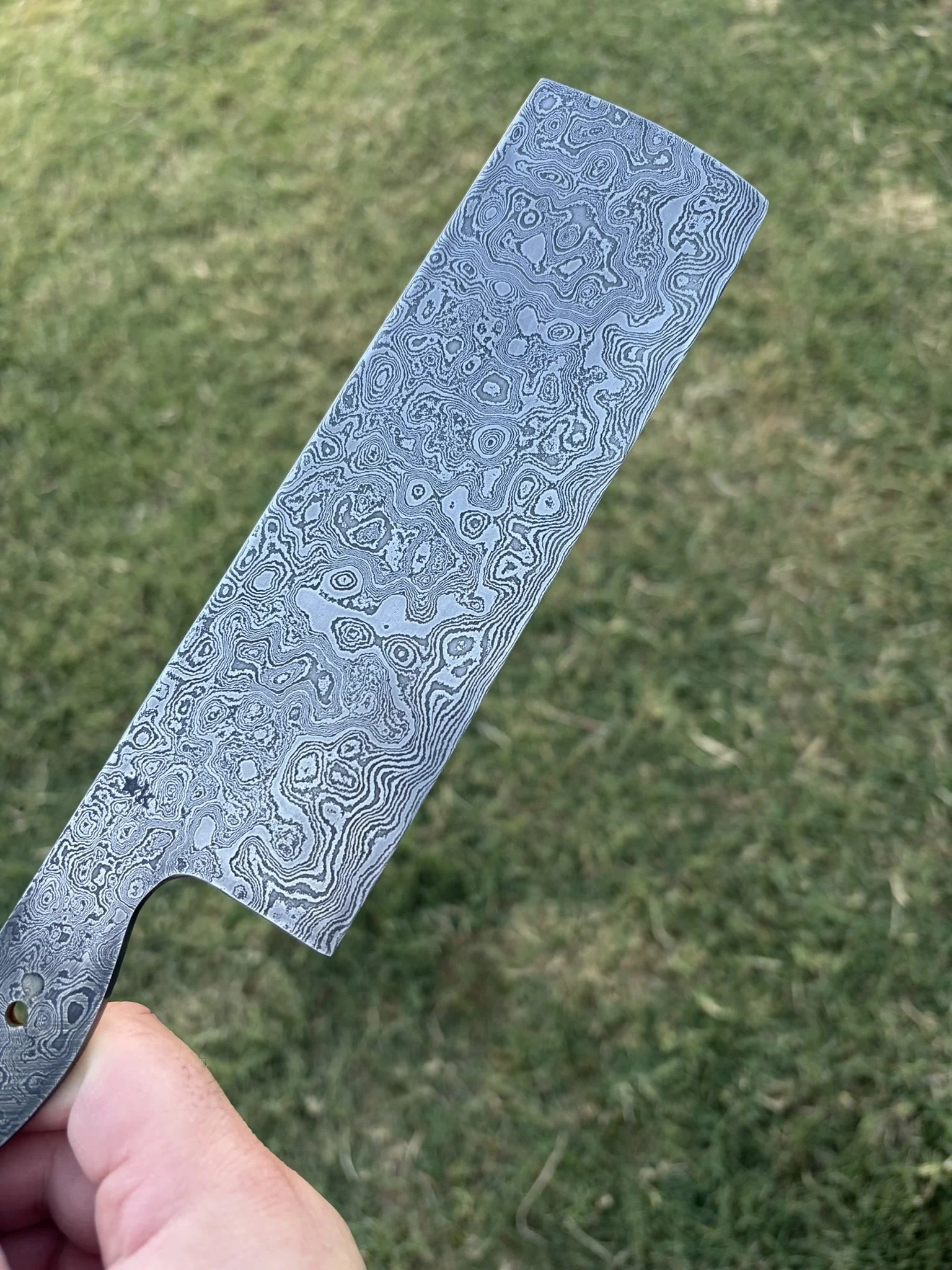
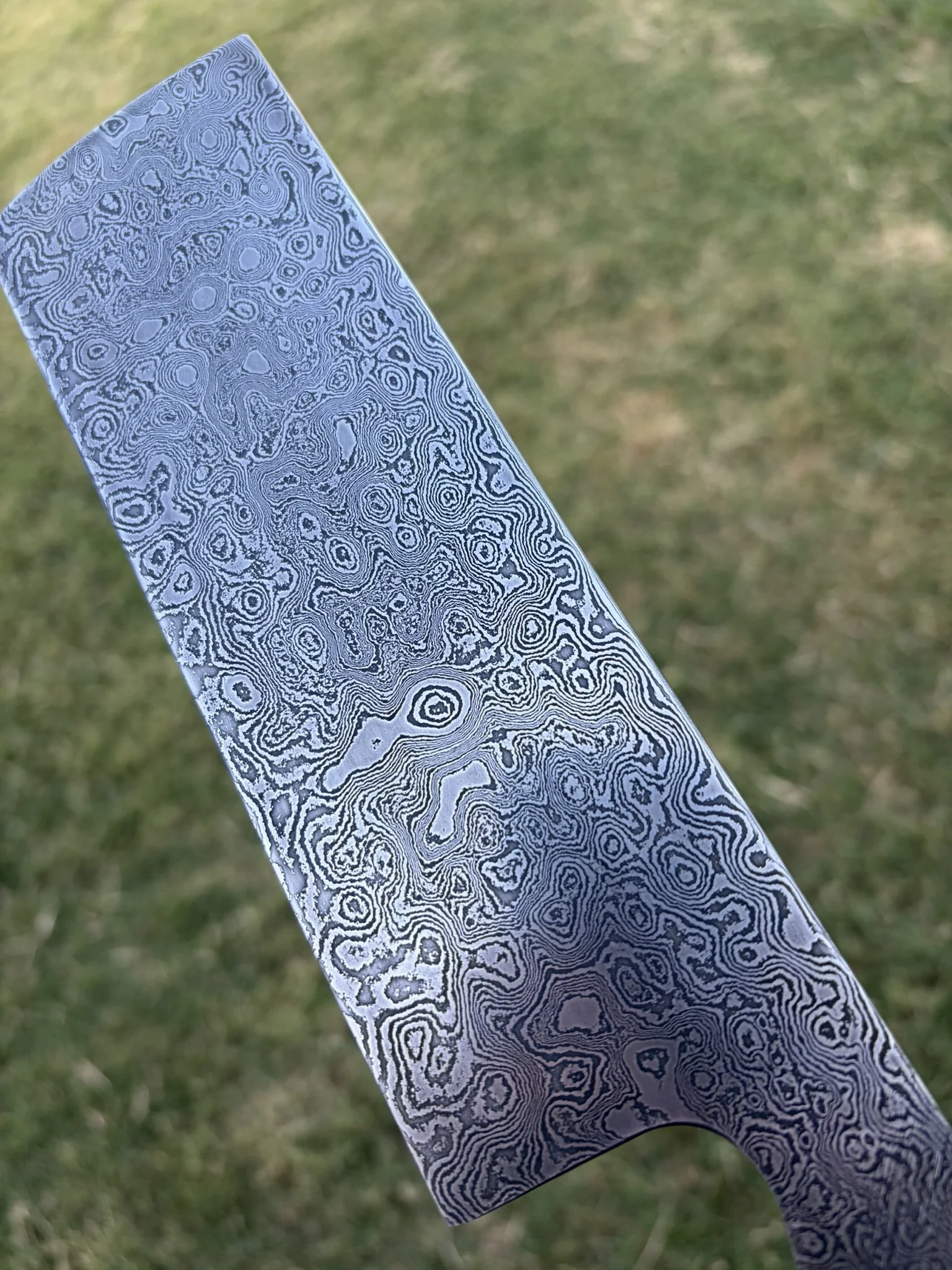
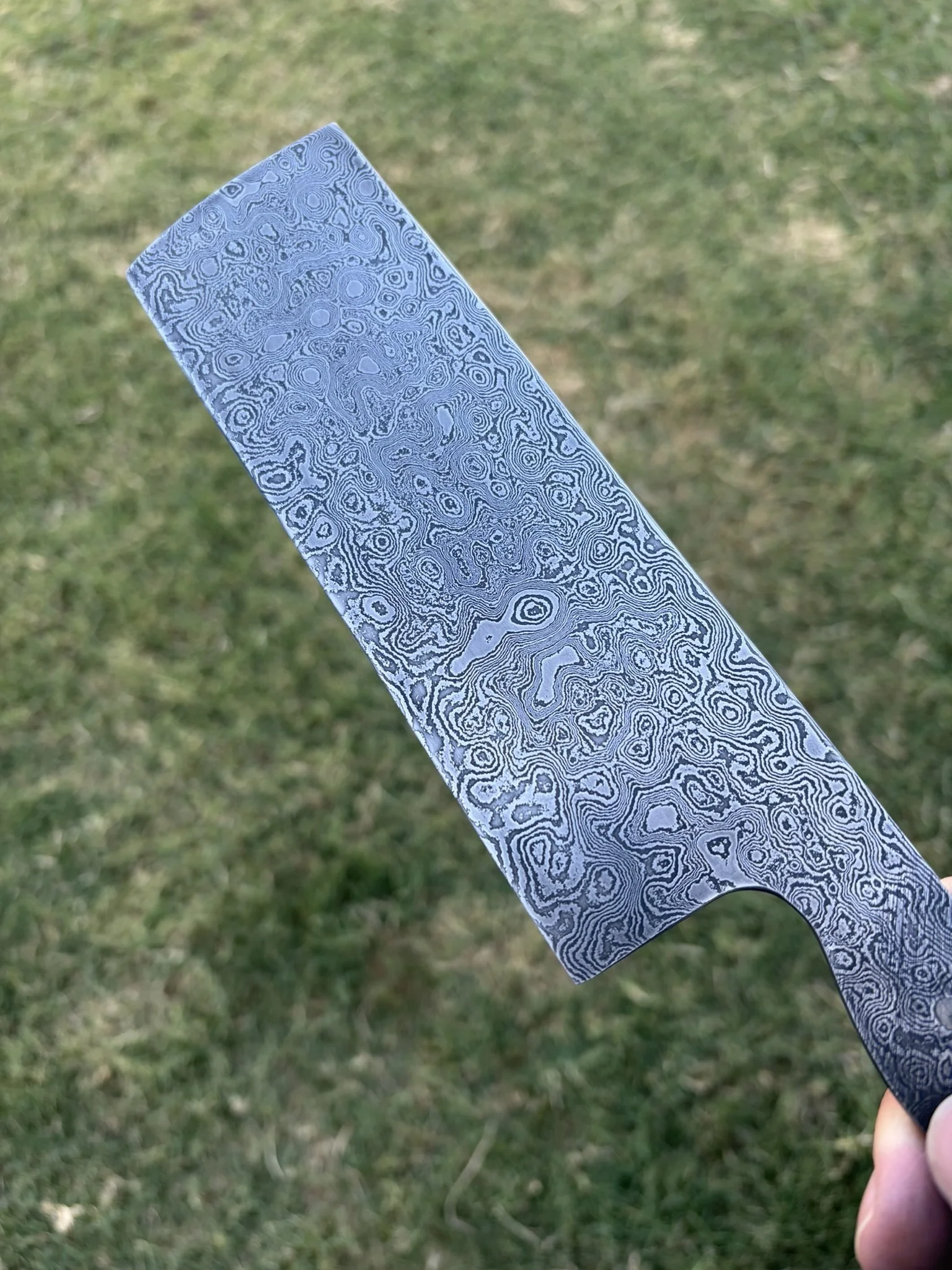
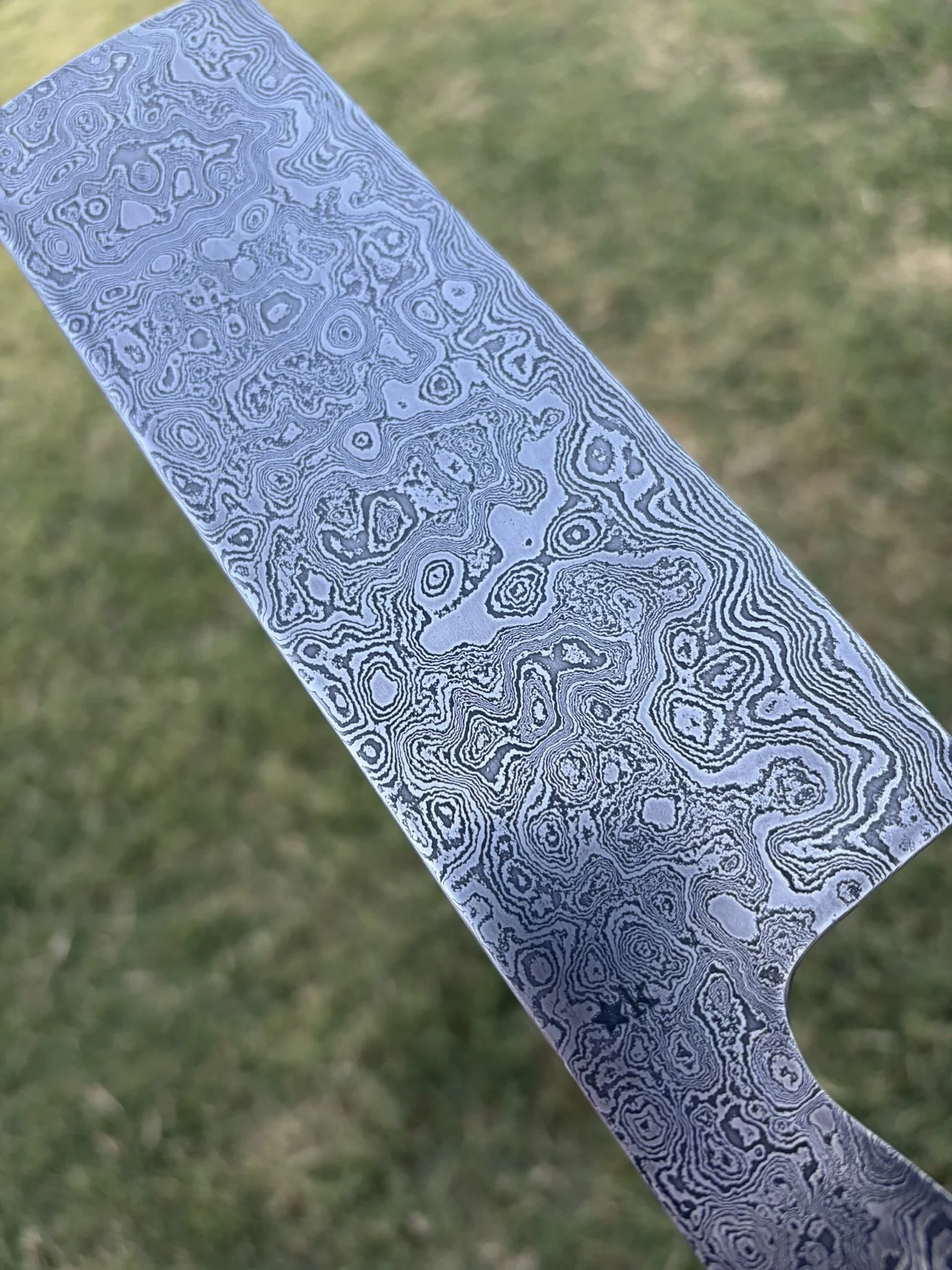
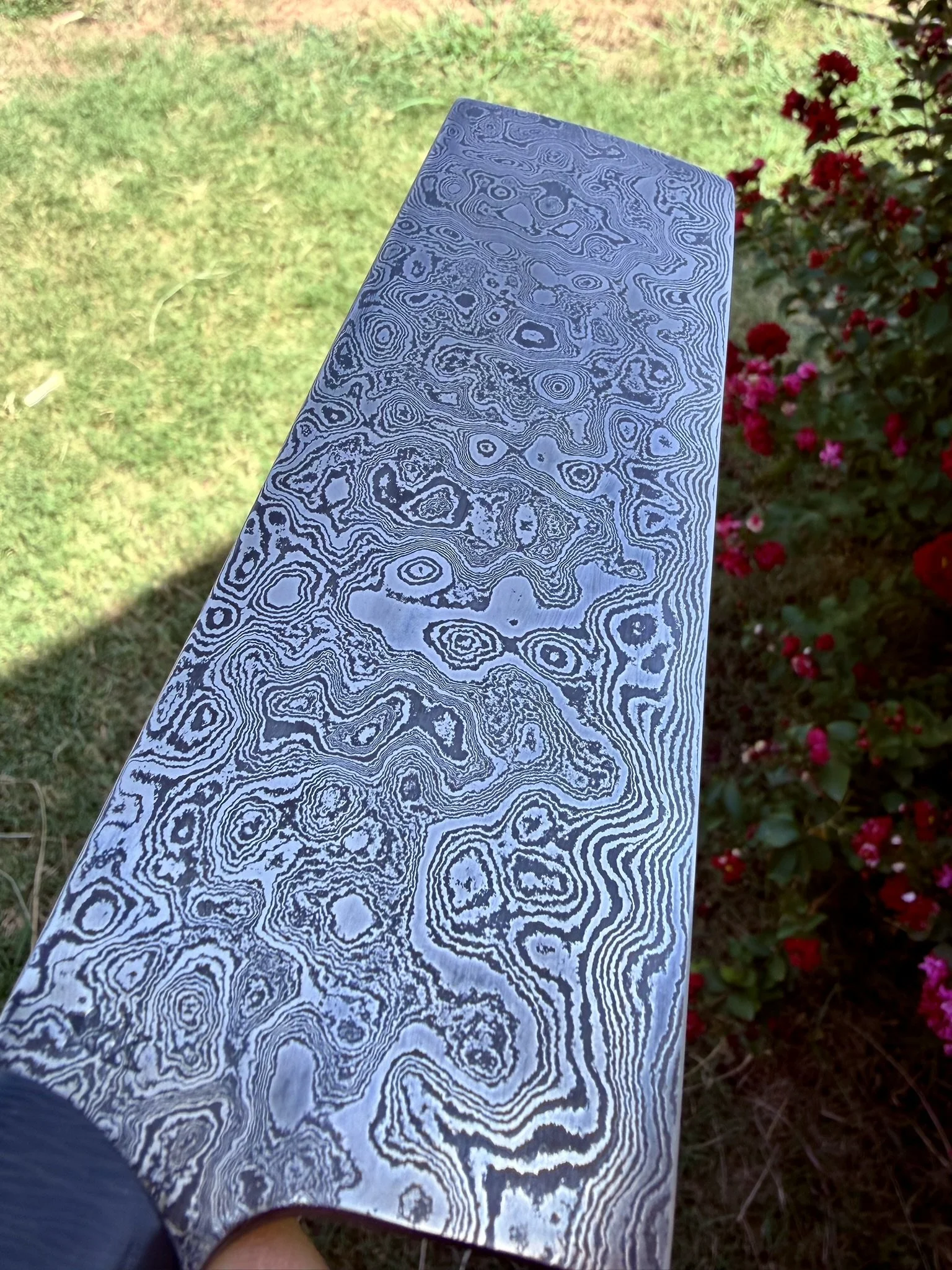
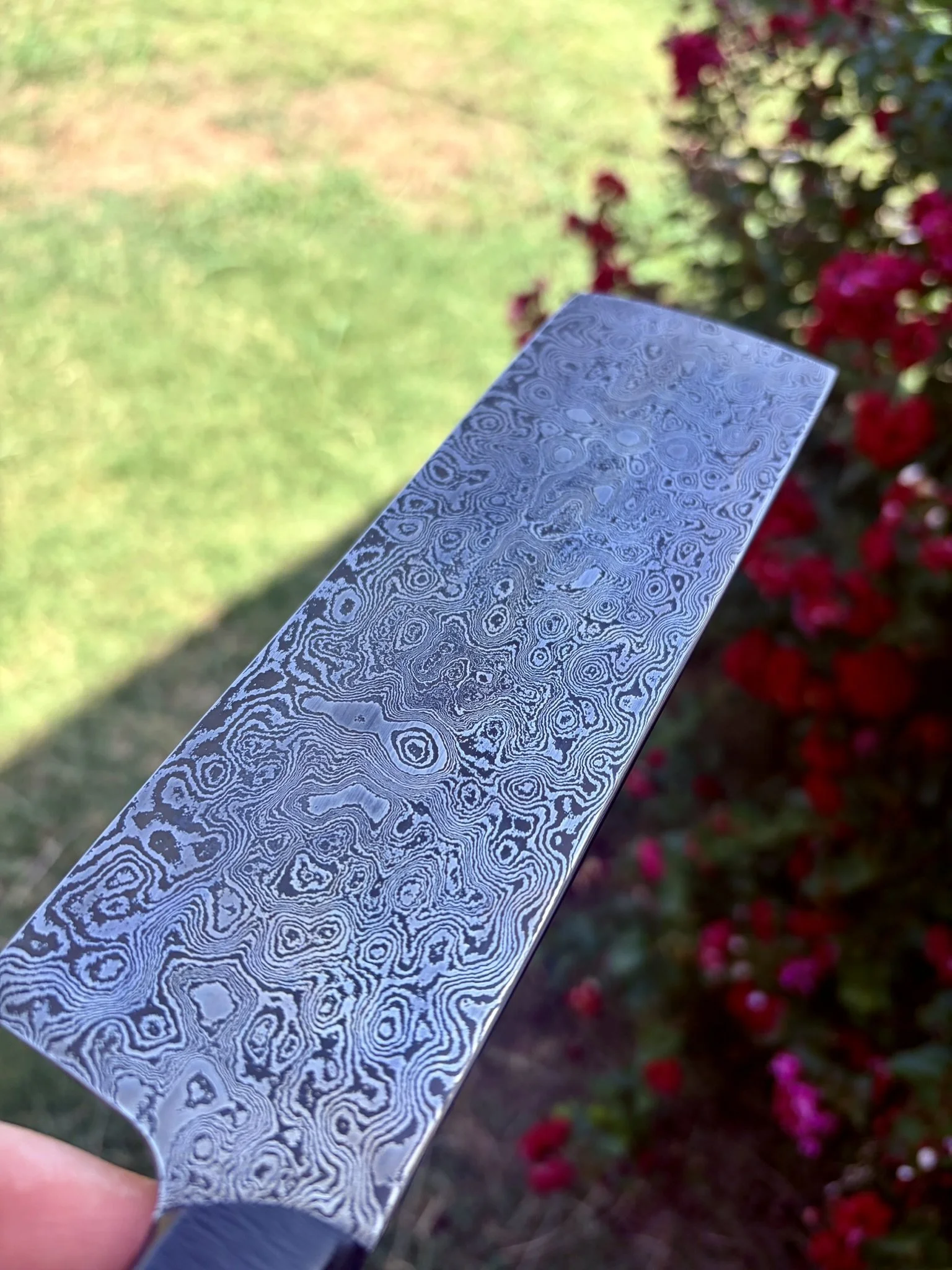
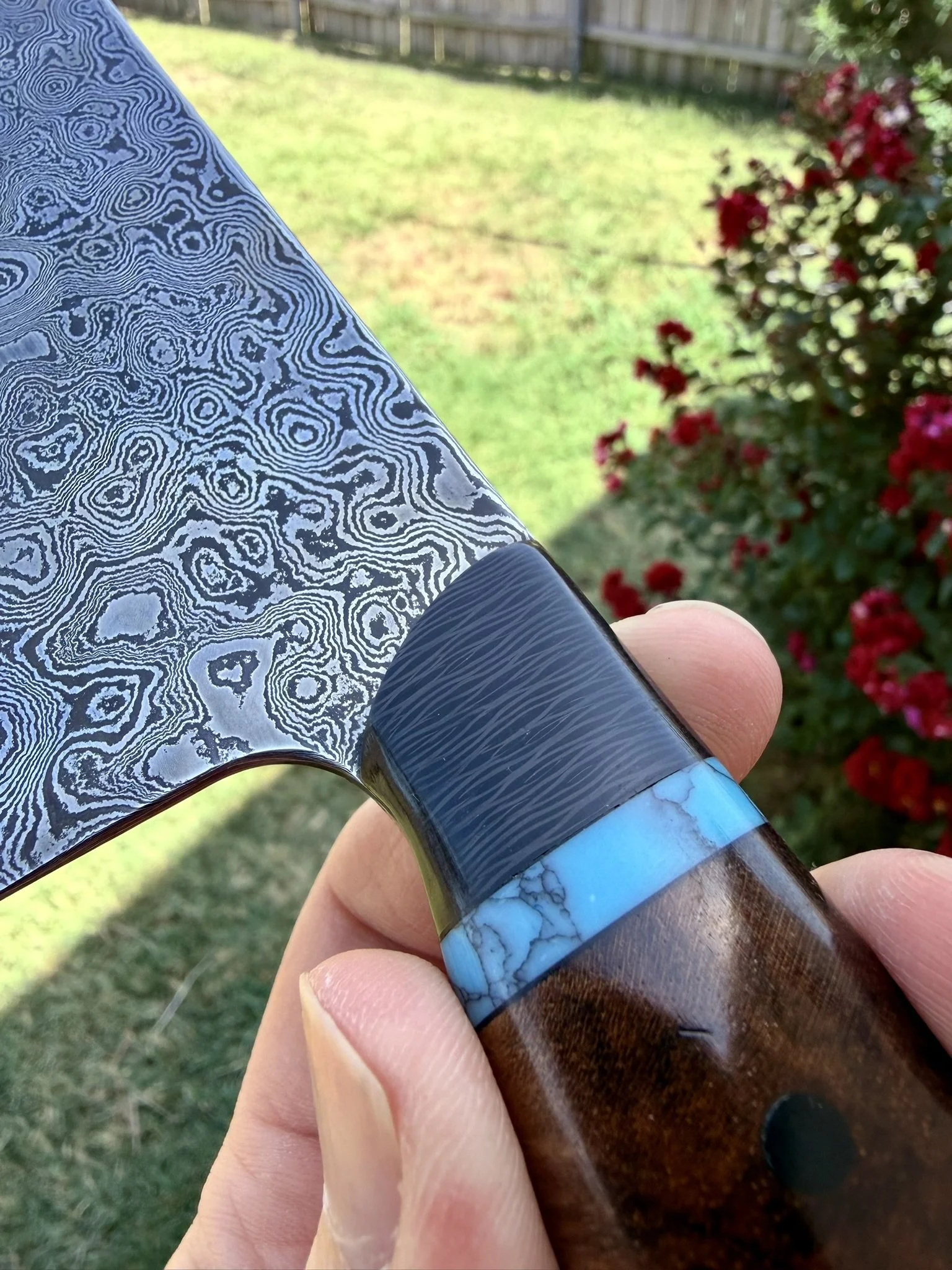
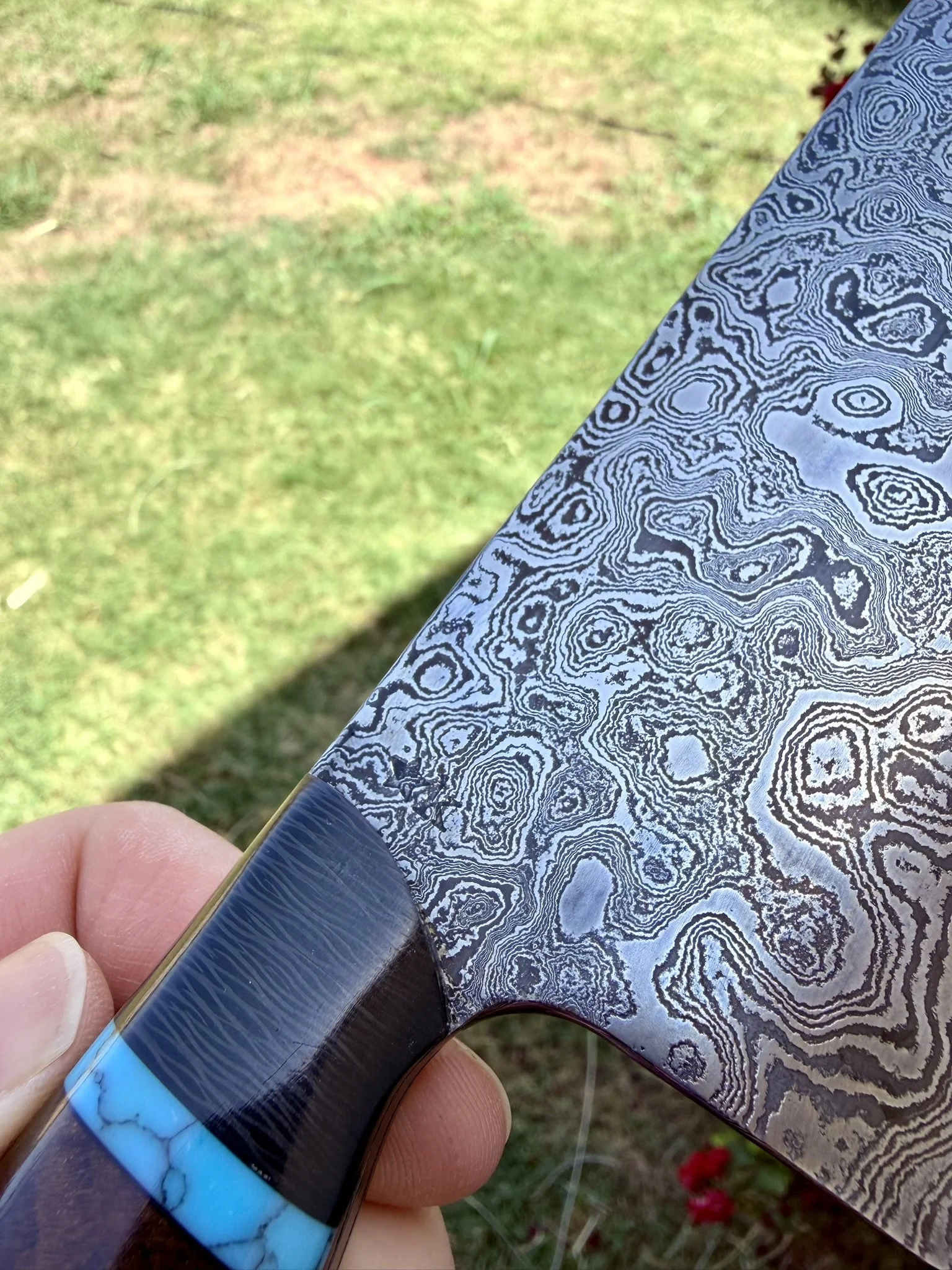
The project also gave me an opportunity to attempt raindrop Damascus for the first time. I began with a larger billet of 1084 and 15N20, knowing the broad blade would require considerably more material than many of my other builds. Raindrop Damascus can be created by pressing impressions into the billet or by drilling into the steel before forging it back flat. I have always felt that evenly pressed patterns can look a little too predictable and man-made, so I chose the second approach. Using several different drill-bit sizes and varying the depth and placement of each hole, I tried to introduce as much natural variation as possible—something closer to the randomness of individual raindrops striking the surface of water.
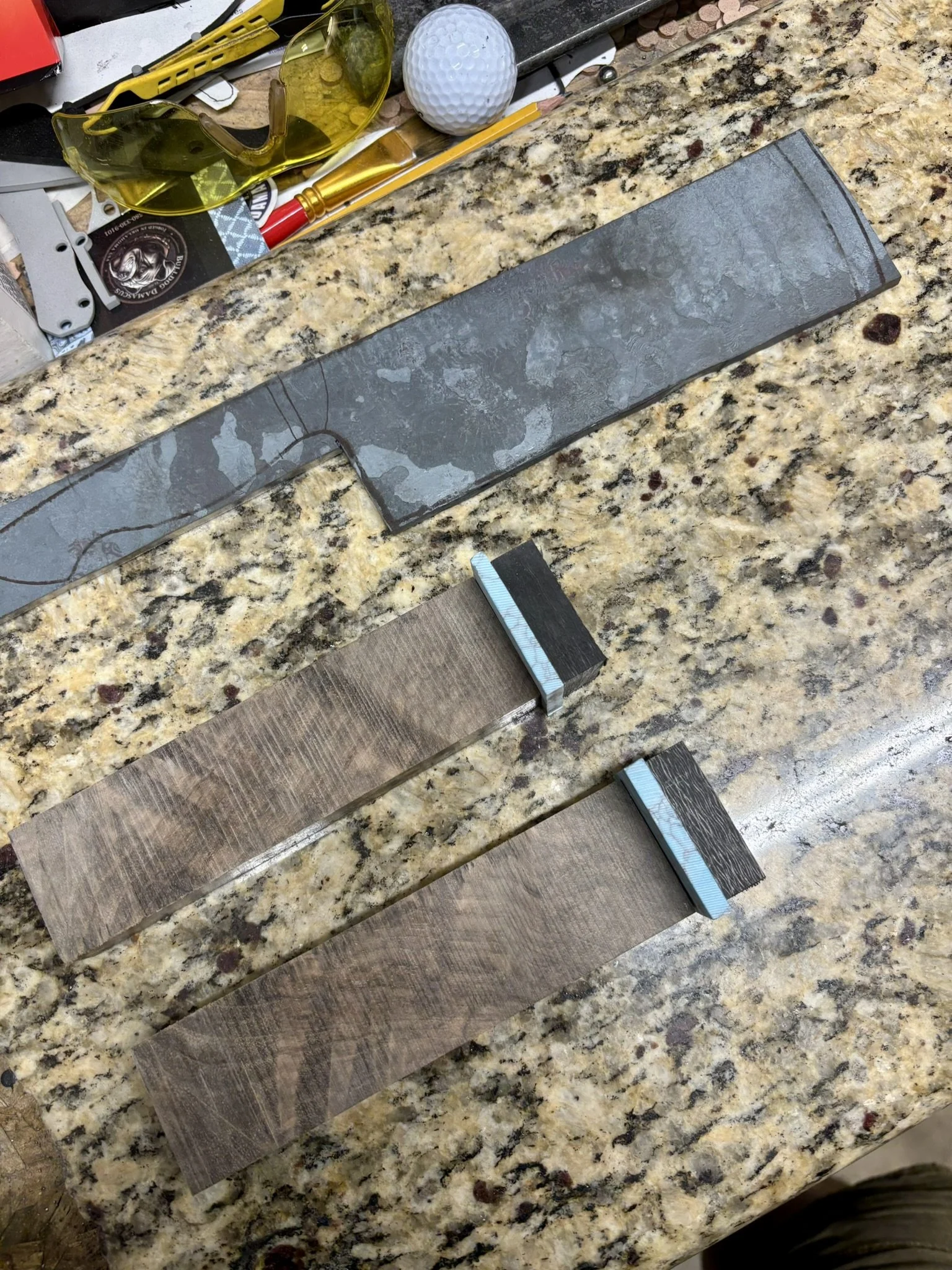
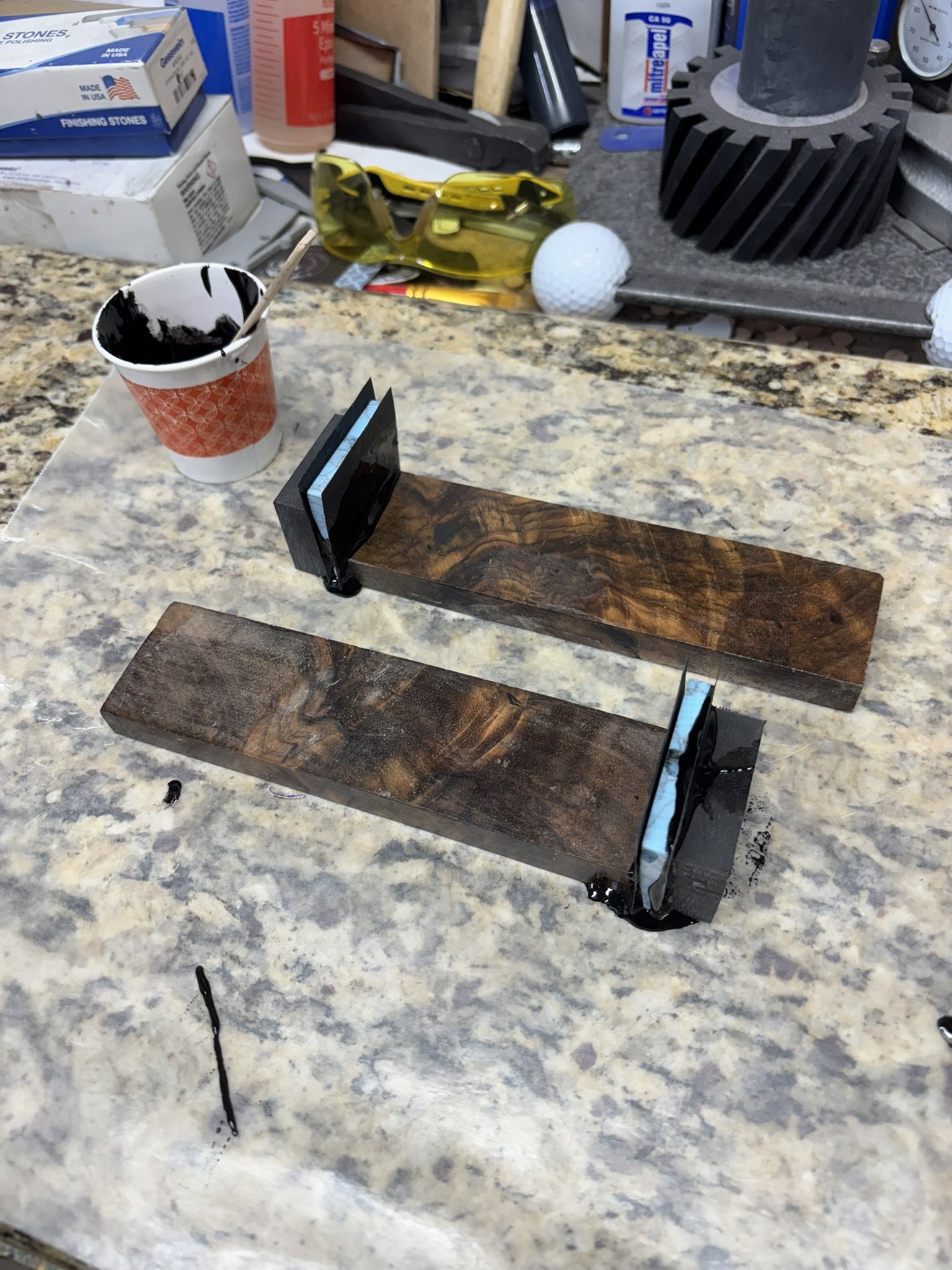
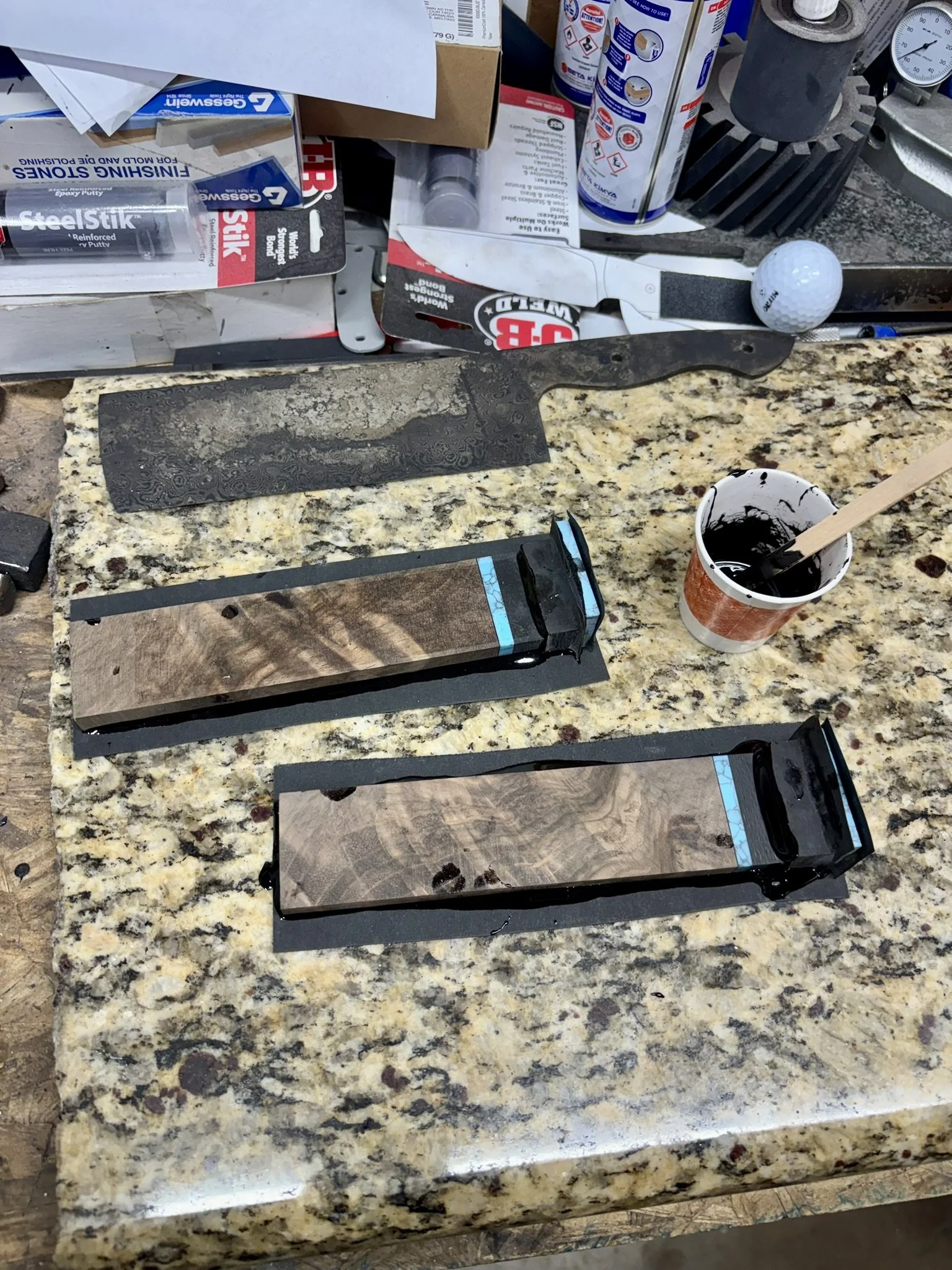
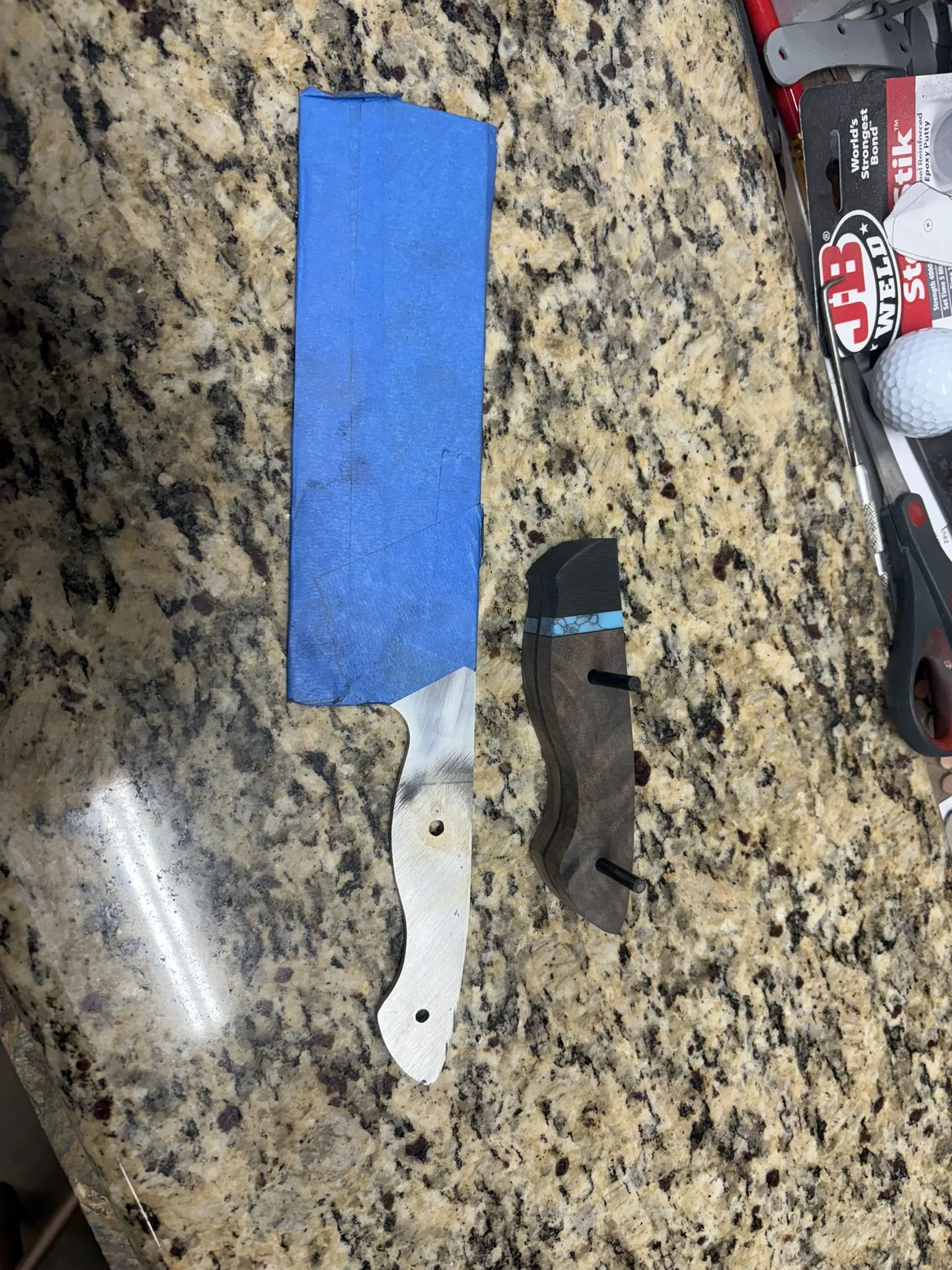
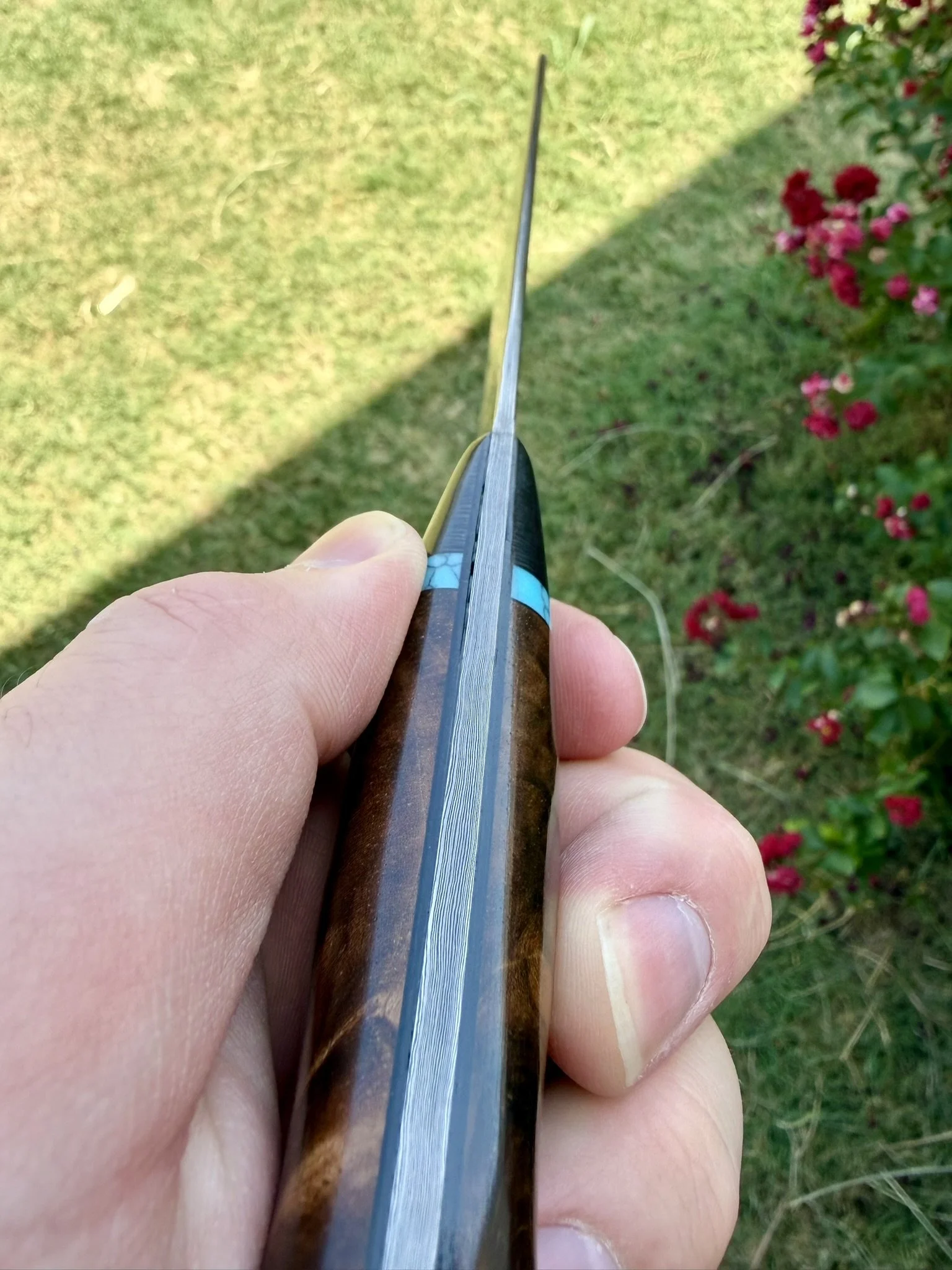
The handle became another opportunity to make the knife personal. Tiffany lives in Arizona, and through our conversations we decided that a turquoise-inspired TruStone accent would be a fitting nod to the Southwest. I paired it with black carbon-fiber bolsters and richly figured Turkish walnut, creating a combination that balanced modern materials with the warmth of natural wood. Against the movement of the Damascus, the turquoise accent became that “pop” of color that I love to include for contrast and beauty.
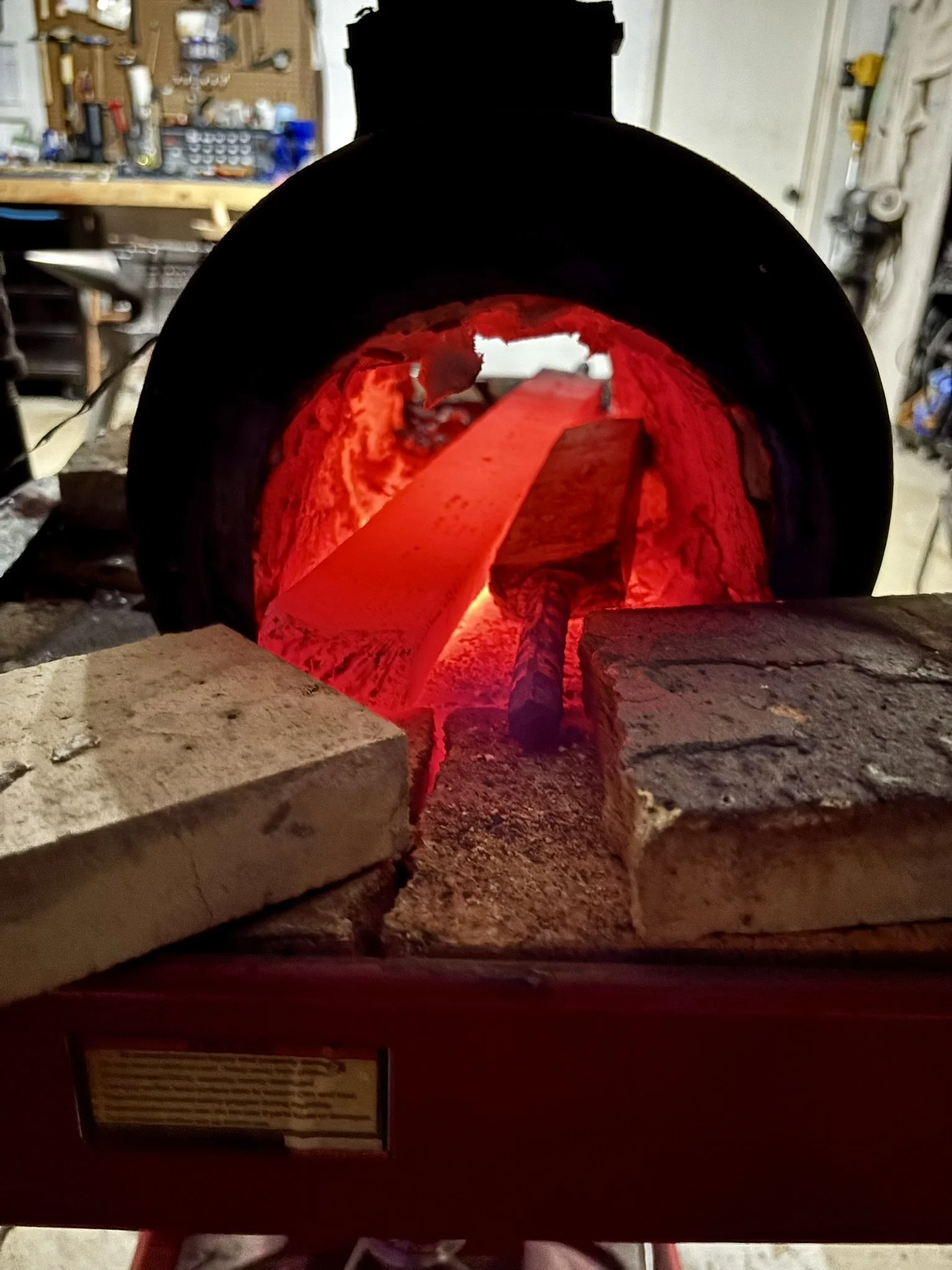
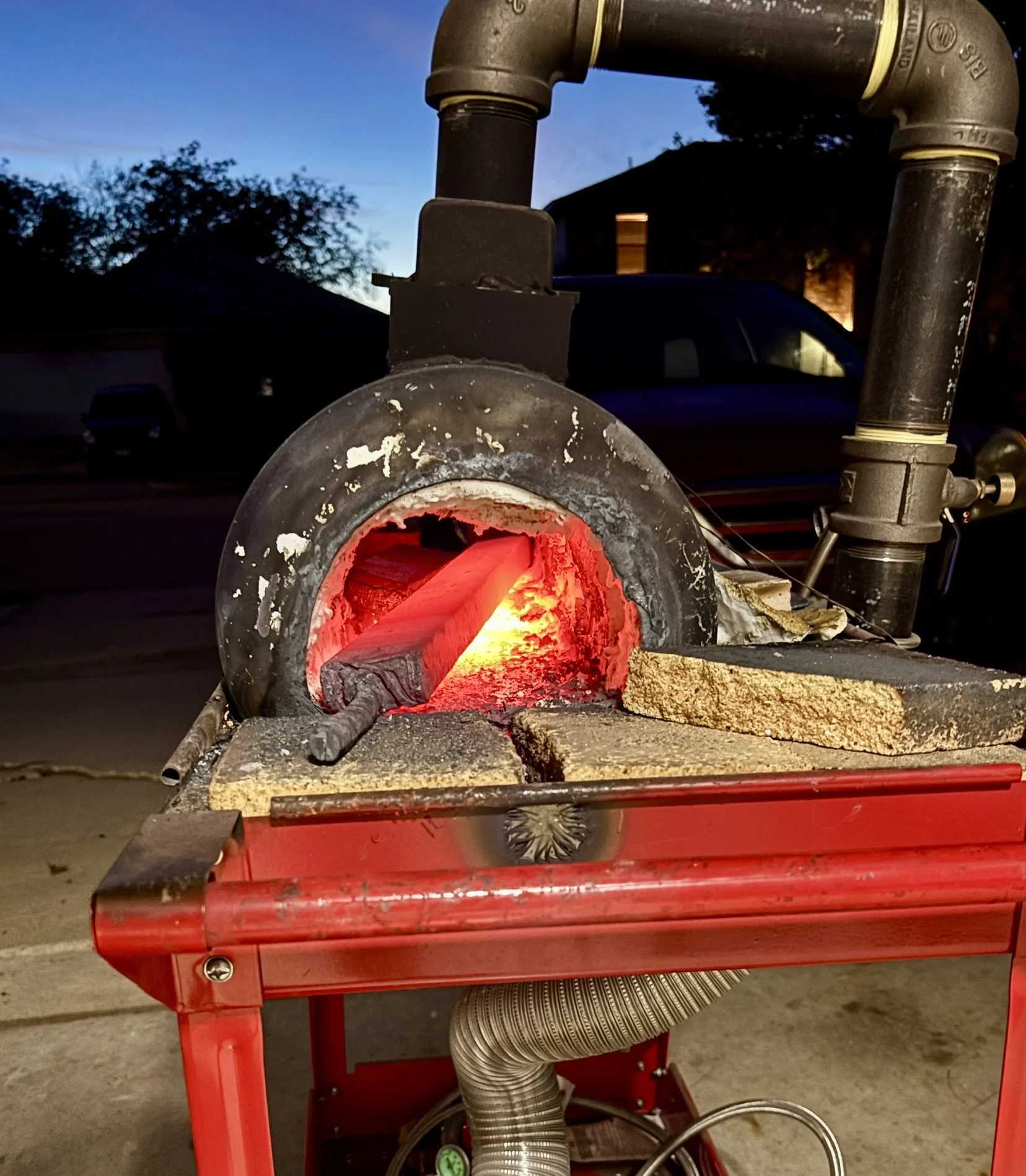
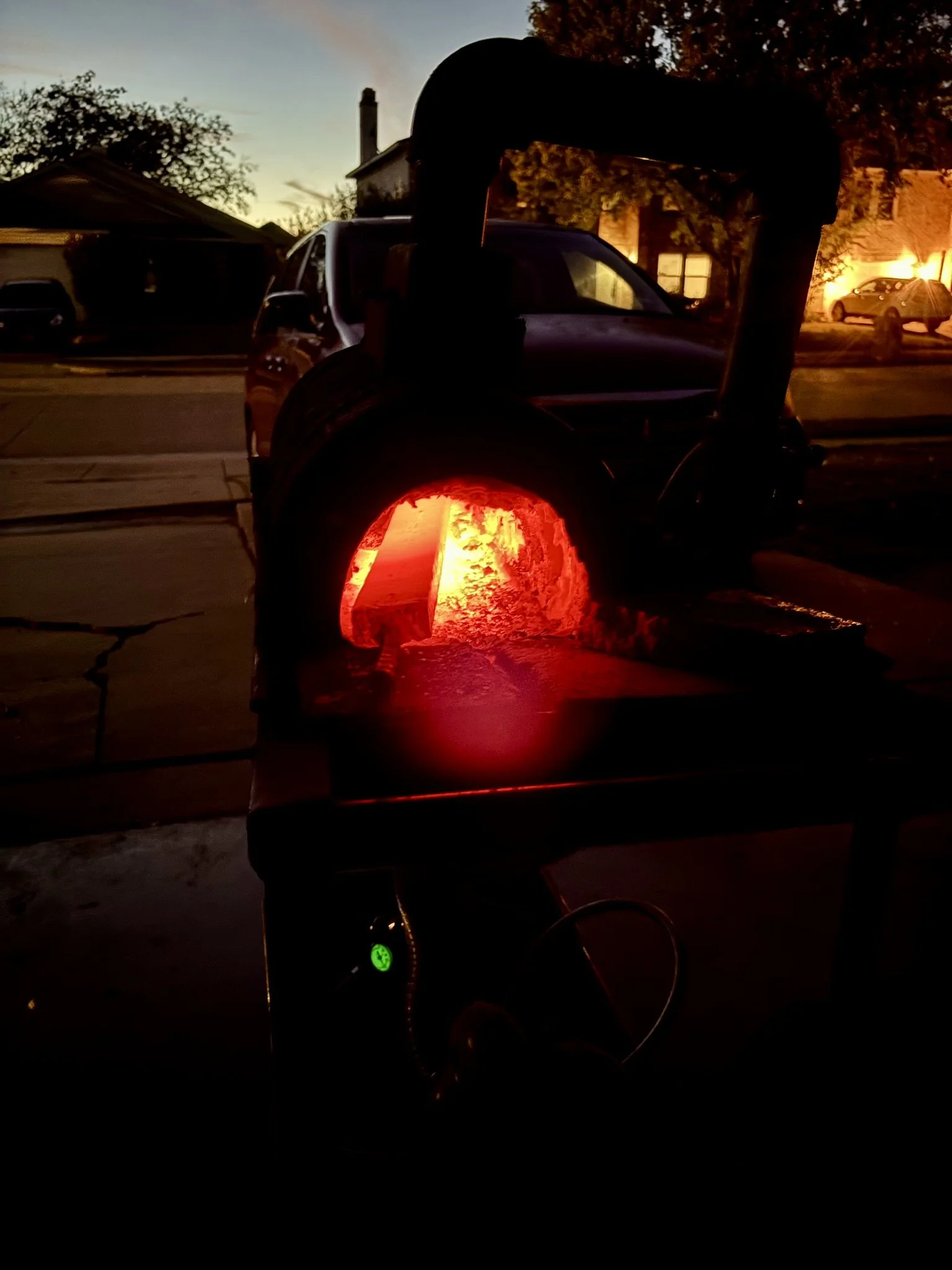
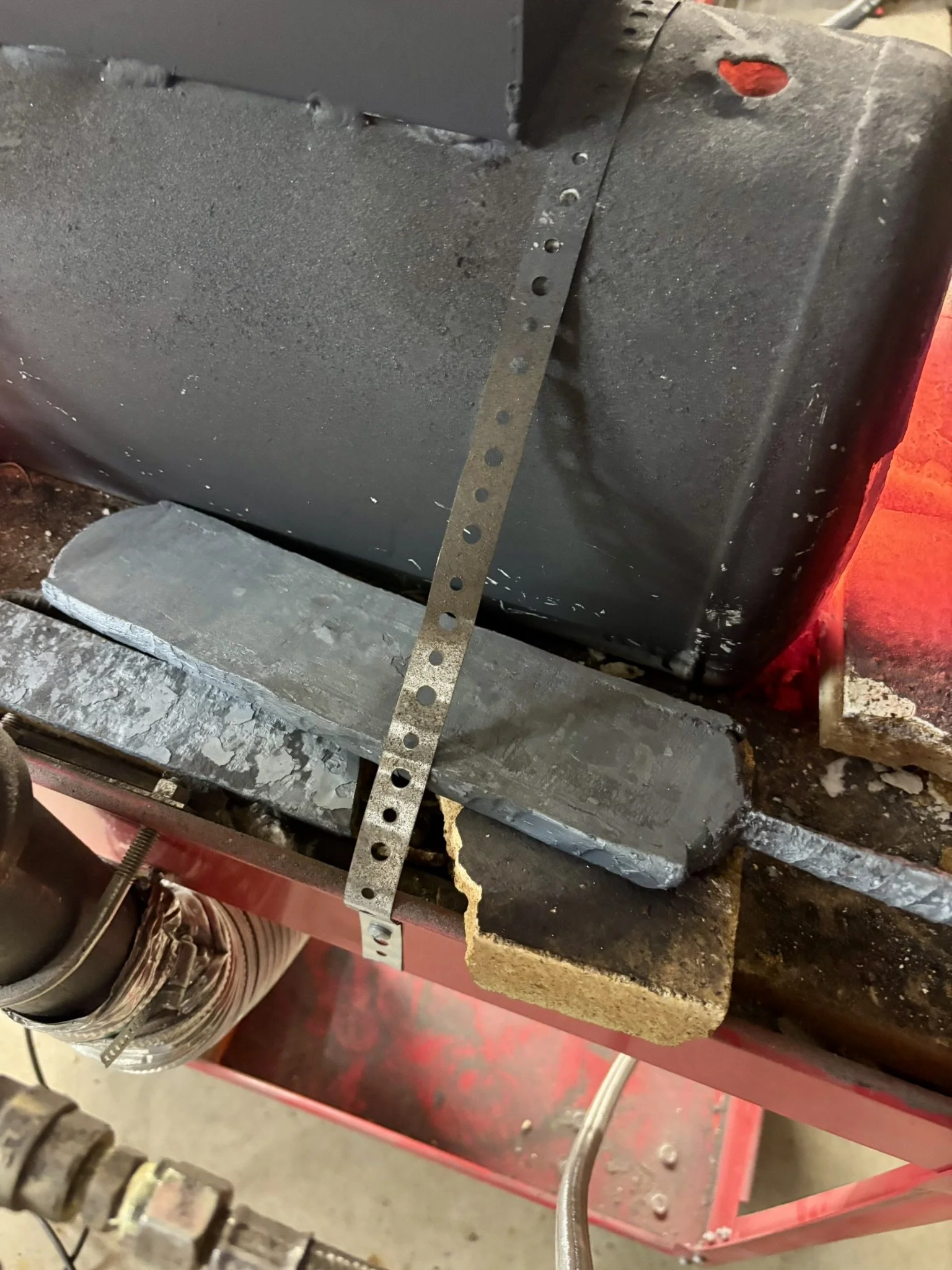
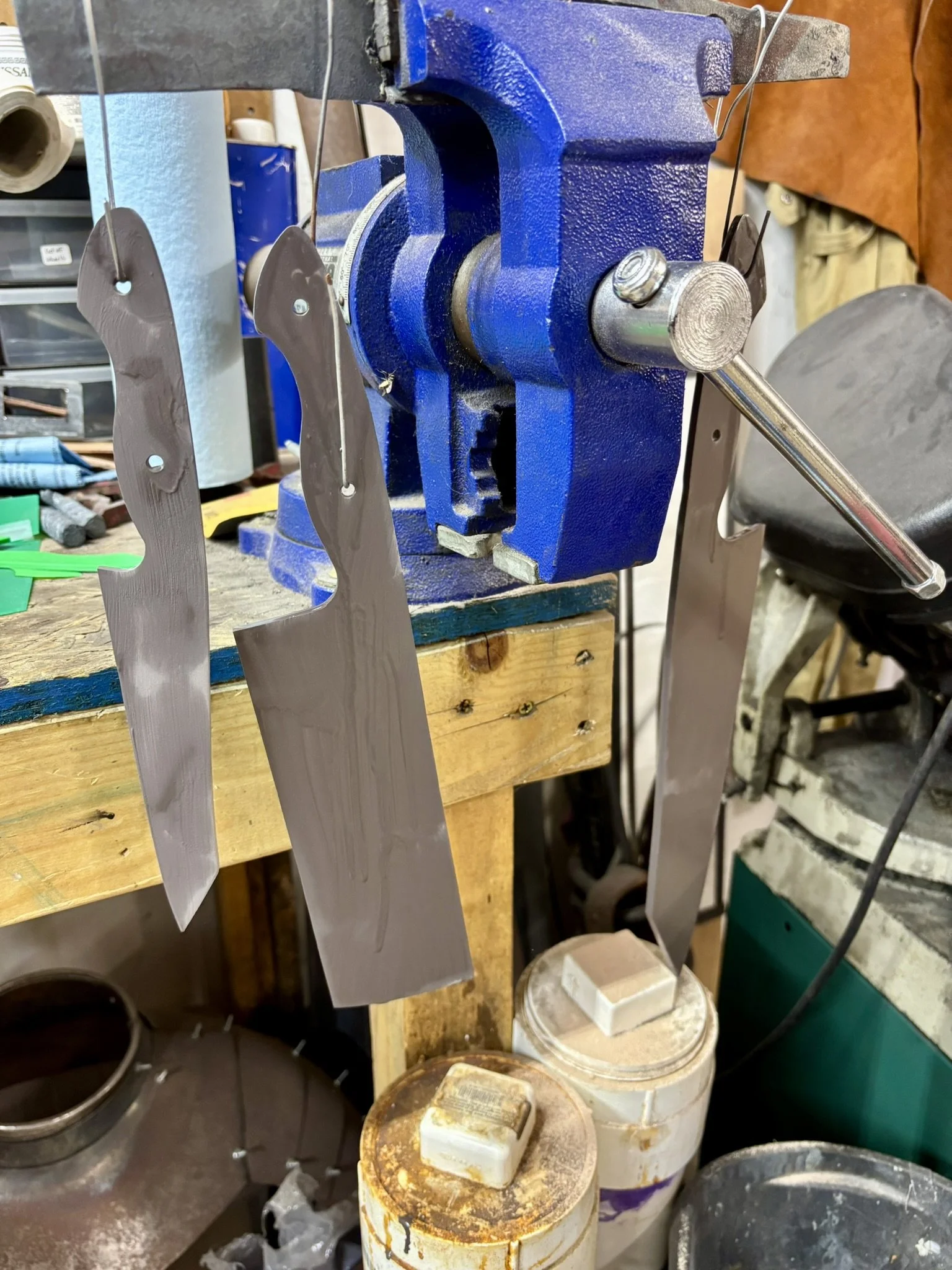
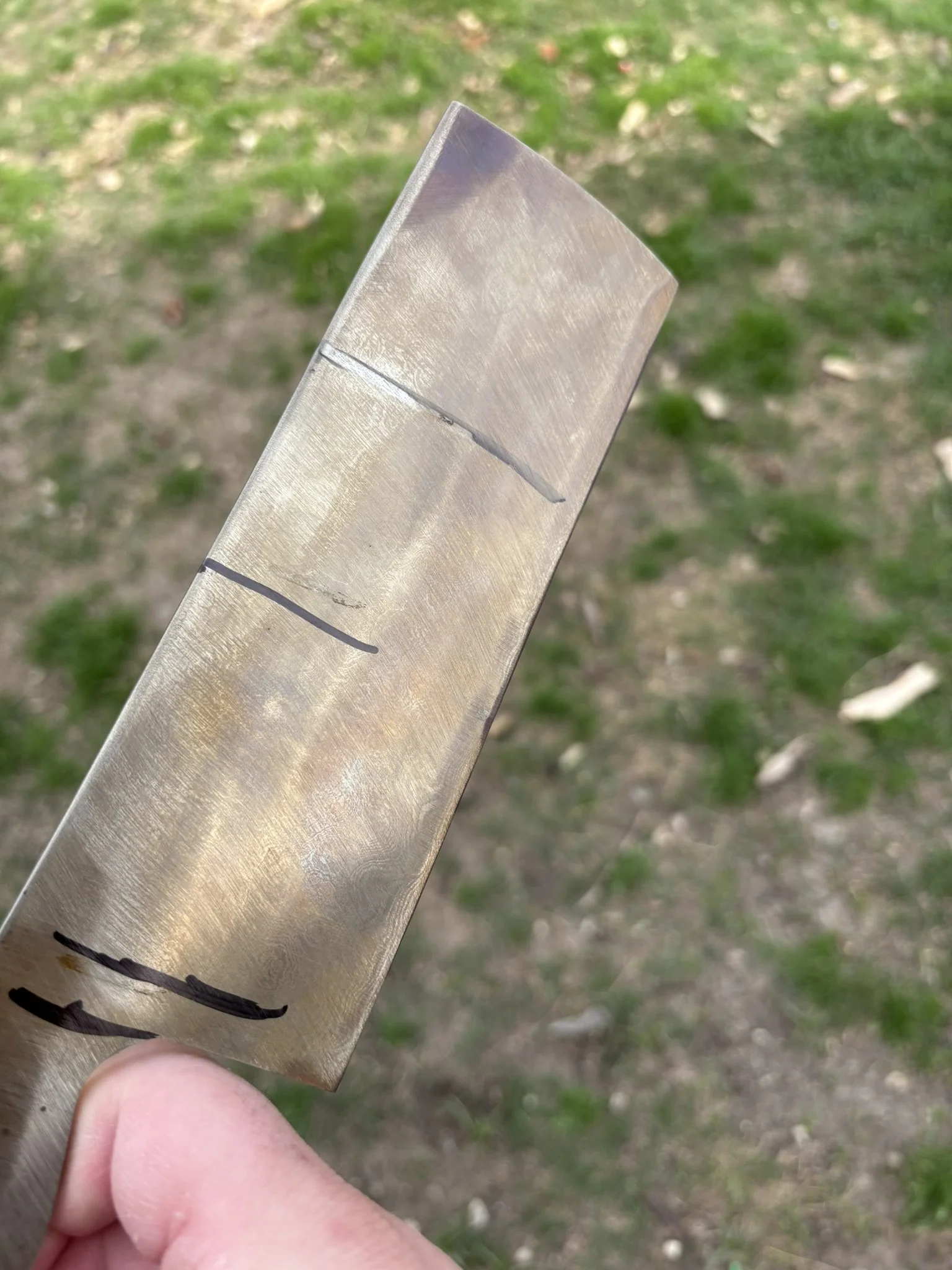
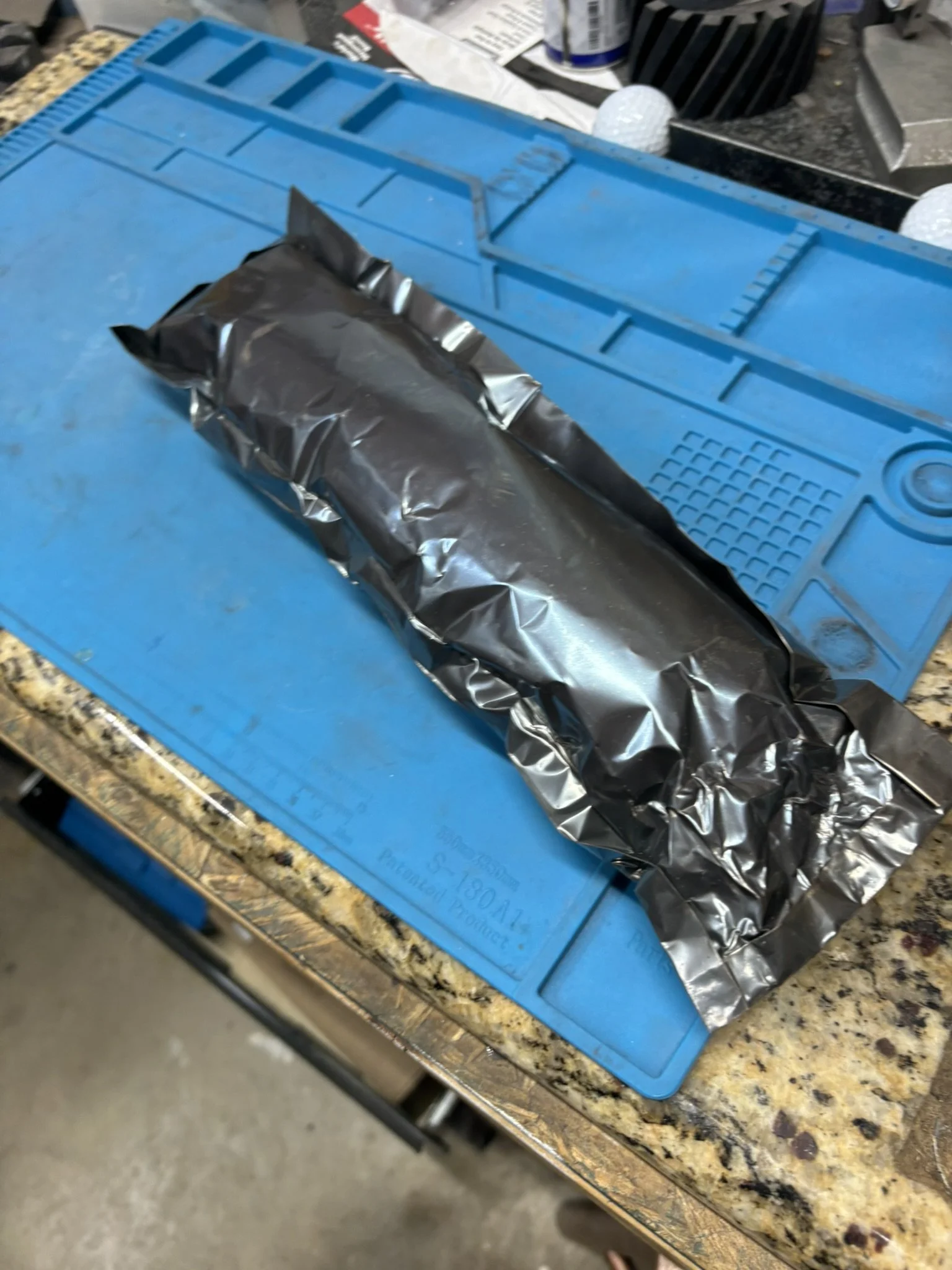
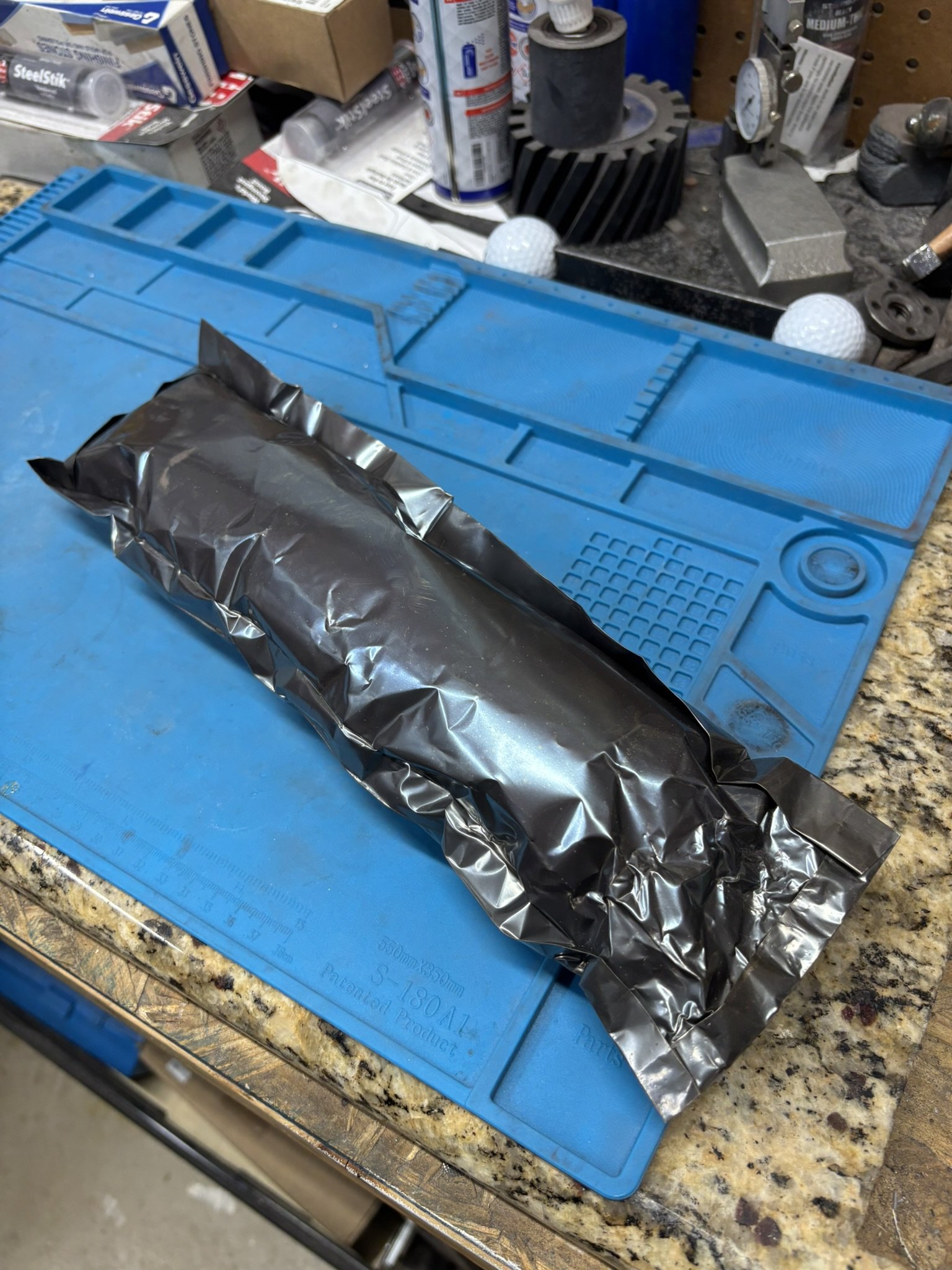
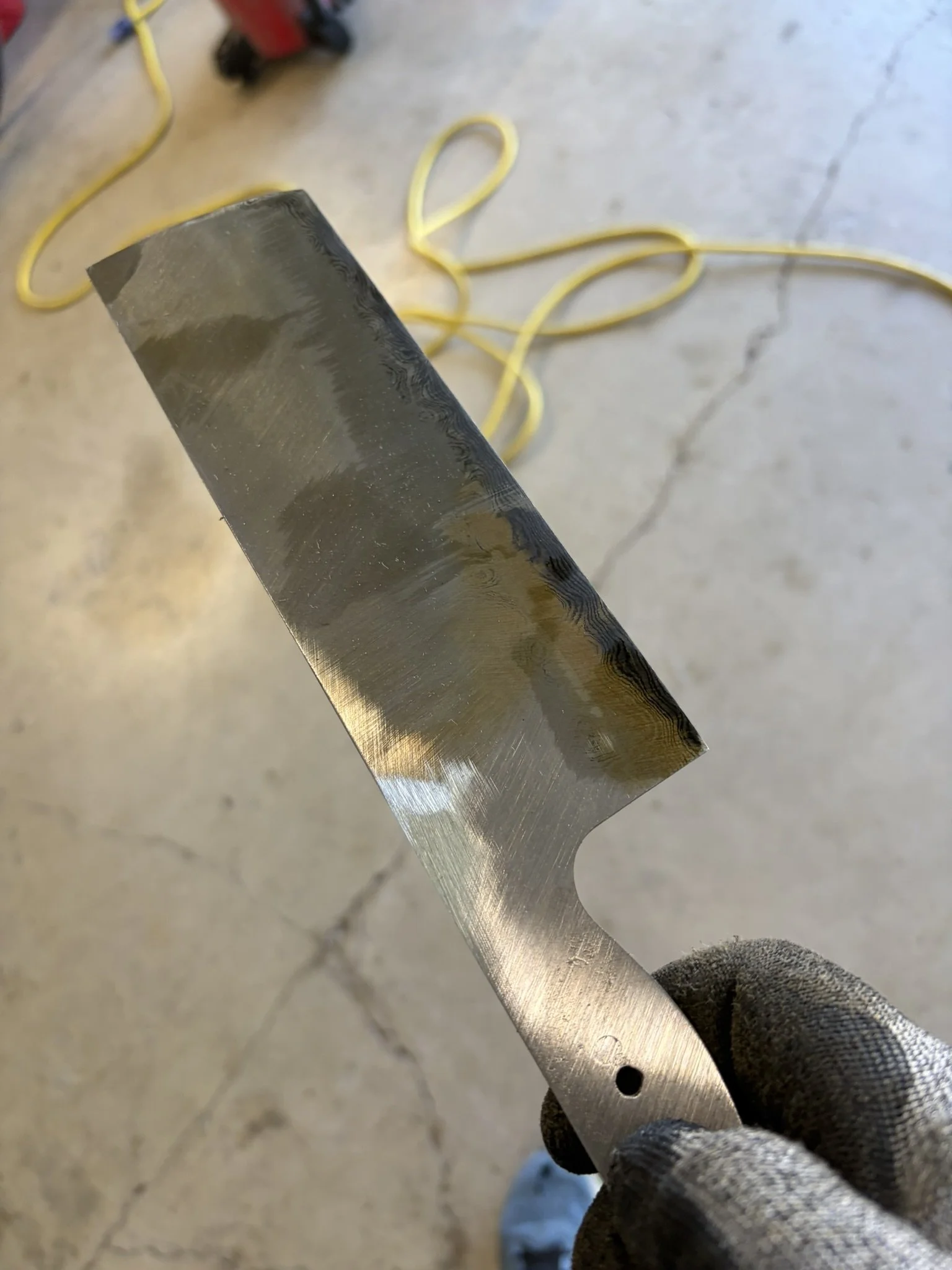
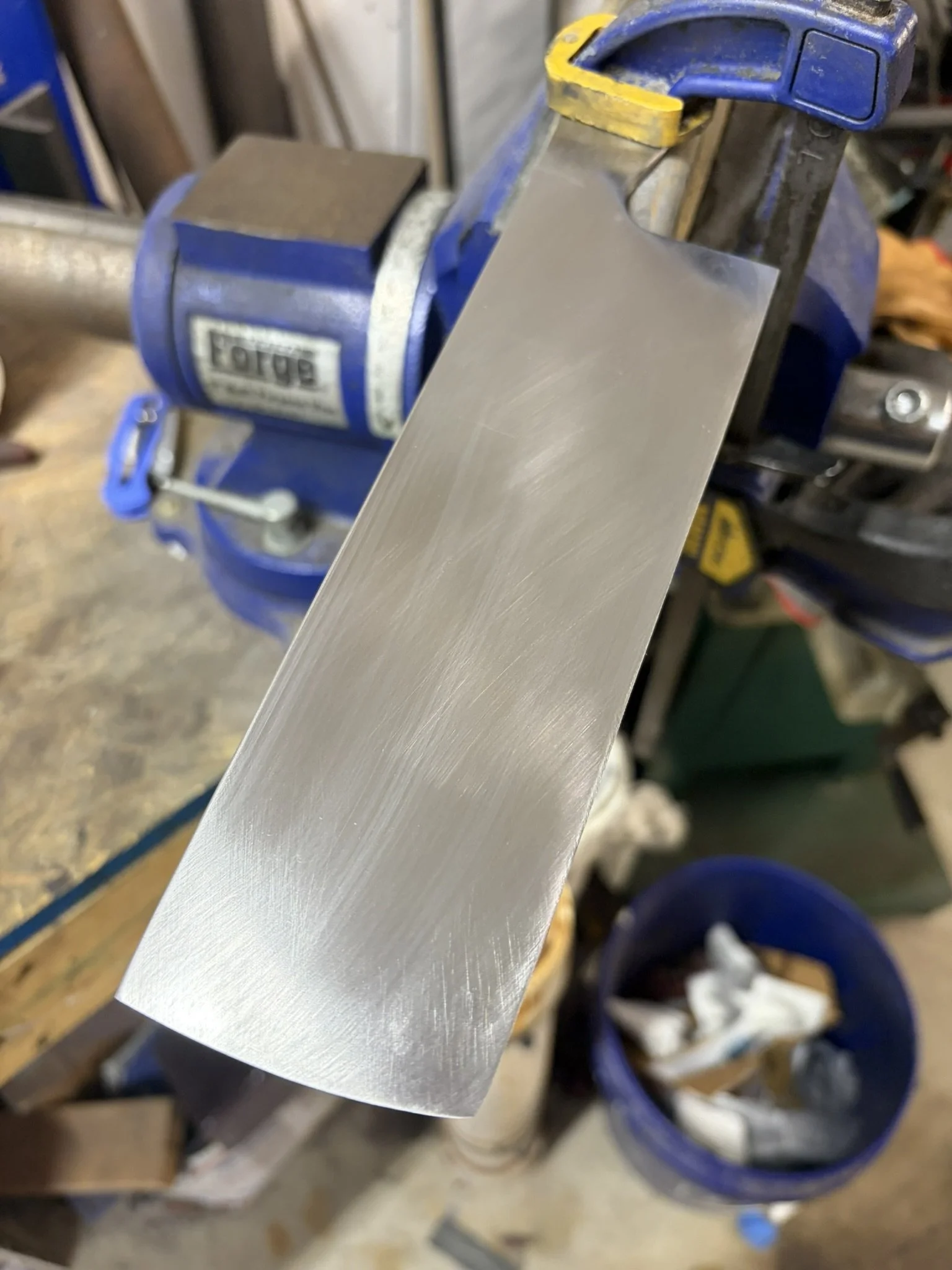
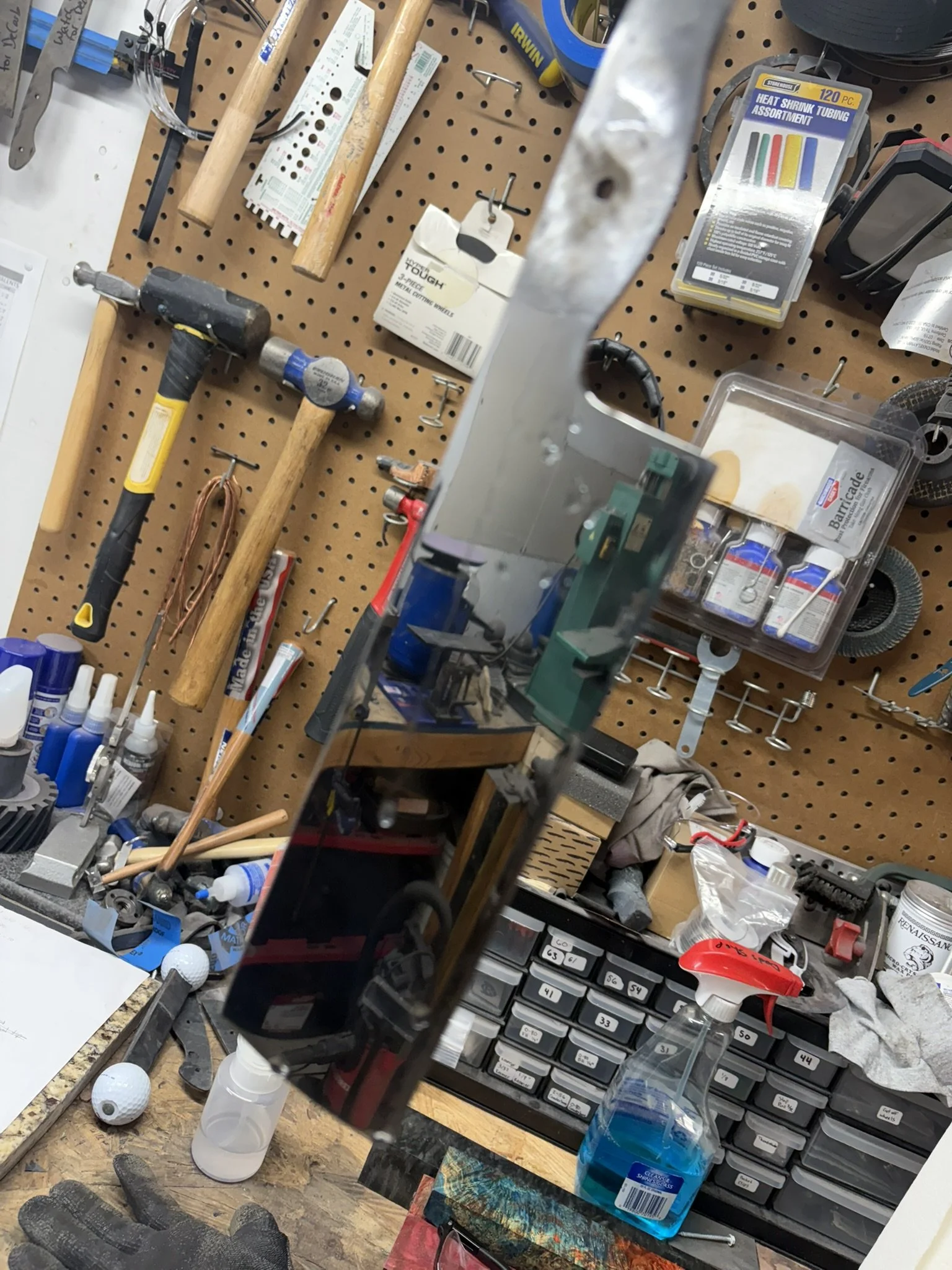
Like many worthwhile builds, this one also came with its share of challenges. I was working with a new heat-treating oven, and after the first cycle the blade had not hardened quite the way I wanted. Rather than accept something less than the result I was looking for, I went back through the process. The broad blade also developed some warping along the way, which I carefully mapped with a Sharpie and worked through a series of straightening and tempering steps before ultimately heat treating the blade again. It was a good reminder that even with careful planning, knifemaking often comes down to diagnosing problems and being willing to redo the work until it is right.
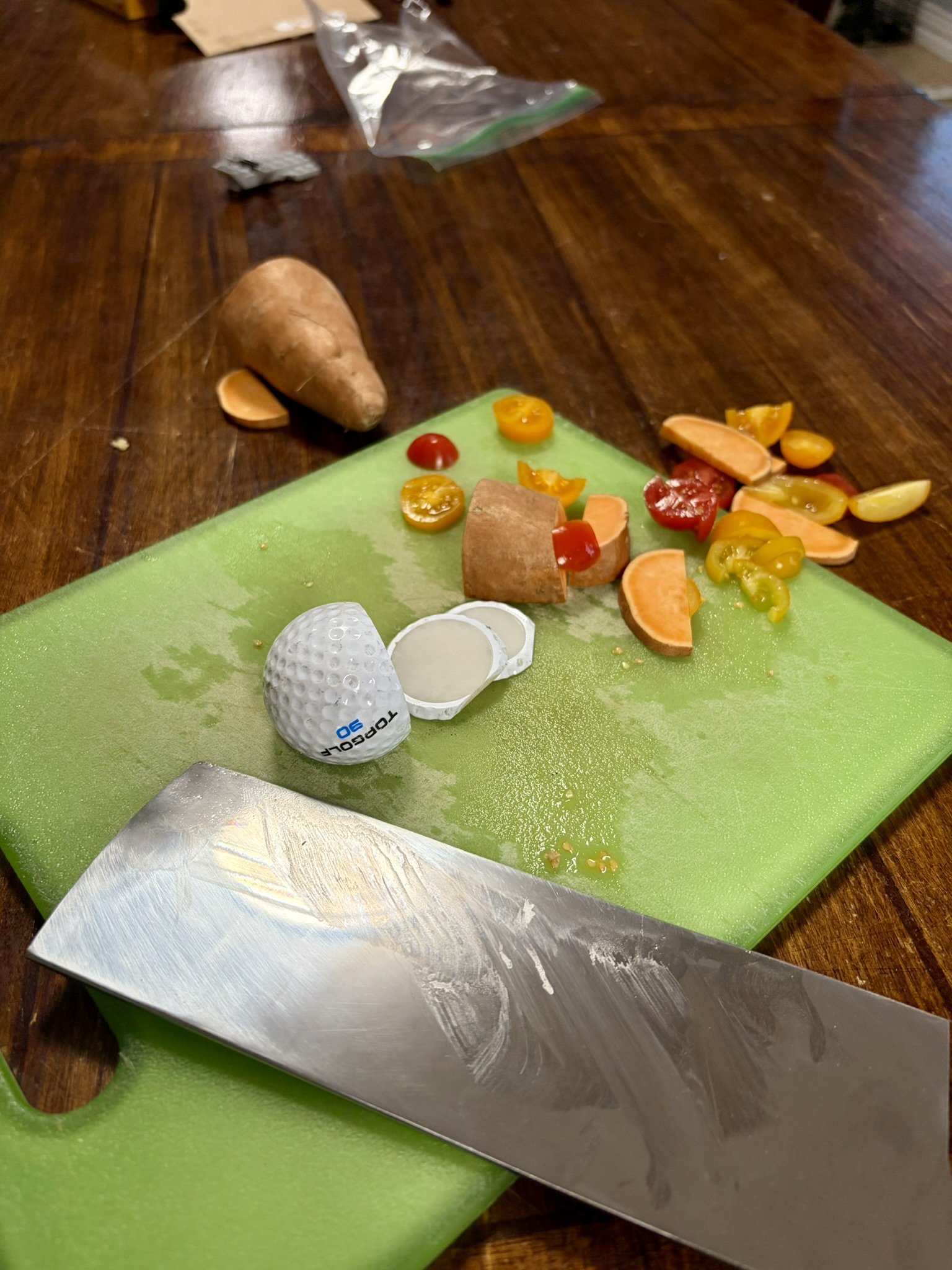
Once finished, I spent some time putting the edge through its paces on a variety of vegetables, and the knife performed exactly as I had hoped. Out of curiosity—and because sometimes it is fun to see just how much a blade wants to cut—I even pushed it well beyond its intended kitchen role and carved several slices from a golf ball. The edge handled the experiment beautifully!
For a first attempt at raindrop Damascus, I could not have been happier with the result. The finished knife brought together a new steel pattern, a custom design, meaningful material choices, and more than a few lessons learned along the way. It remains one of those builds that was simply fun to make, and one I was especially proud to hand over when it was complete.