Knife Care & Maintenance
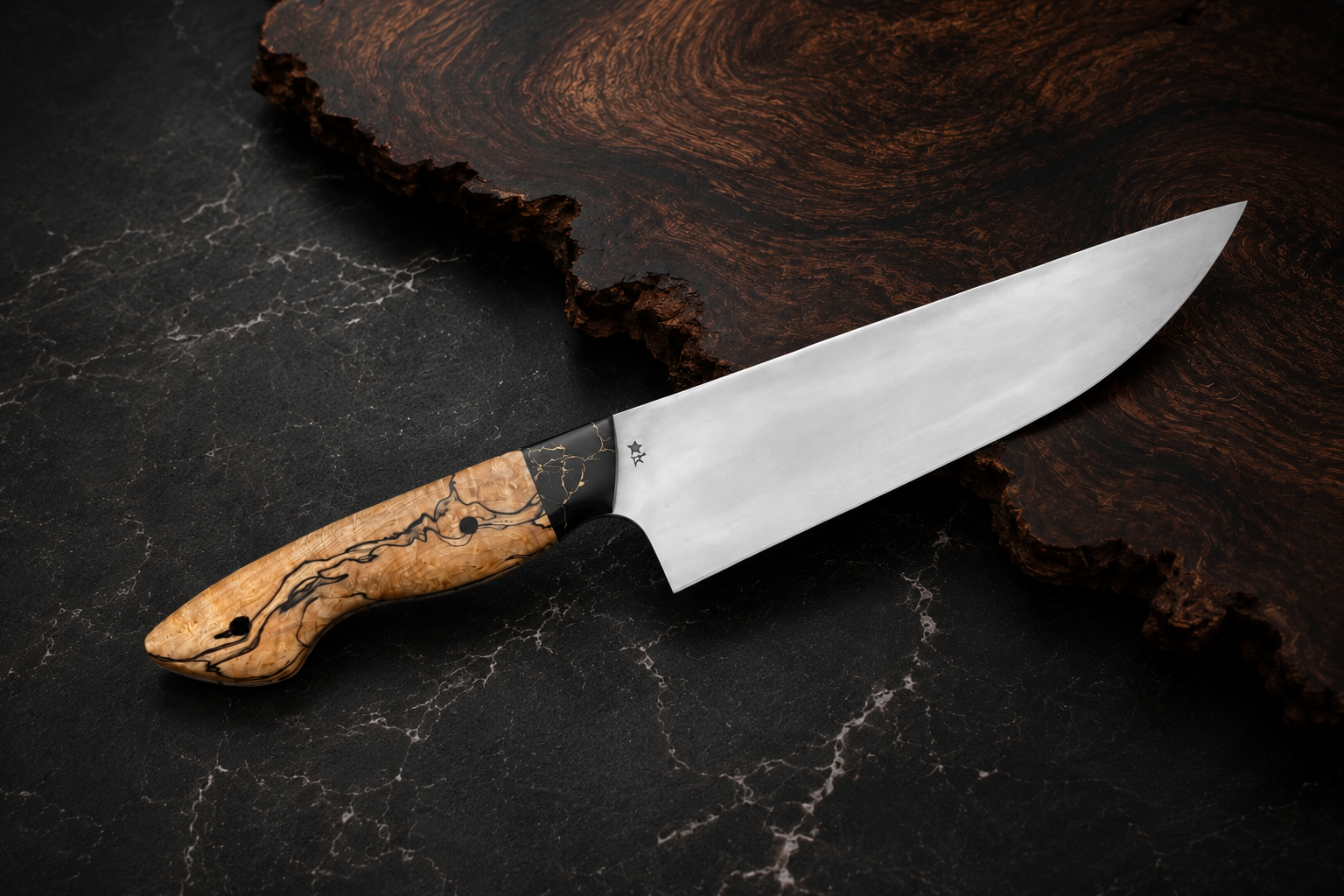
Caring for your Stark Custom Arms knife today ensures it will serve faithfully for generations.
Welcome
Congratulations on your new Stark Custom Arms knife!
Every knife that leaves my shop has been handcrafted one at a time with the goal of creating something that will serve faithfully for years—and hopefully generations—to come. While each knife is built to be used, proper care will ensure it continues to perform beautifully and age gracefully.
The good news is that caring for a quality knife is simple - A few good habits are all it takes.
Daily Care
Your knife is designed to be used—not babied—but like any precision tool, it performs best when cared for properly.
After each use:
Wash by hand using warm water and a mild dish soap if needed.
Dry the blade completely with a clean towel.
Store in a dry location.
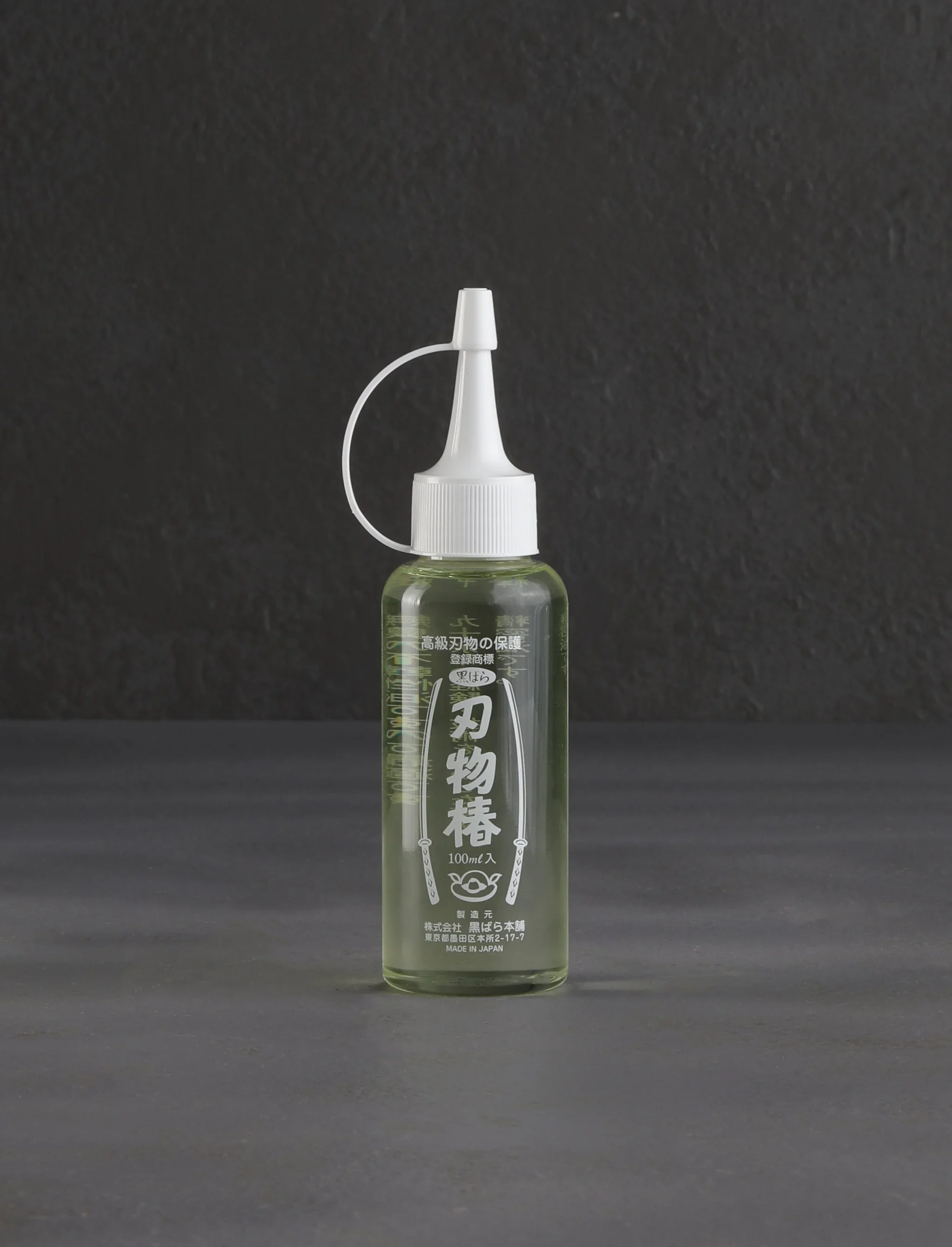
If the knife will be stored for an extended period, apply a light coat of food-grade mineral oil.
Avoid using abrasive cleaners or scouring pads that may scratch the blade's finish.
A Few Things to Avoid
To keep your knife looking and performing its best, never:
Wash it in a dishwasher.
Leave it soaking in water.
Store it while still wet.
Leave it resting on a damp towel or cloth.
Use it as a screwdriver, pry bar, chisel, or hammer.
Store it inside a leather sheath for long-term storage.
Leather makes an excellent carrying sheath, but because it naturally traps moisture and contains tanning chemicals, it is not recommended for long-term storage.
Understanding Your Blade Steel
Different steels have different personalities. None are "better" than another—they simply excel in different ways.
Carbon Steel
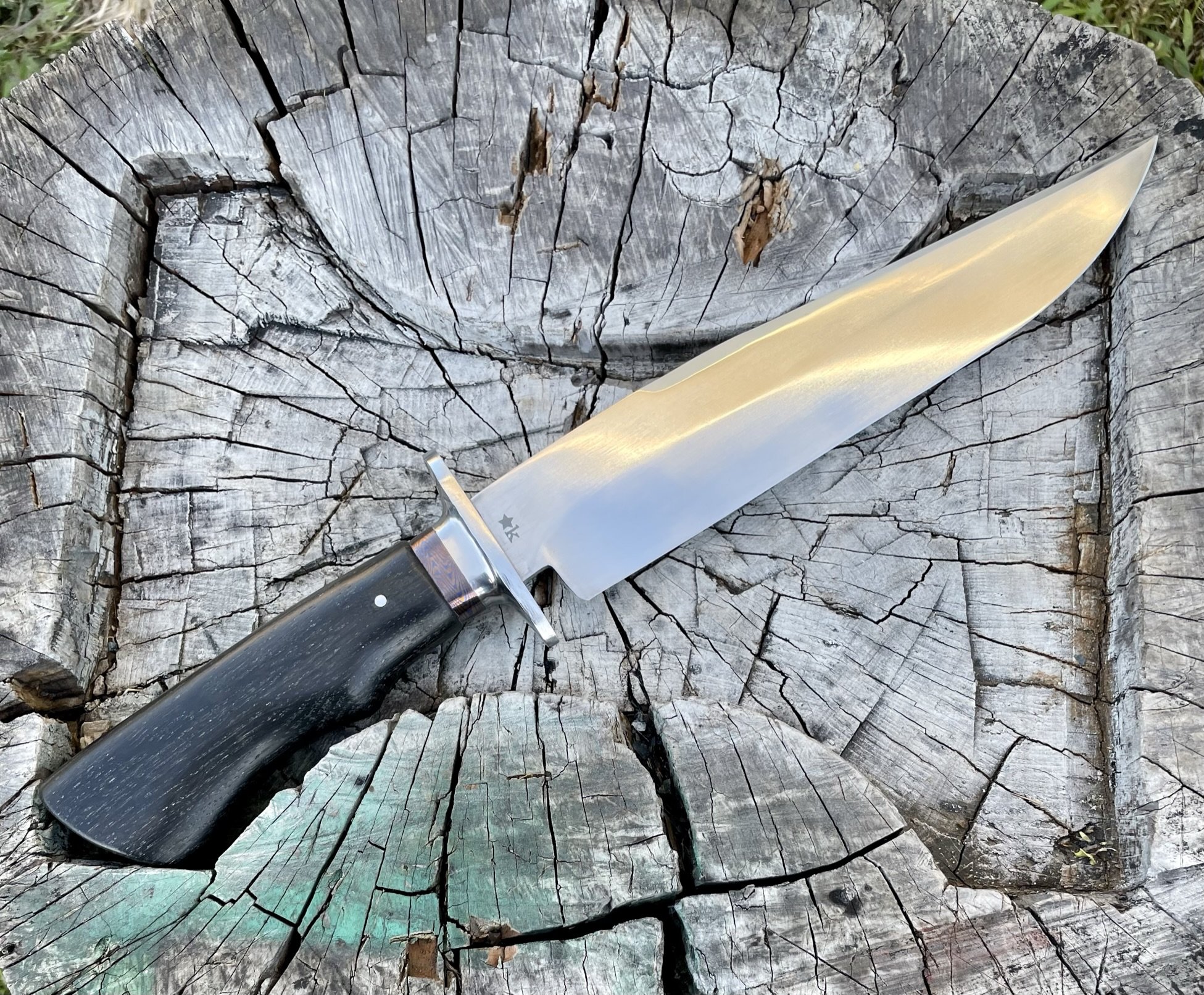
High-carbon steels are prized for their toughness, edge retention, and ease of sharpening.
They will naturally develop a protective patina over time. This is completely normal and often highly desirable.
Every blade develops its own unique character depending on how it's used. Foods such as cooked meats often create attractive blue-gray tones, while fruits and vegetables can produce darker or more varied colors.
Patina is not rust—it's part of the story your knife tells.
Damascus Steel
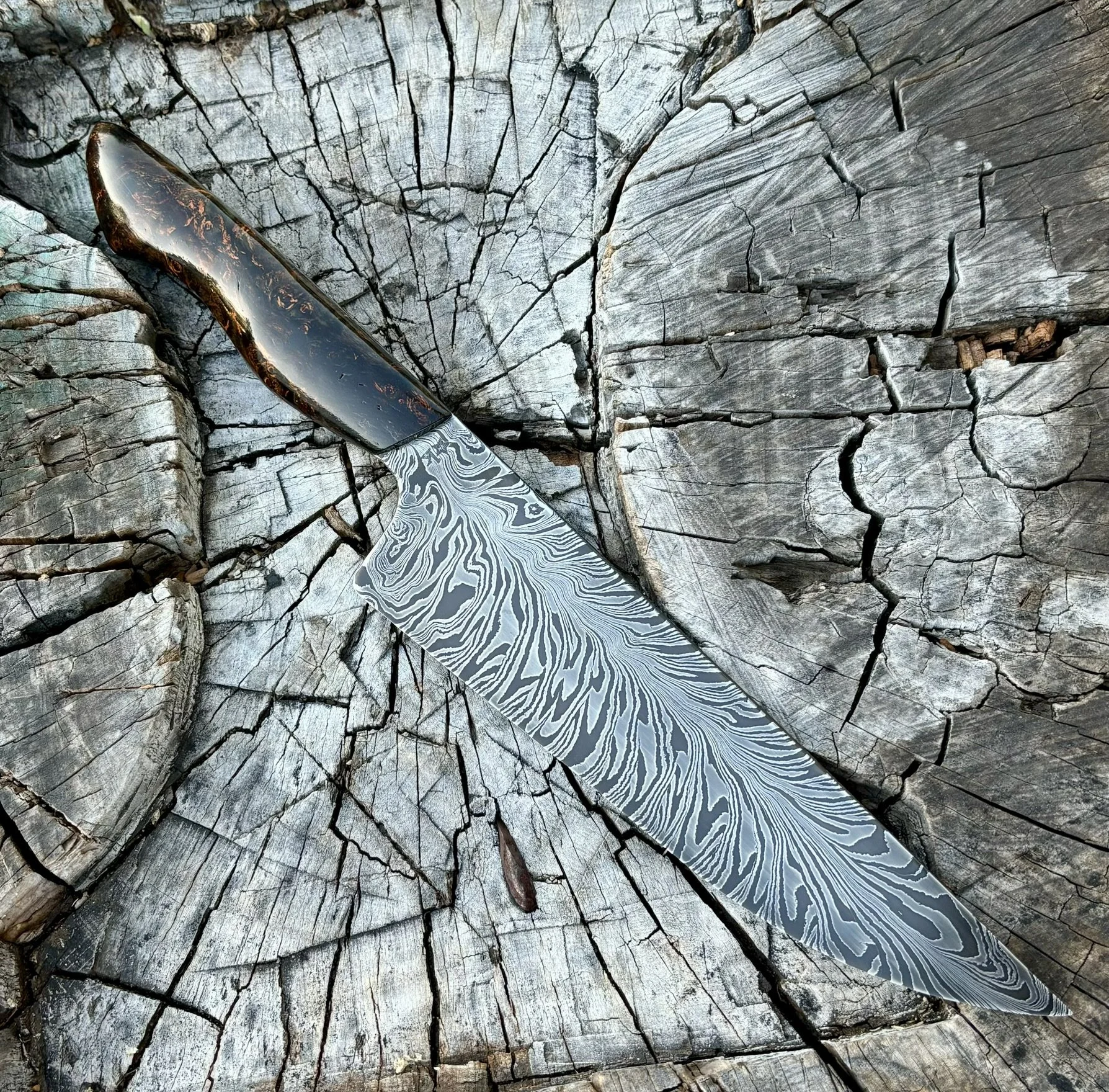
My Damascus steel is hand-forged from alternating layers of 15N20 and 1084 steel. The bright layers come from the nickel-rich 15N20, while the darker layers are created by the carbon steel during the etching process.
Damascus offers exceptional cutting performance while creating a one-of-a-kind pattern unique to your knife.
Because Damascus contains carbon steel, it benefits from a little extra attention to prevent corrosion.
Oiling Your Knife
If your knife will be stored for more than a few days, apply a very light coat of food-grade mineral oil to the blade.
Avoid vegetable oils, olive oil, or cooking oils, as they can become sticky or rancid over time.
Food-grade mineral oil is inexpensive, odorless, and readily available at most pharmacies and grocery stores.
Stainless Steel
Stainless steels are more resistant to corrosion and require less maintenance than carbon steels, but no steel is completely immune to rust.
Keeping your knife clean and dry remains the best practice regardless of the steel!
Refreshing a Damascus Finish
Warning! I don’t recommend doing this on your own, but I’ll put the information here - if it needs done please contact me.
With years of use, the contrast in Damascus steel may gradually soften. This is perfectly normal and does not affect the performance of your knife.
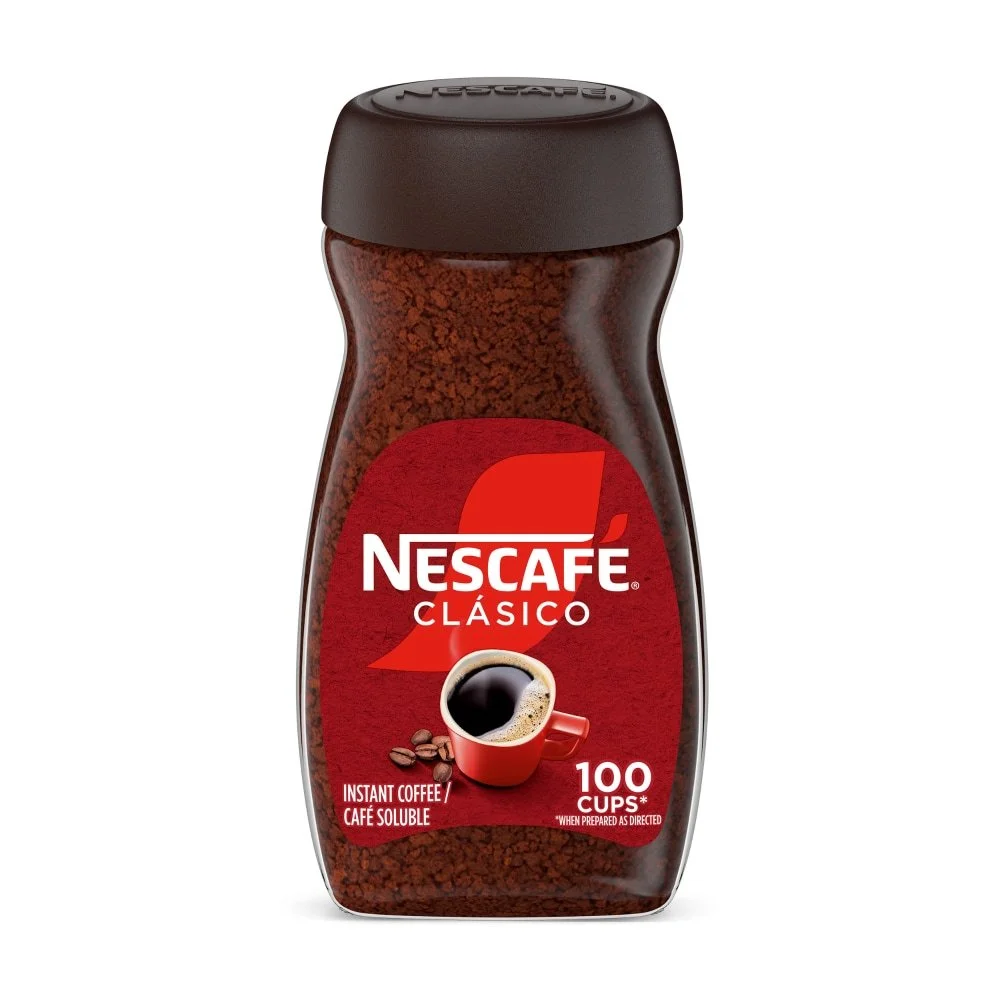
The pattern can be refreshed using a simple coffee etch.
You'll Need
Instant coffee
Hot water
Denatured alcohol or acetone
Mineral oil
A container deep enough to immerse the blade
Instructions
Brew an extremely strong batch of instant coffee.
Wash and thoroughly dry the blade.
Remove all oils using denatured alcohol or acetone.
Immerse only the blade in the warm coffee.
Allow it to soak for approximately 15–60 minutes, checking every 15 minutes.
Rinse with clean water, dry thoroughly, apply mineral oil, and store as normal.
Take care to keep coffee away from natural handle materials whenever possible.
Honest Wear
A handcrafted knife is meant to be used.
Over time you may notice:
Fine scratches
A developing patina
Slight changes in the Damascus contrast
Minor signs of everyday use
These are not defects.
They are the marks of a tool fulfilling its purpose and becoming uniquely yours.
Questions?
If you ever have questions about cleaning, sharpening, rust, restoring a Damascus finish, or general maintenance, please don't hesitate to contact me.
I'd much rather answer a question than have you worry about damaging your knife.
Thank you for trusting Stark Custom Arms. I hope your knife serves you faithfully for many years—and someday becomes something worth passing on.