Feather Damascus Chef
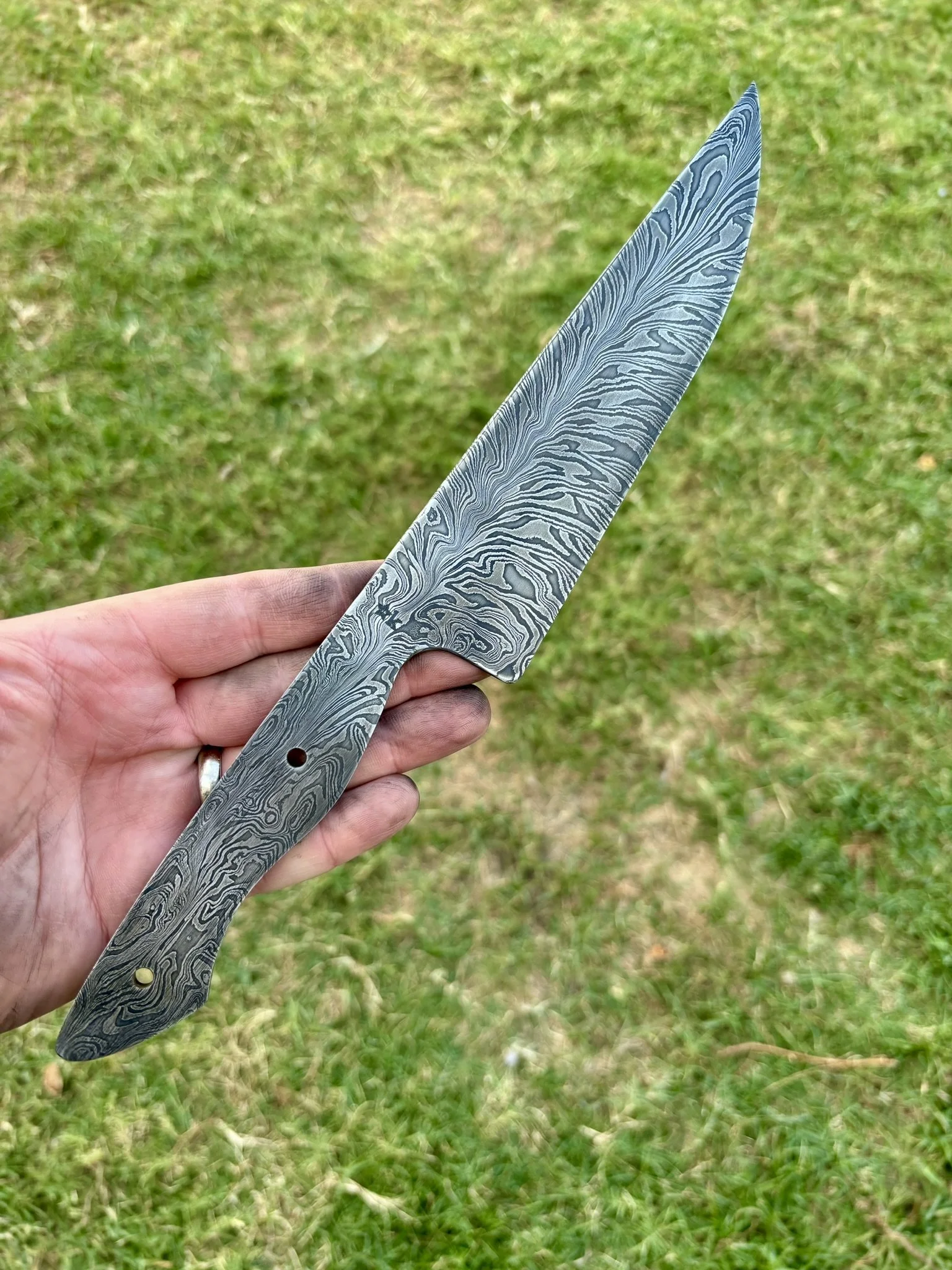
This chef's knife began as a challenge to myself. I wanted to create an updated chef's knife for my personal collection, but more importantly, I wanted to tackle one of the most complex Damascus patterns I had attempted to date: feather Damascus. I have always enjoyed the process of making Damascus steel, and this project represented an opportunity to push my skills well beyond familiar territory.
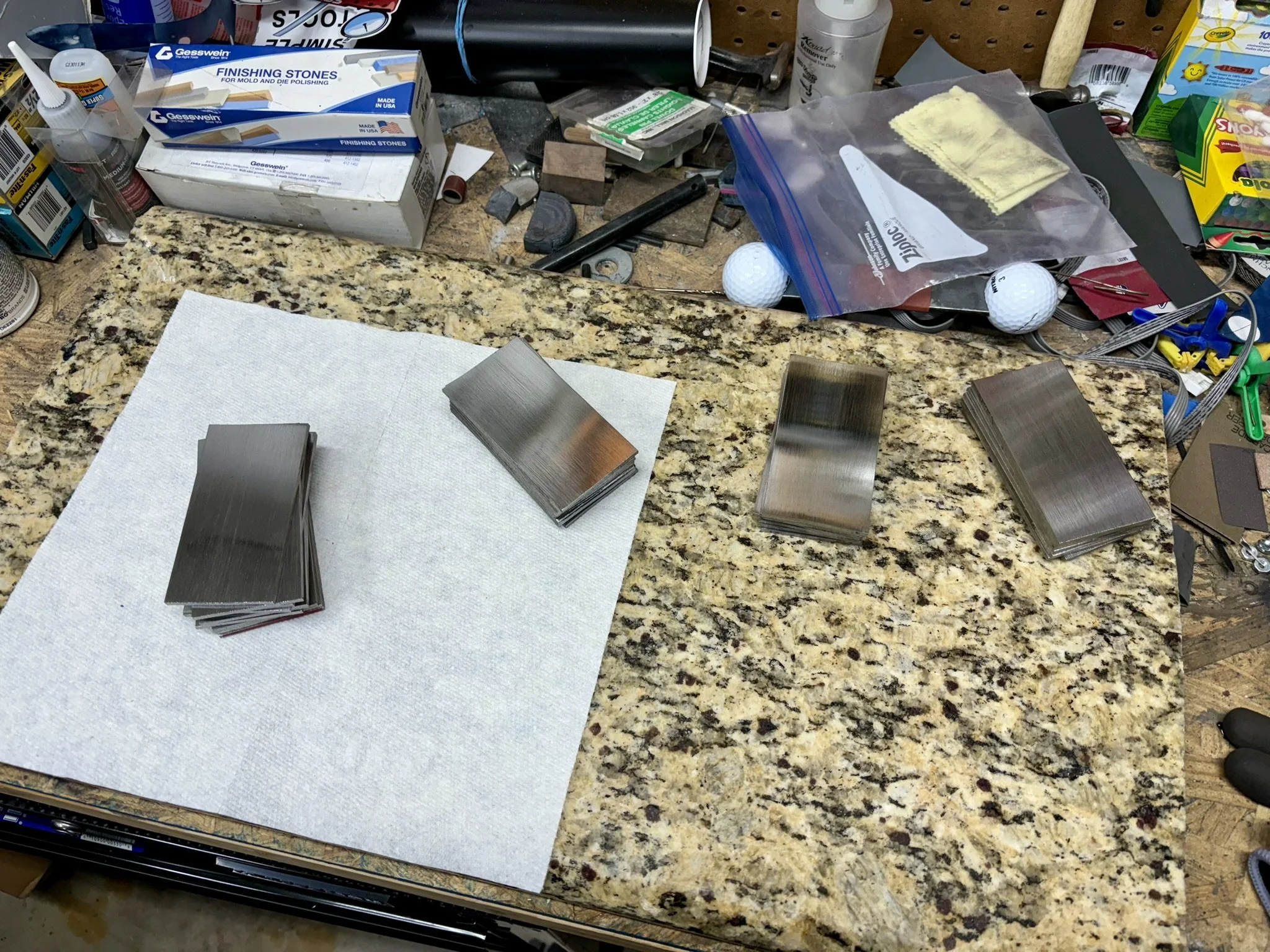
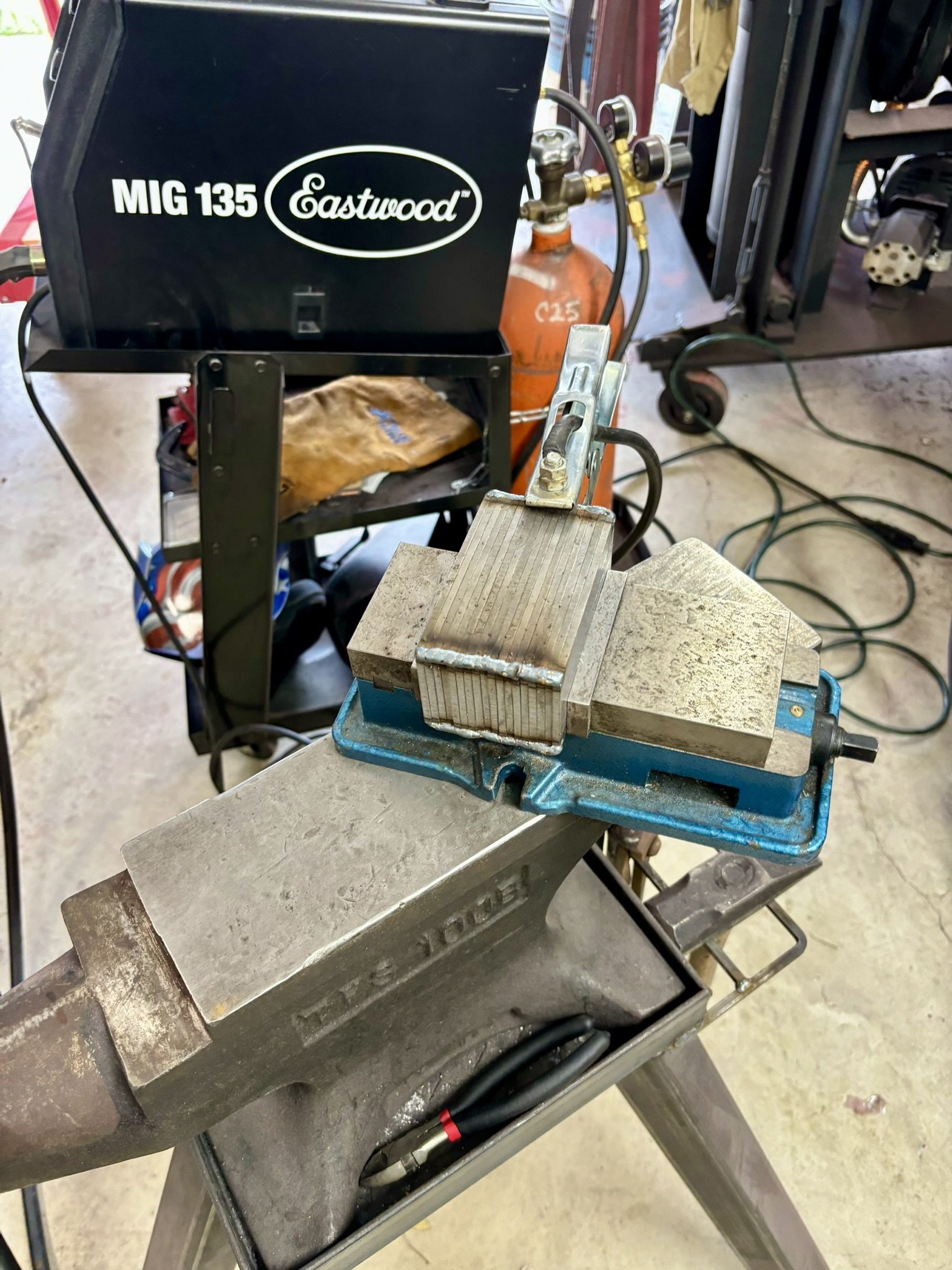
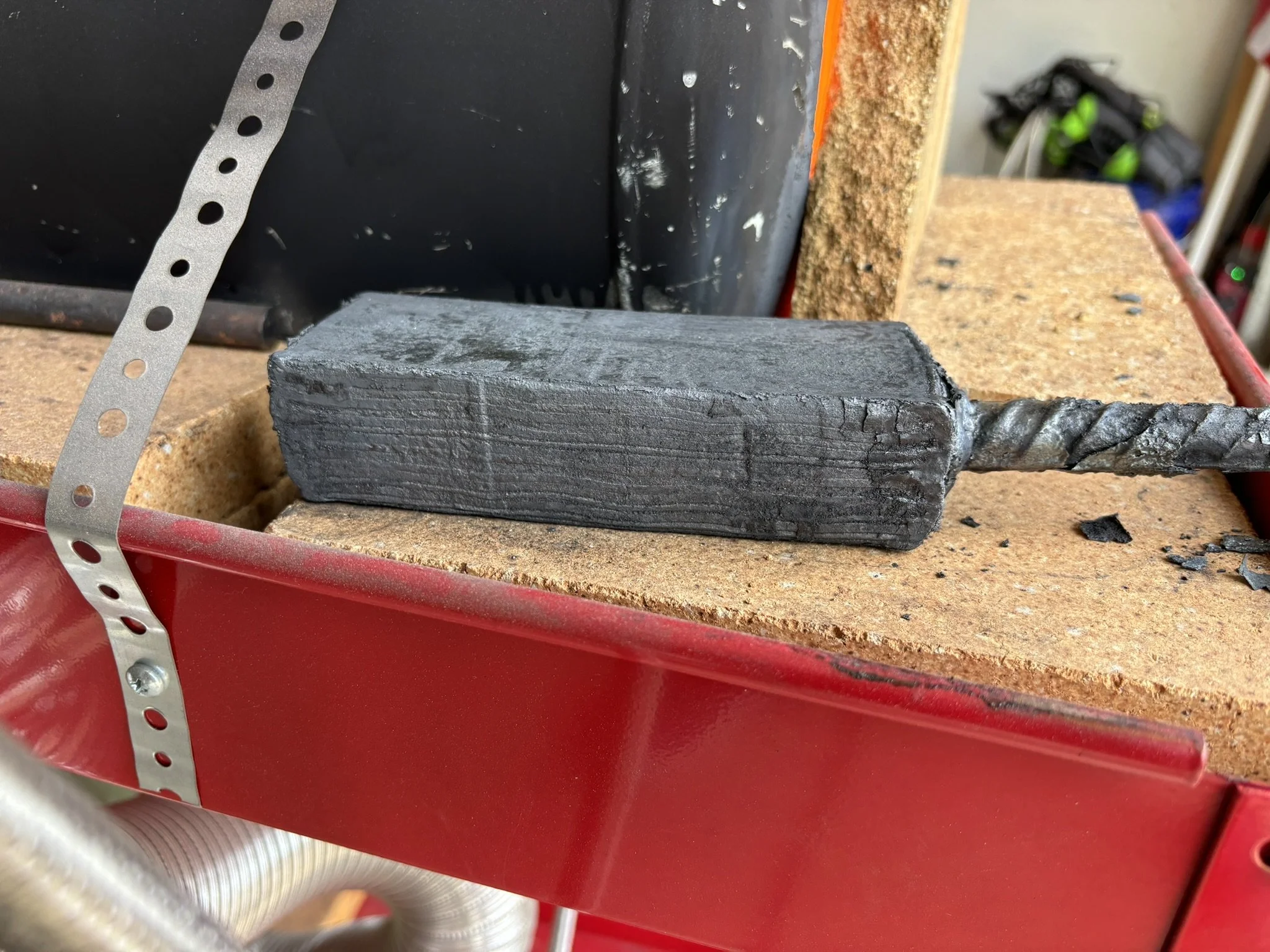
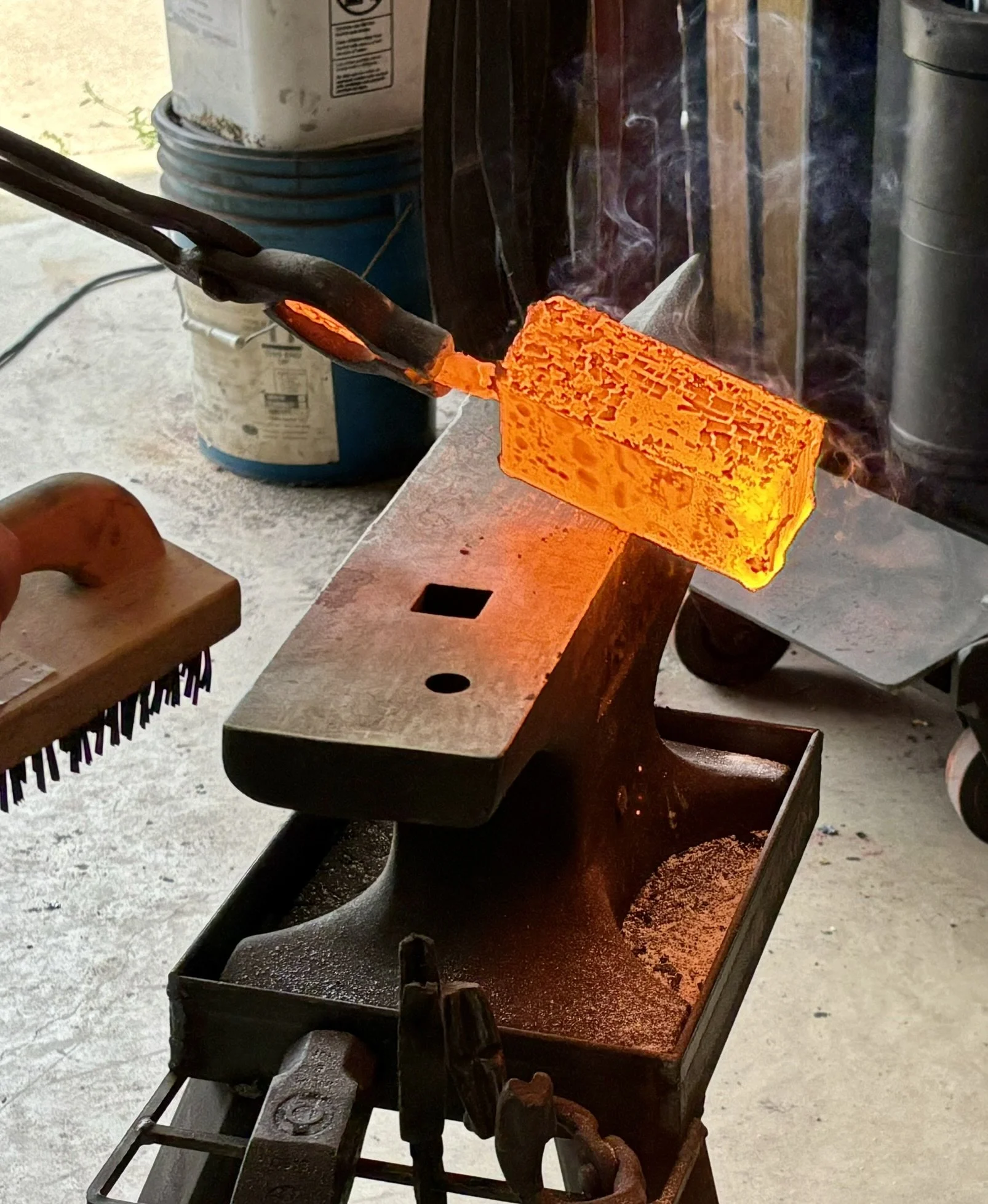
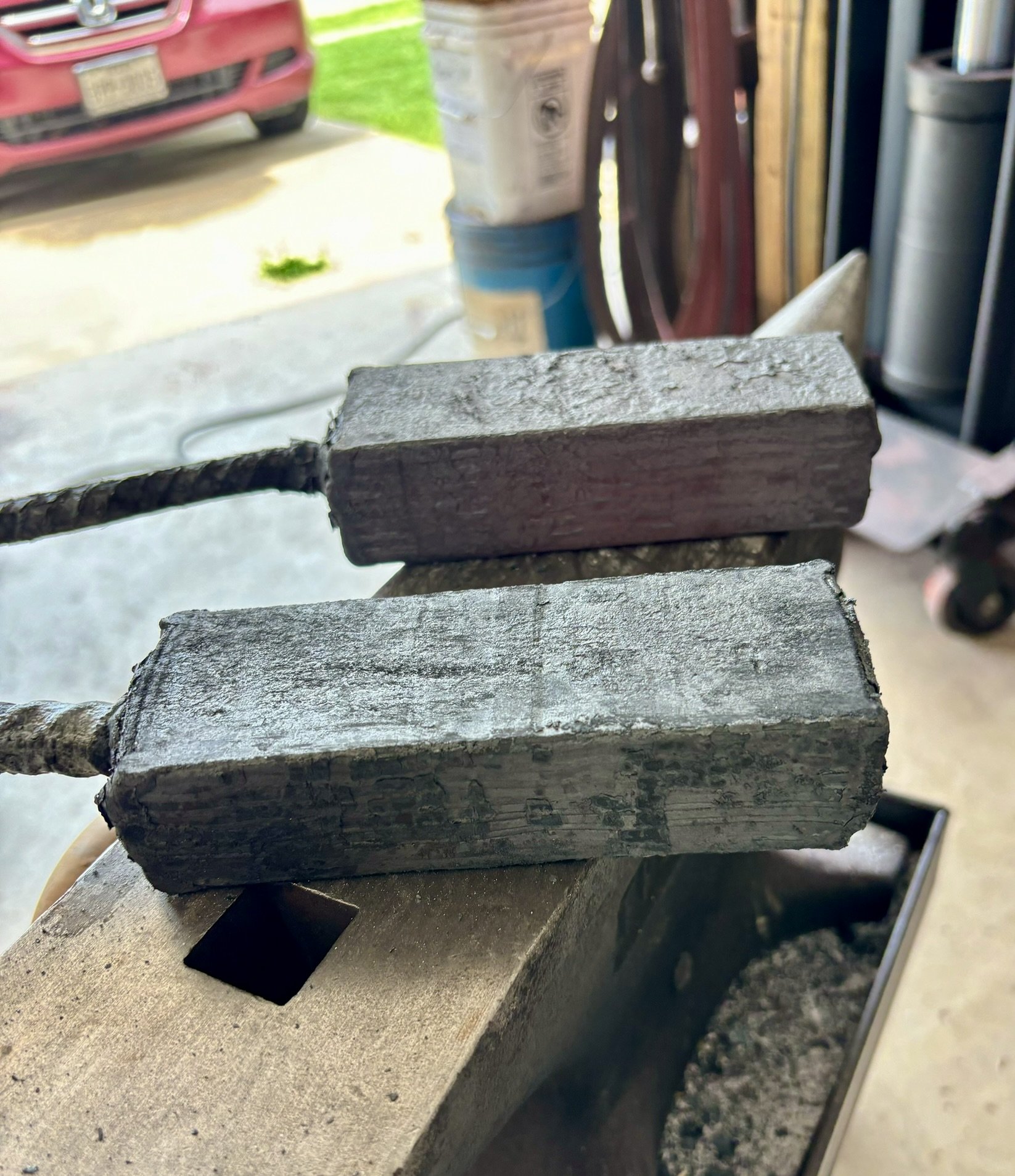
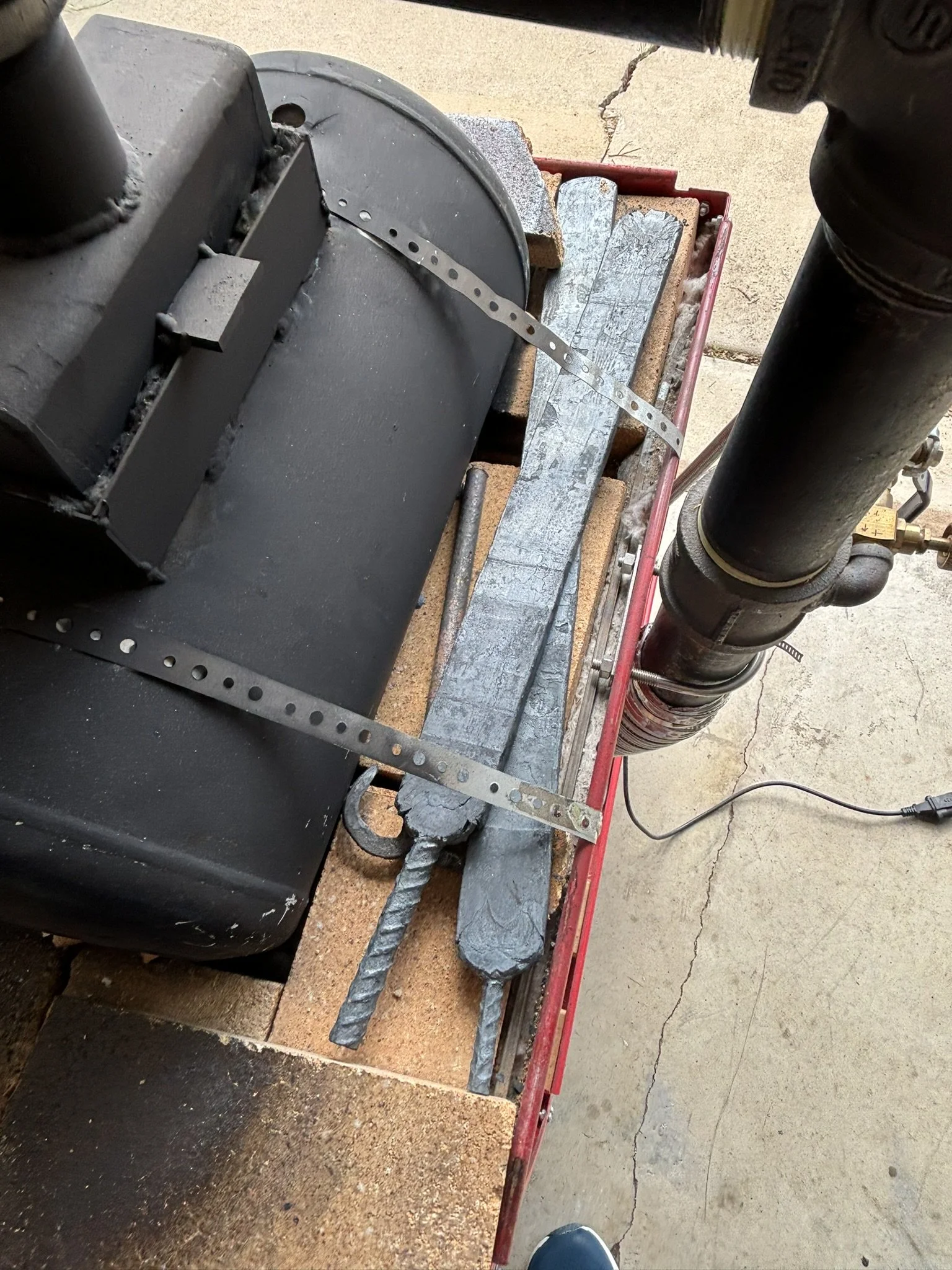
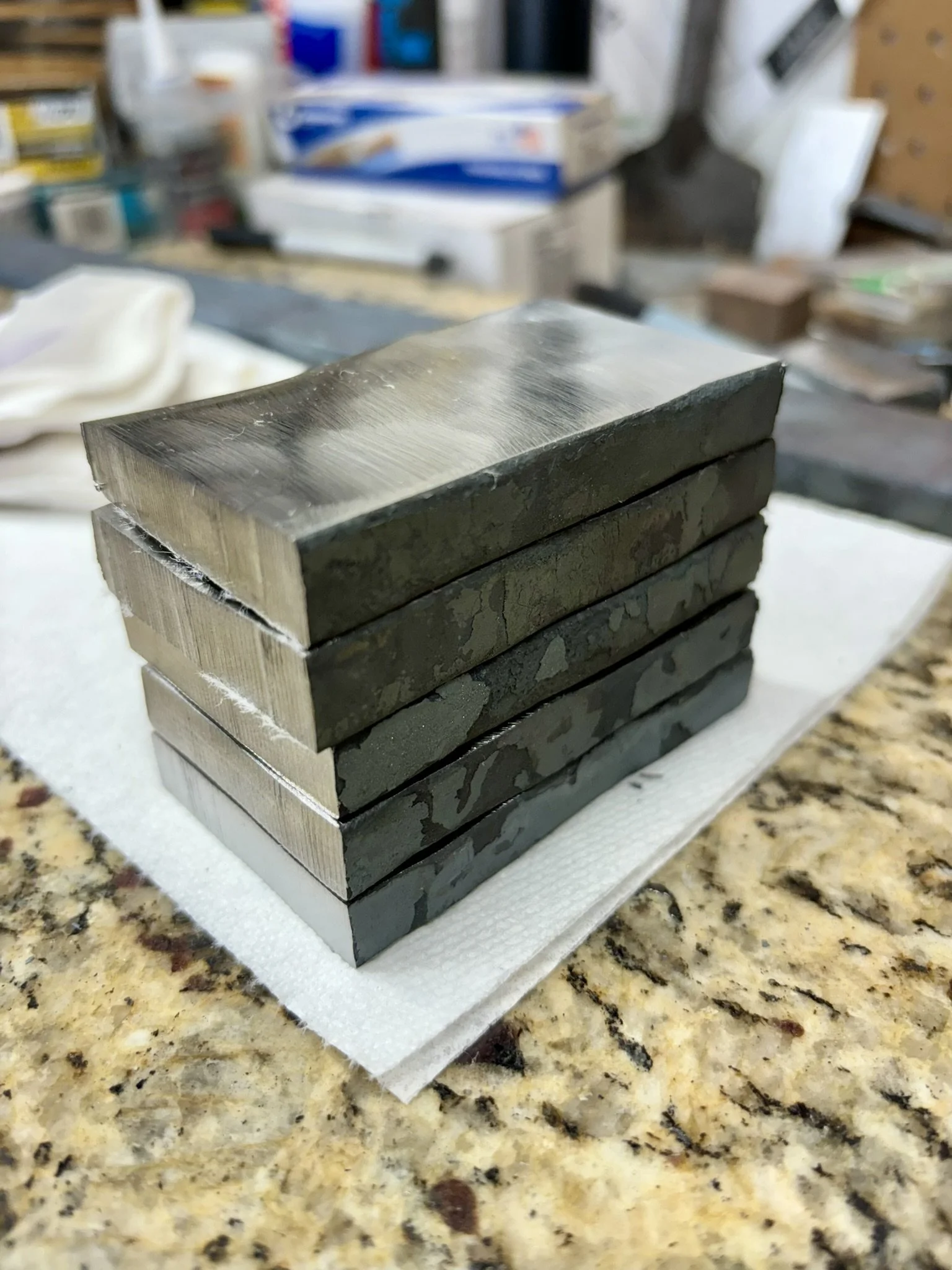
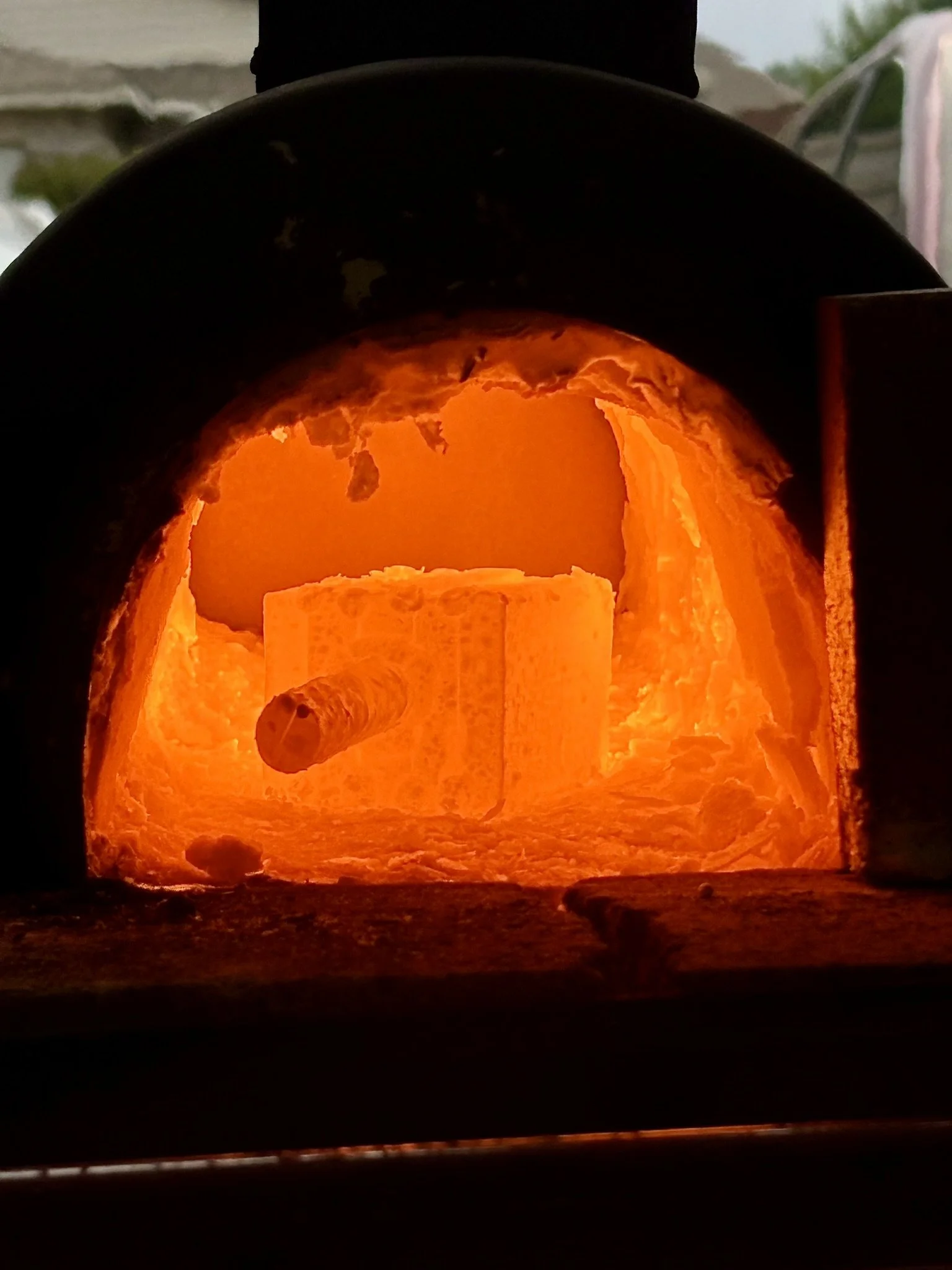
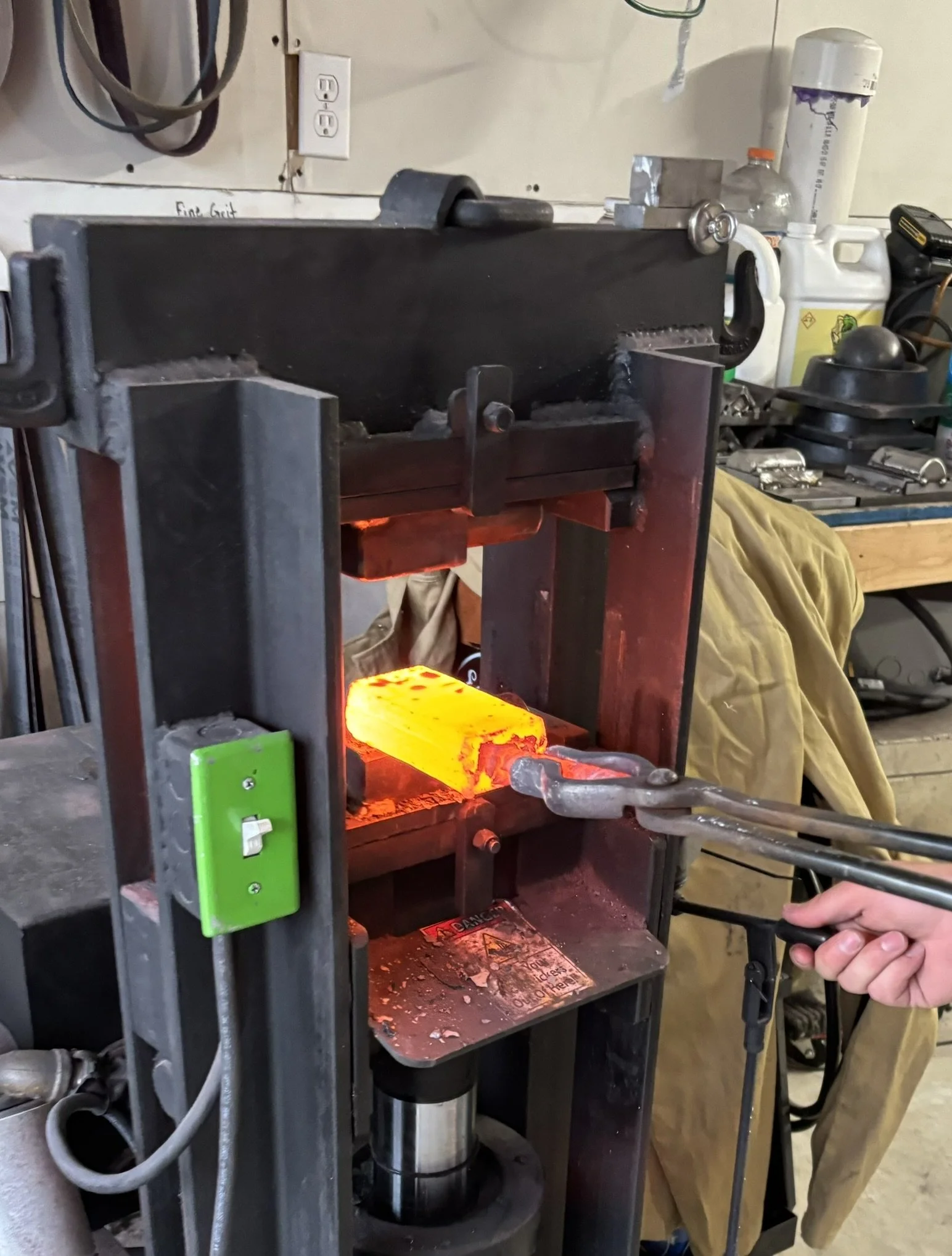
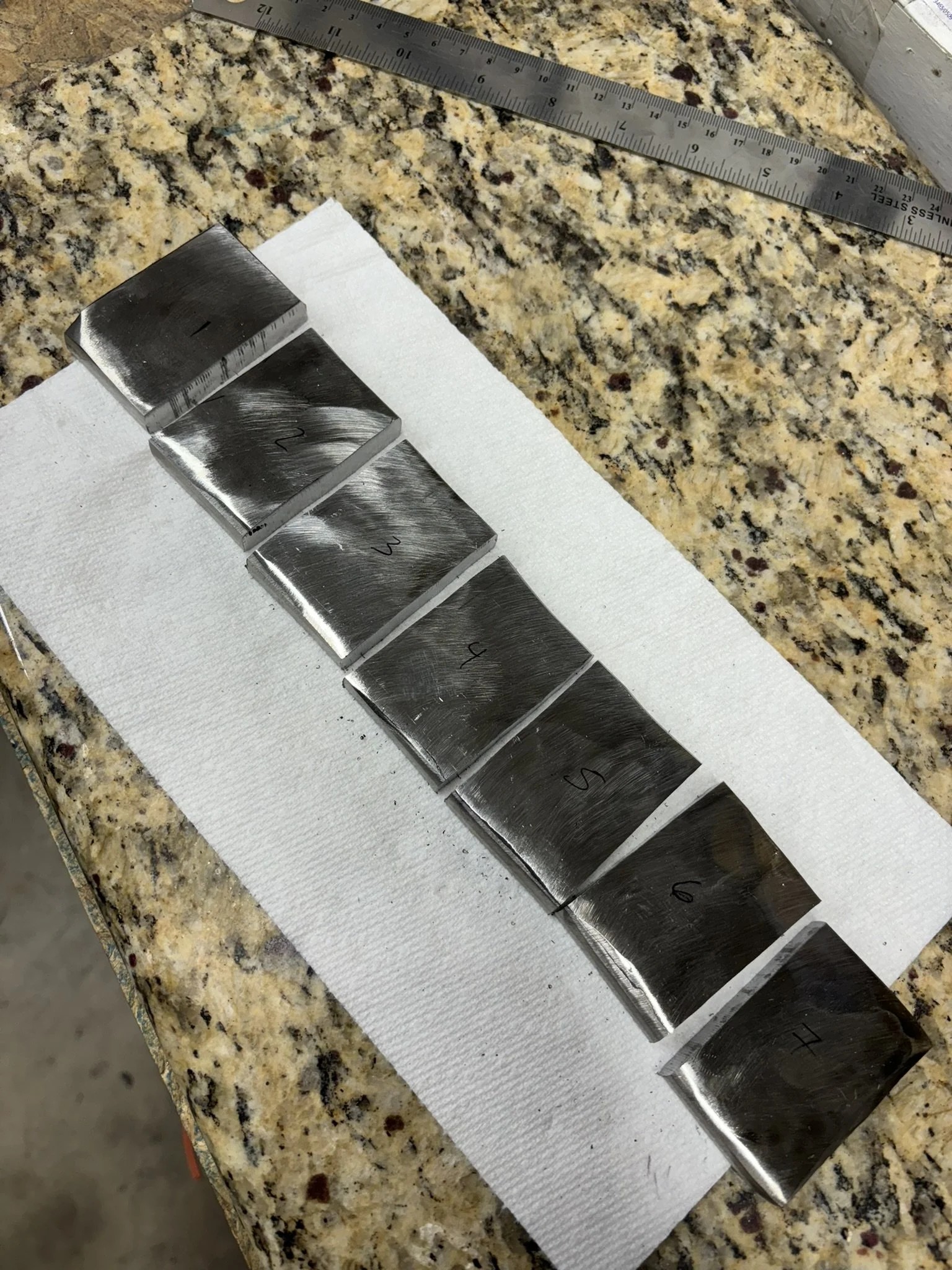
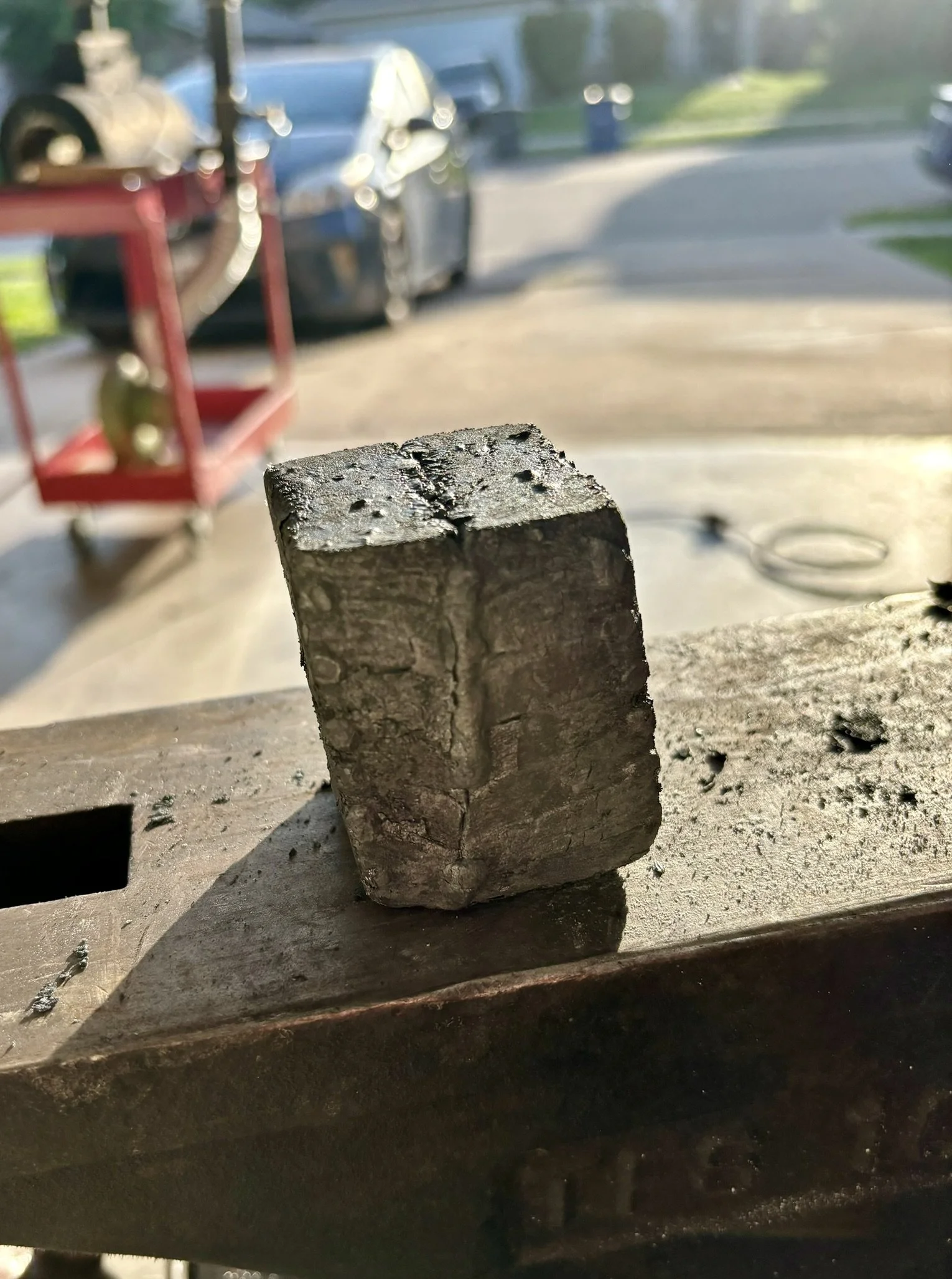
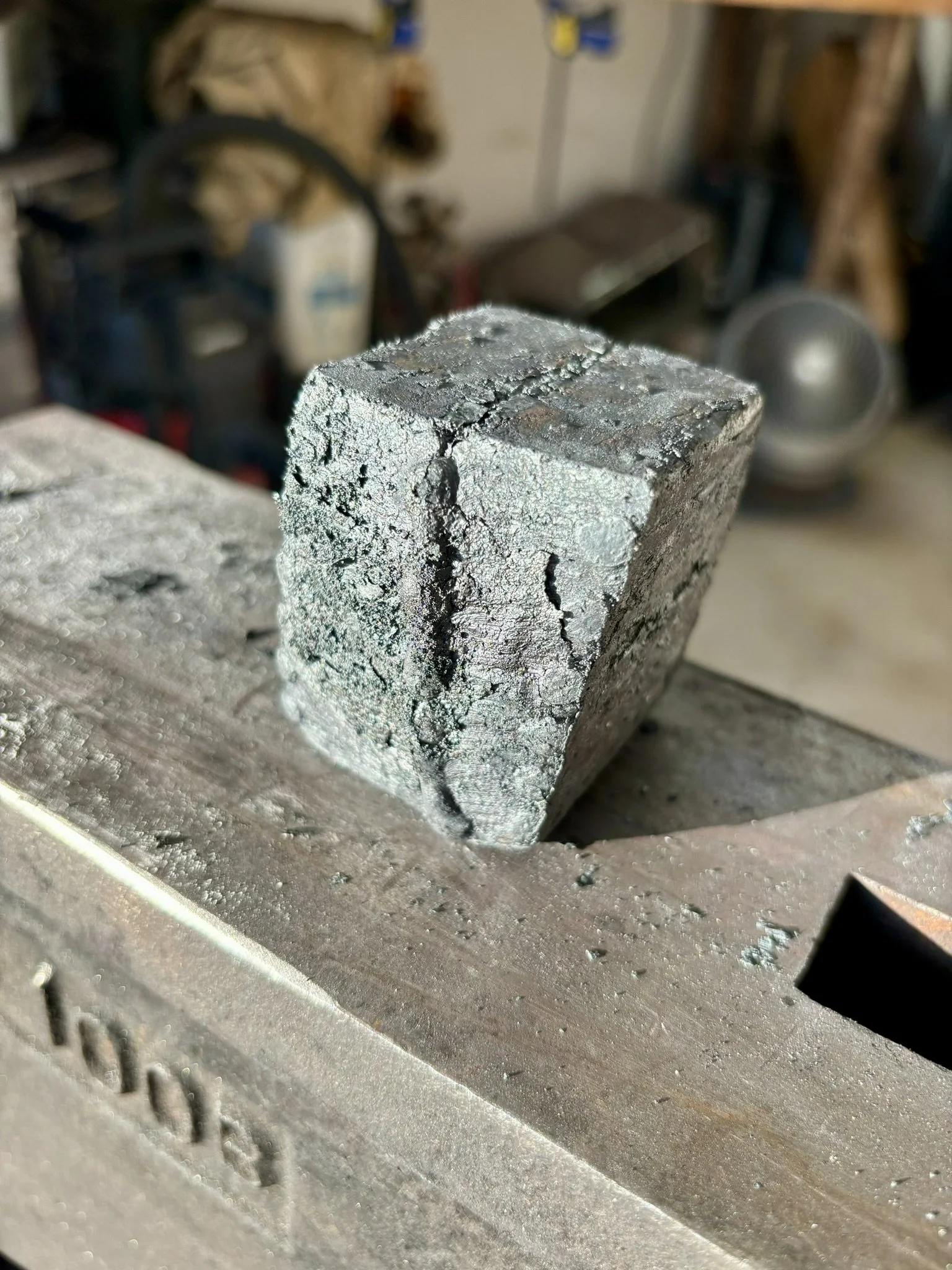
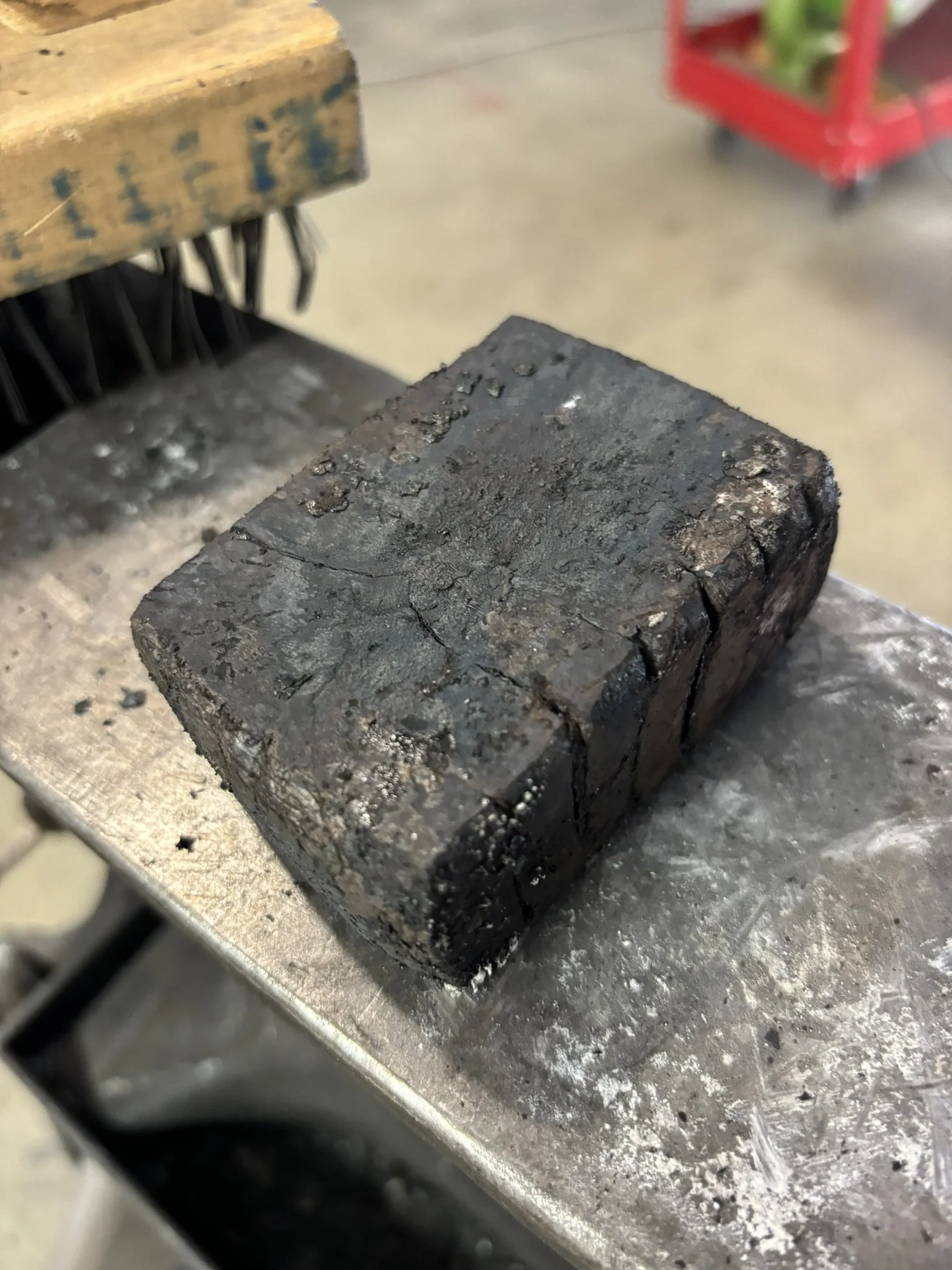
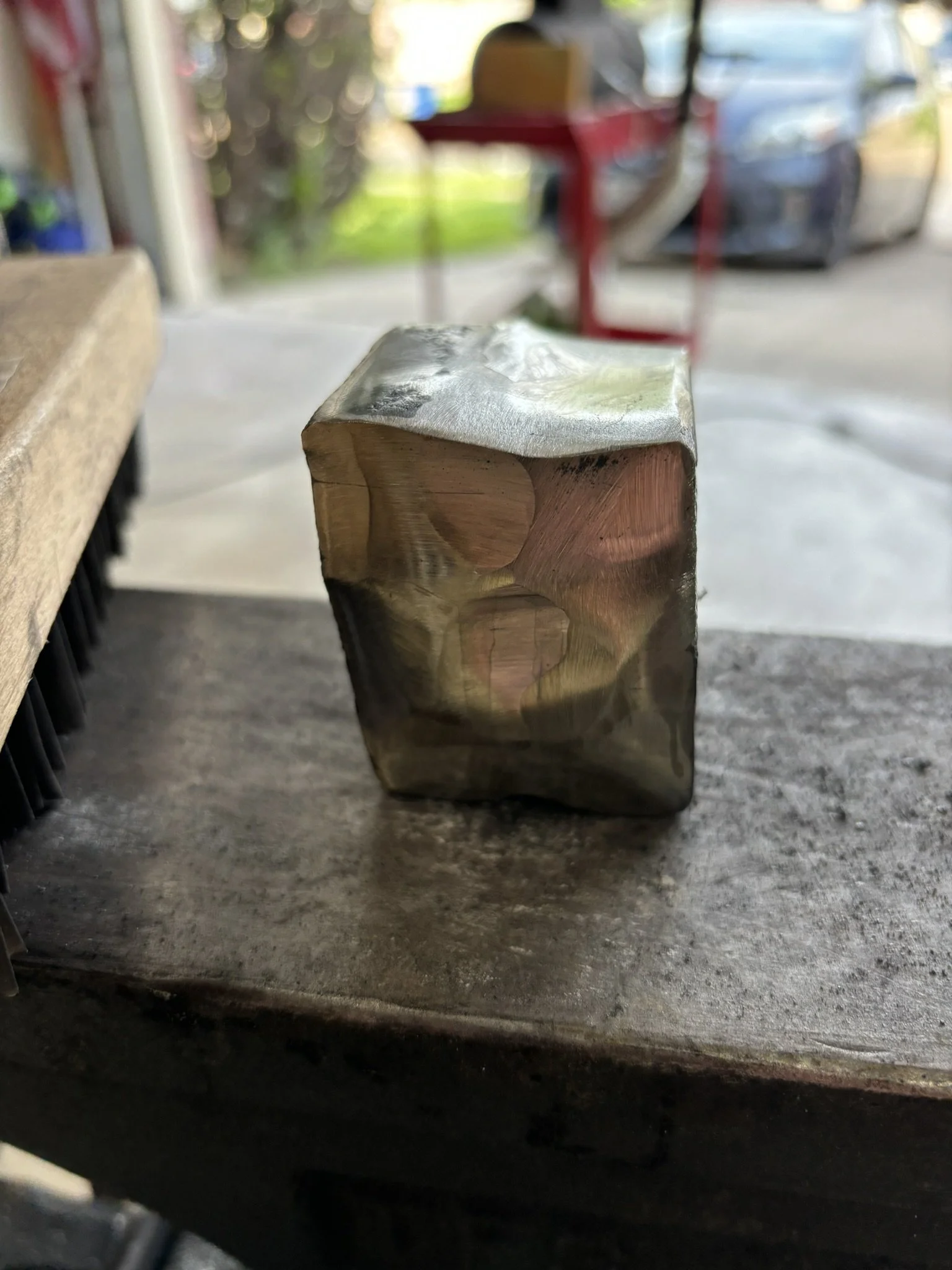
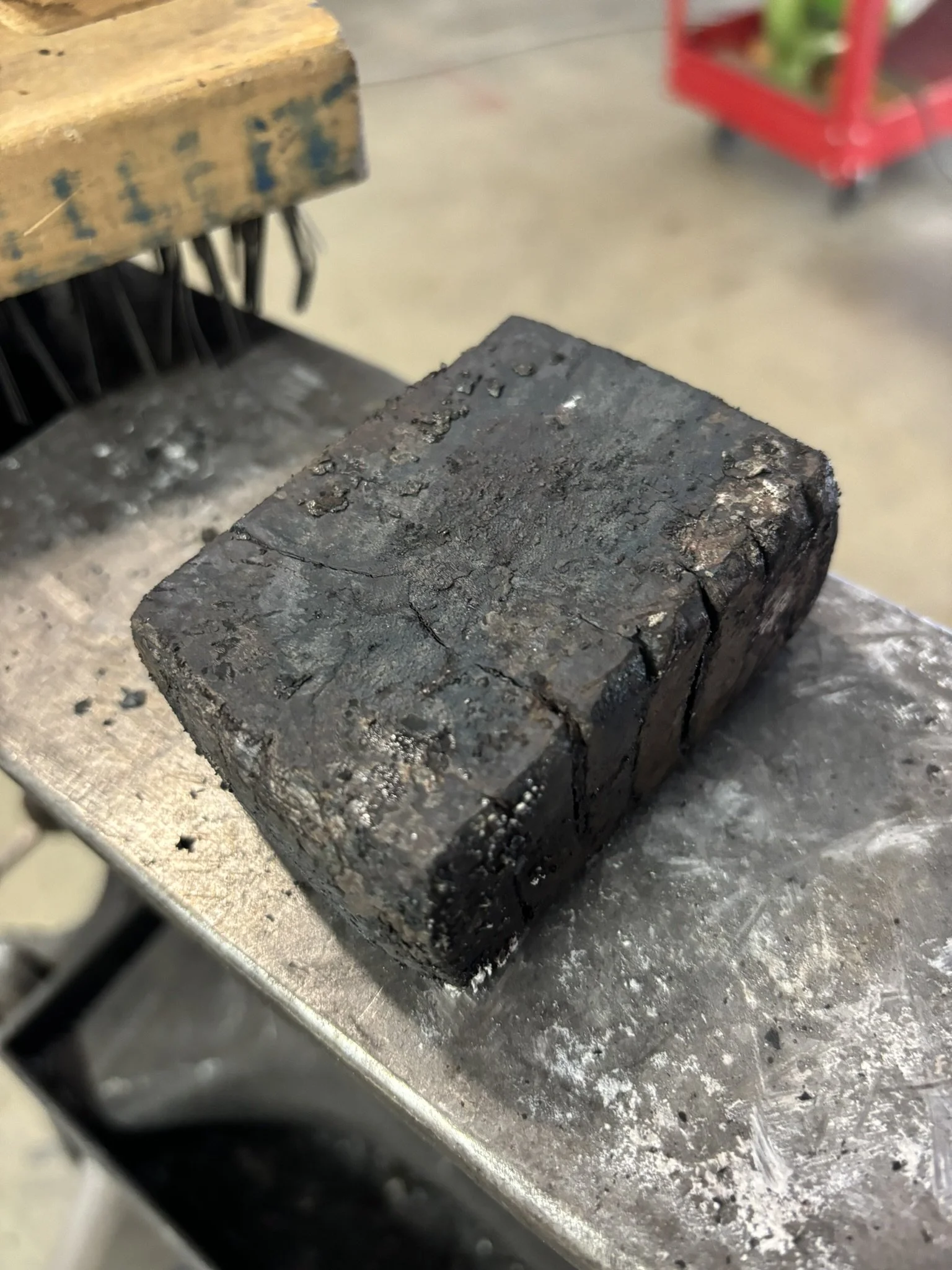
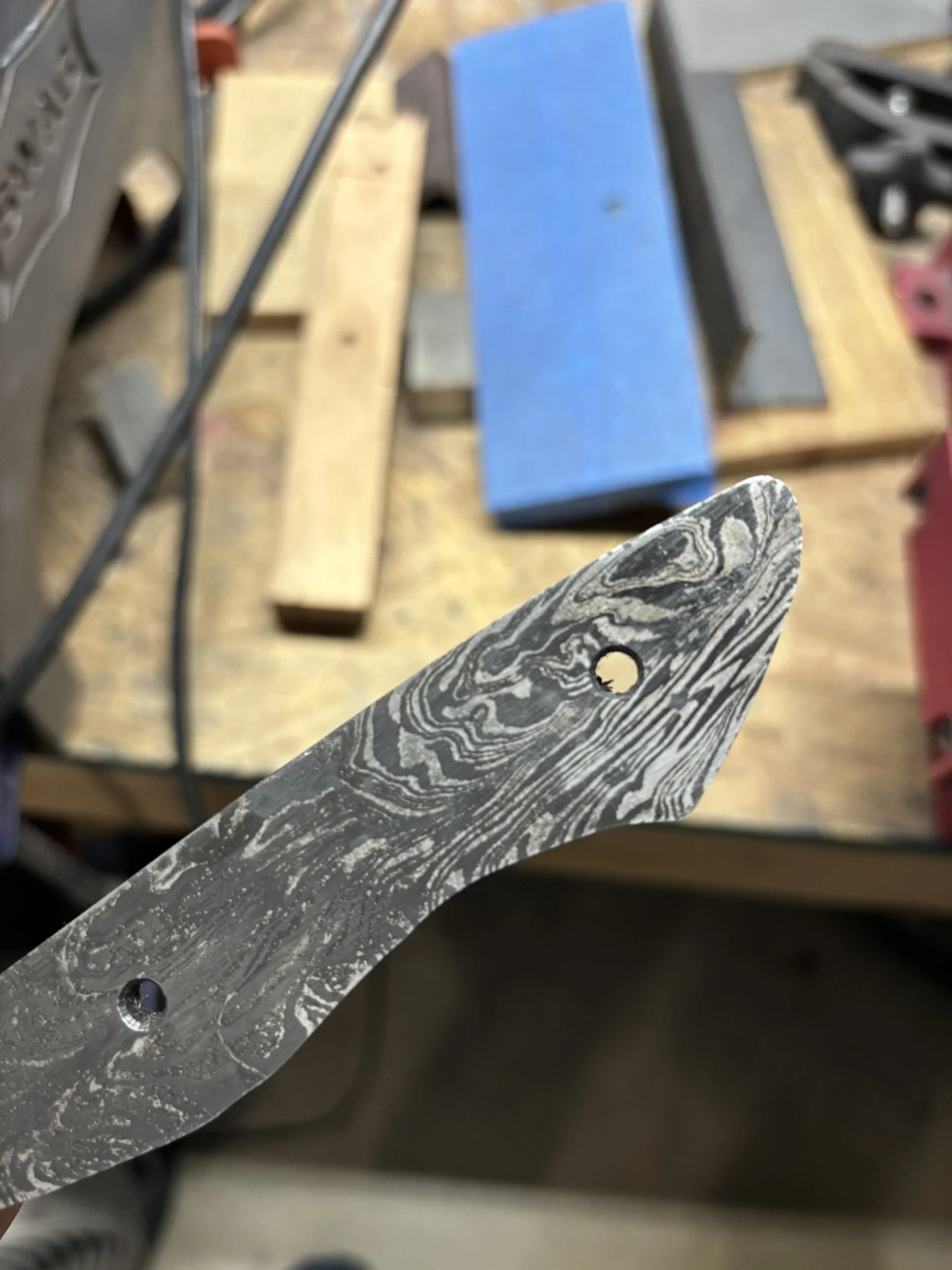
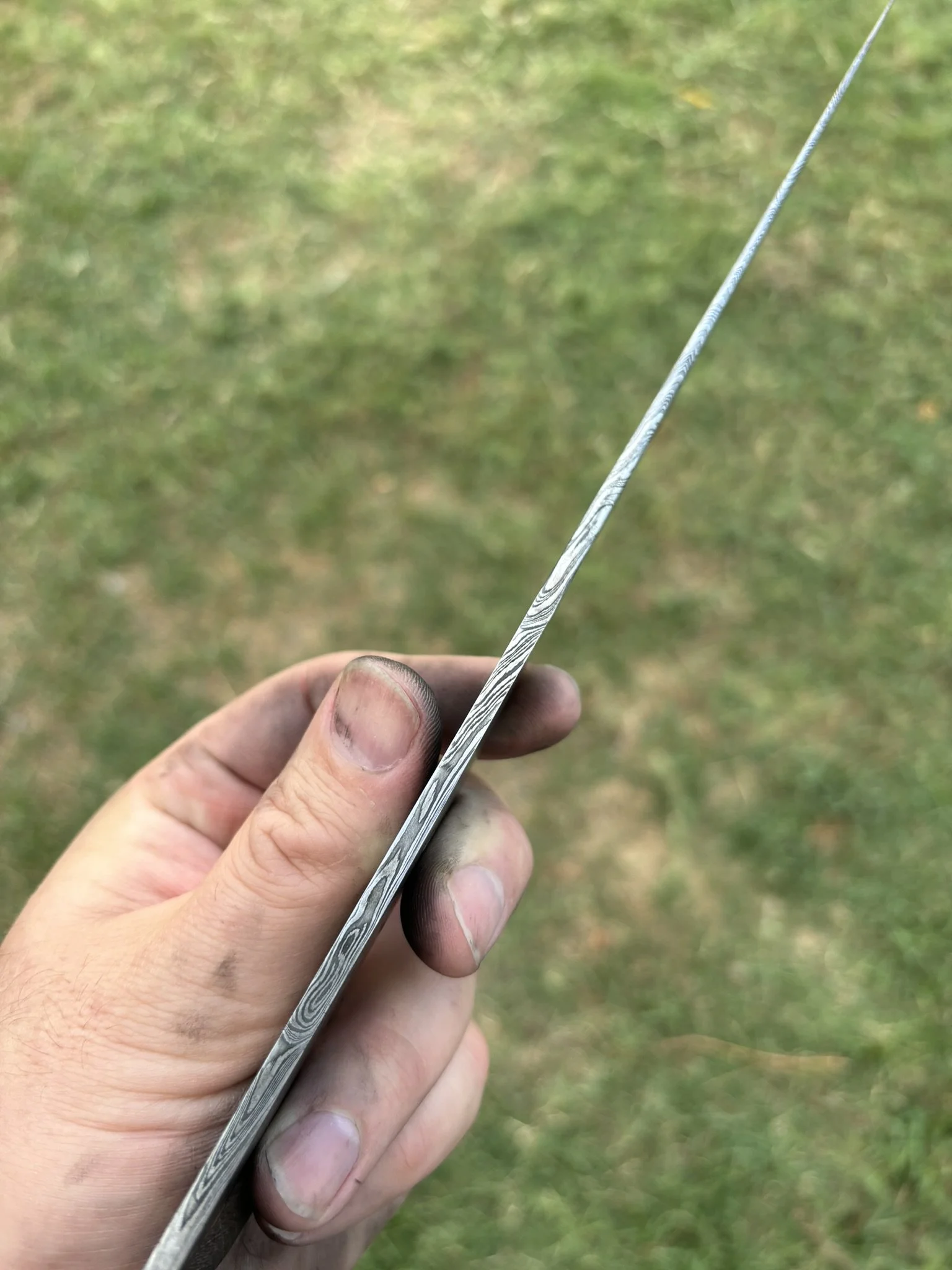
The process began with layers of 1084 and 15N20 steel, which were forge welded, manipulated into crushed "C" and "W" patterns, repeatedly restacked, and drawn out to increase layer counts. Each stage brought both excitement and risk. Feather Damascus is notorious for exposing flaws in forge welds, and every cut, restack, and weld increased the possibility of material loss. Throughout the process, I constantly balanced the desire to maximize pattern development with the need to preserve enough steel to complete the knife.
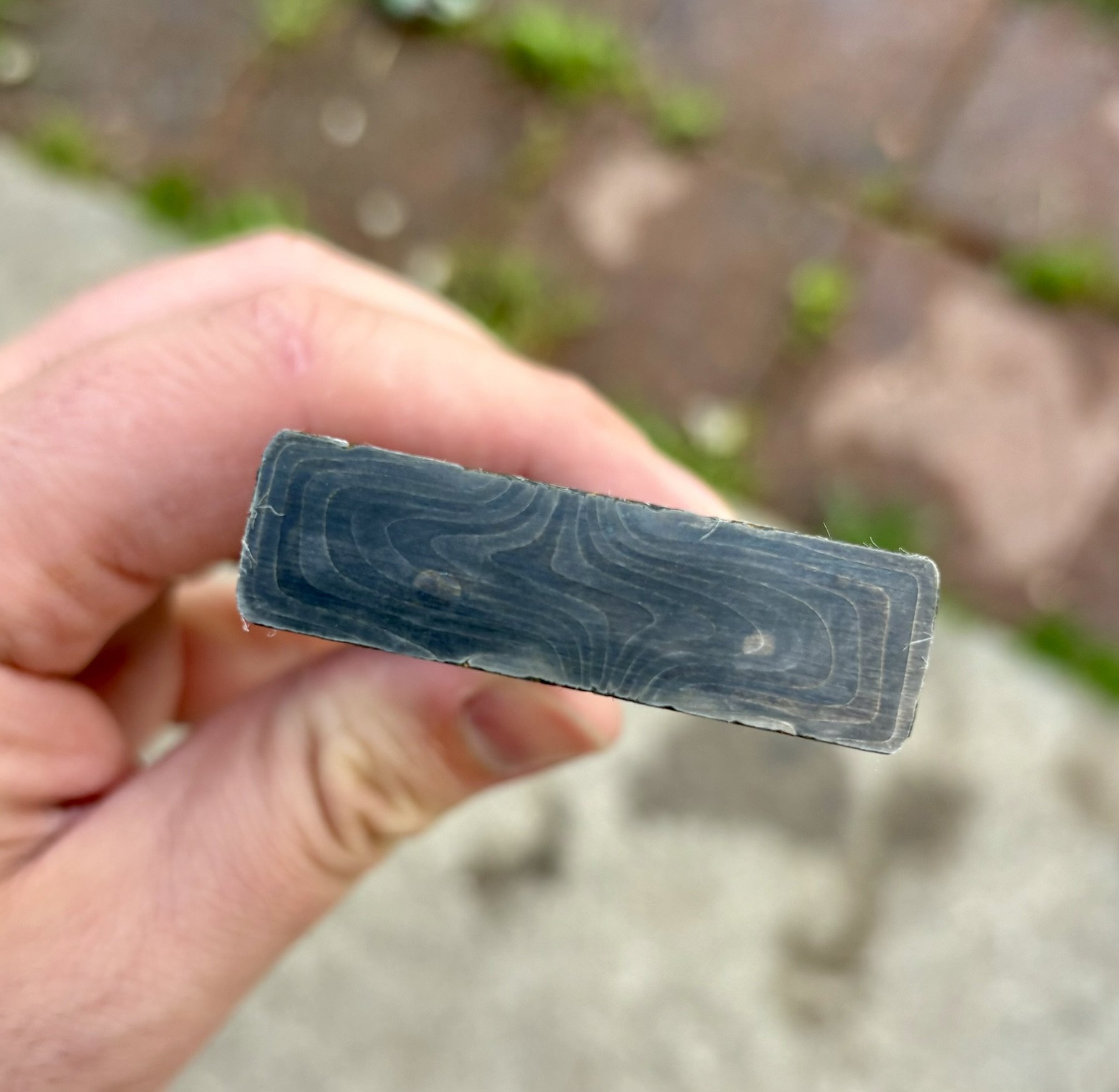
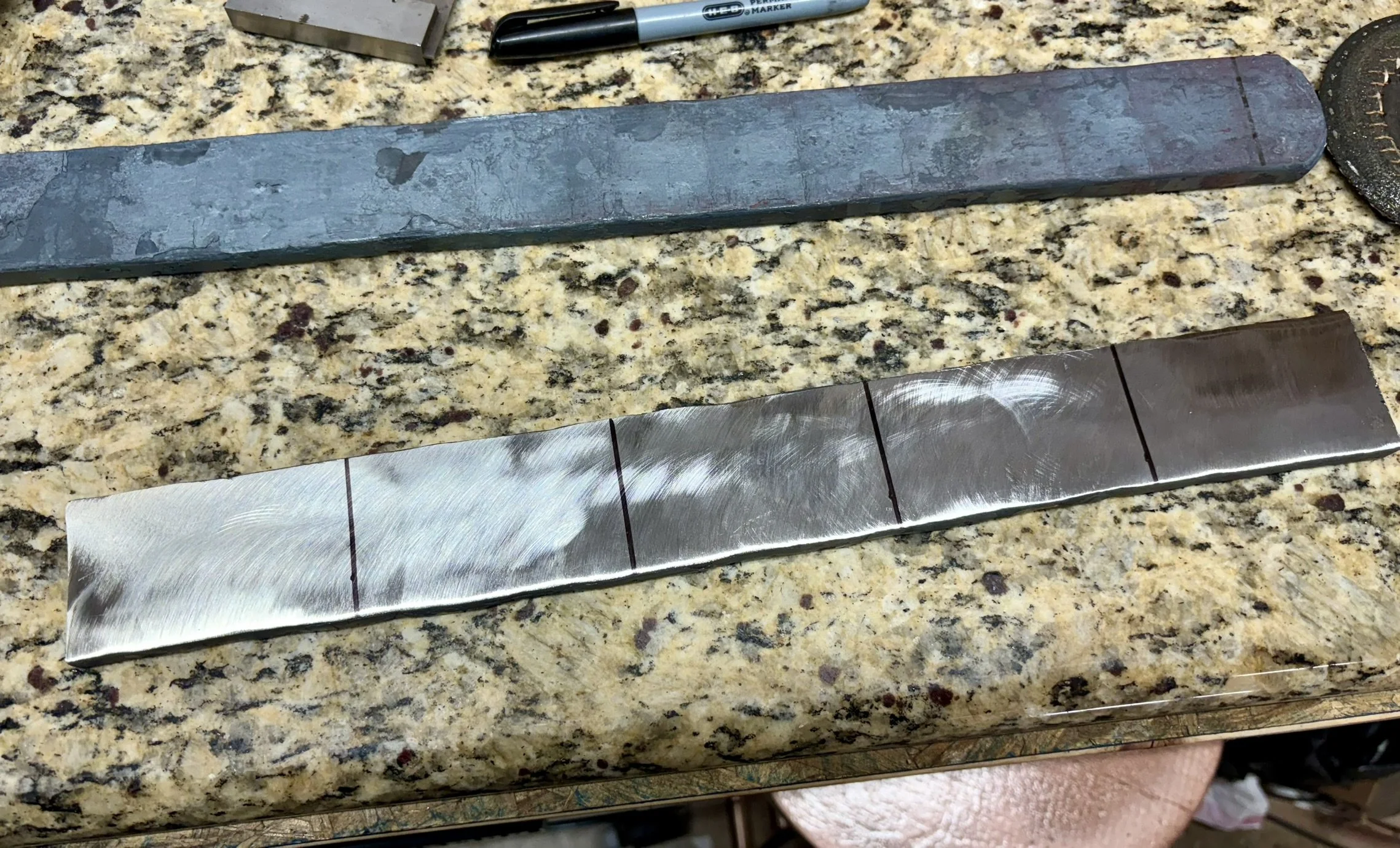
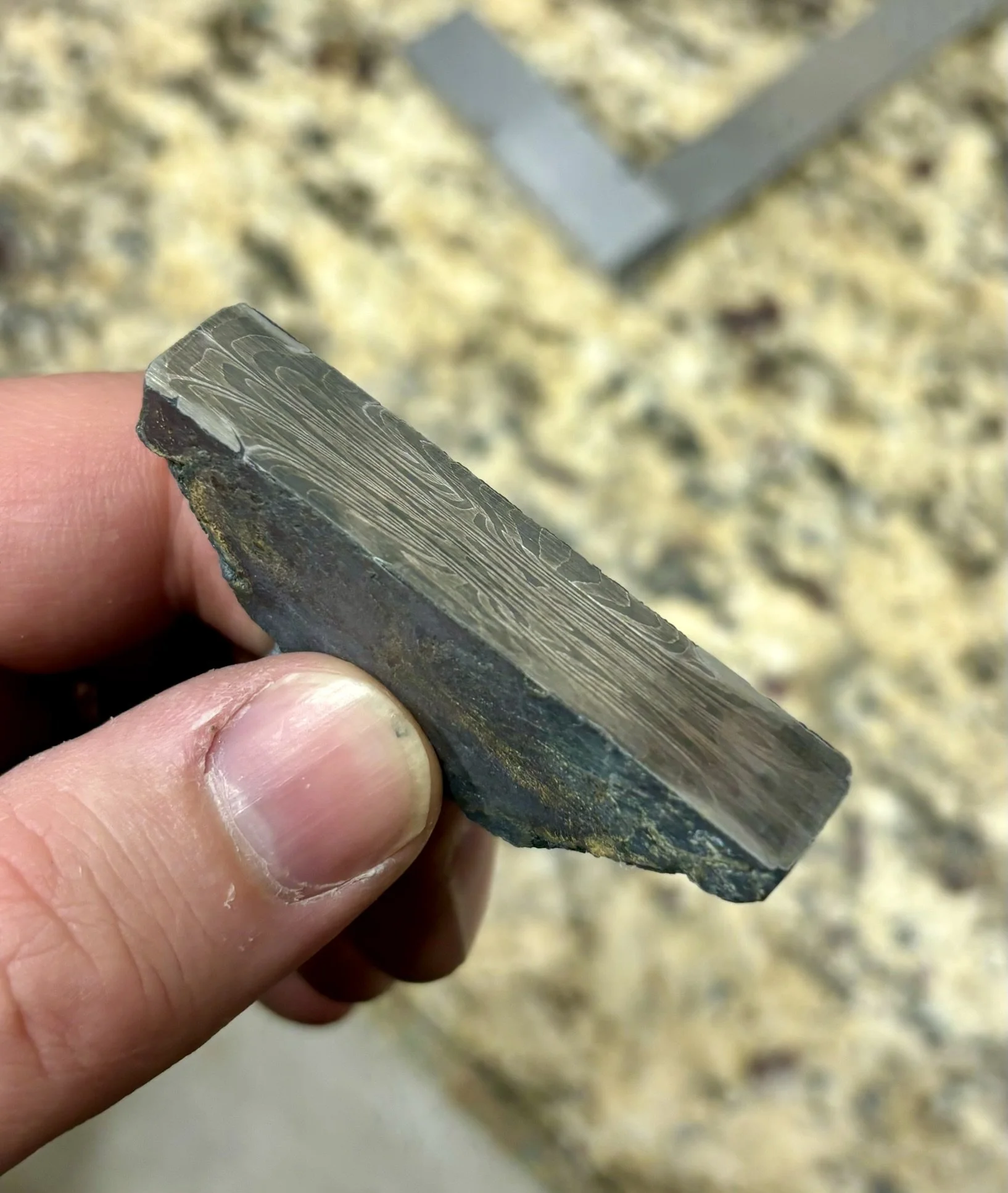
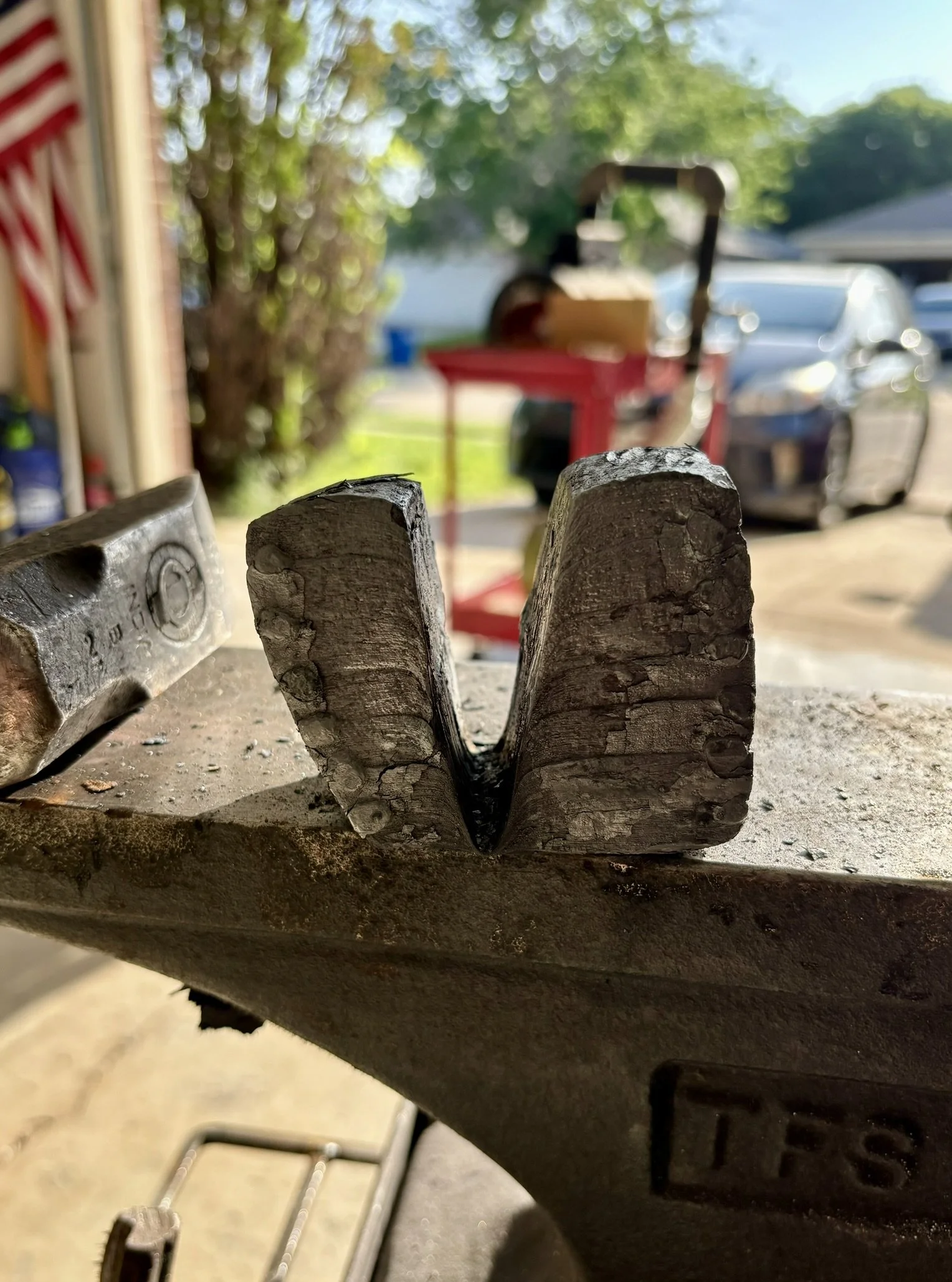
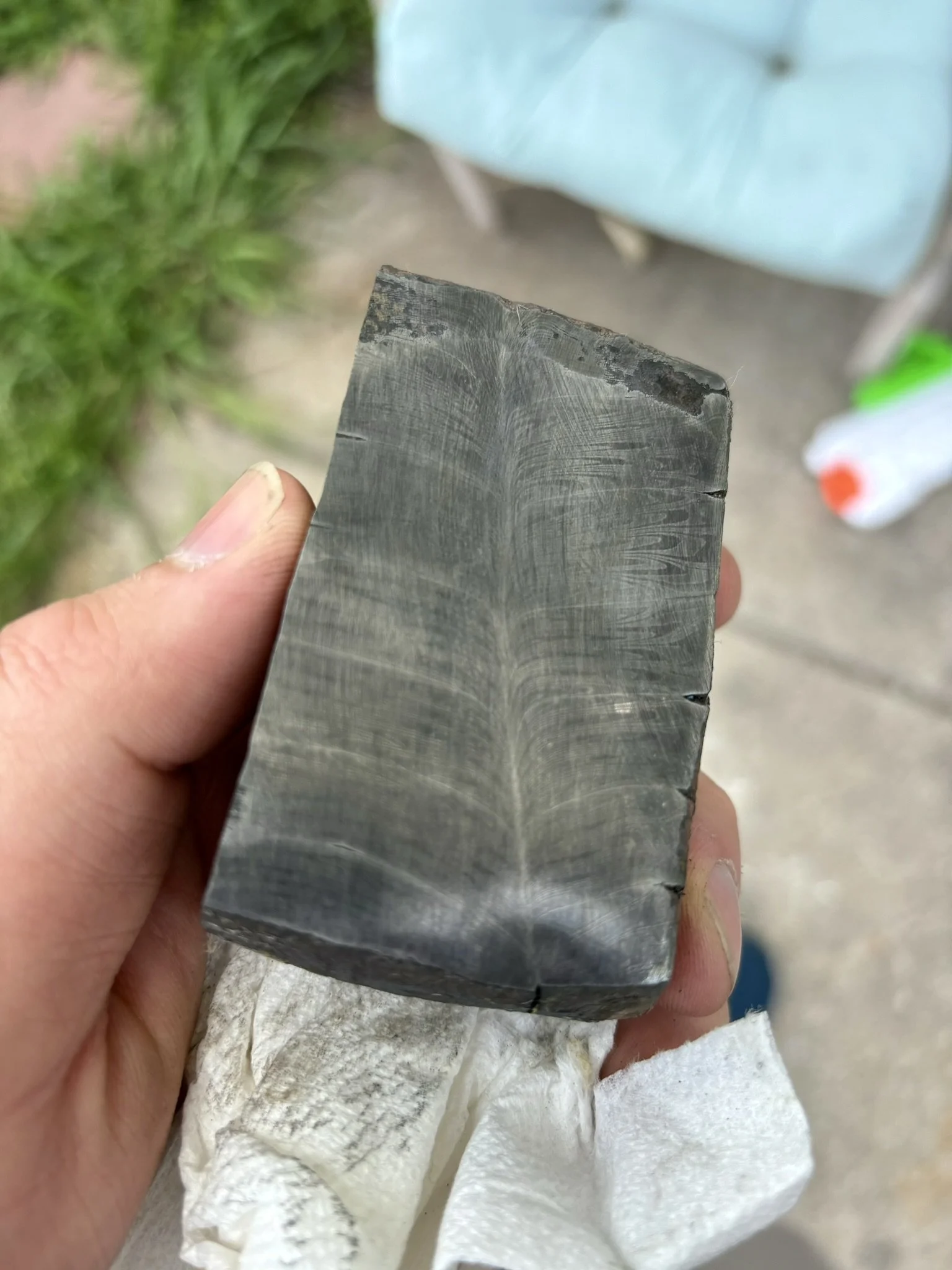
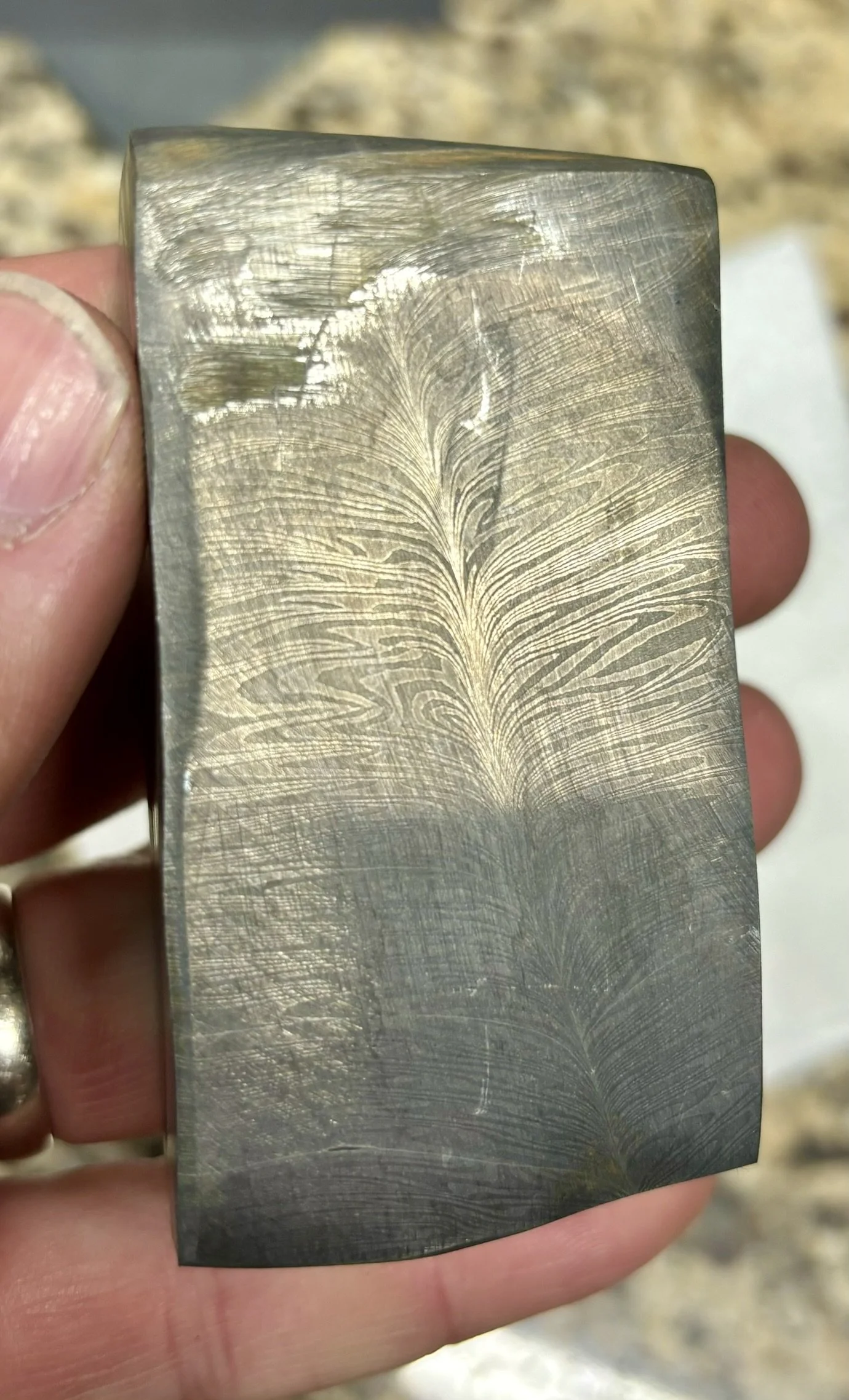
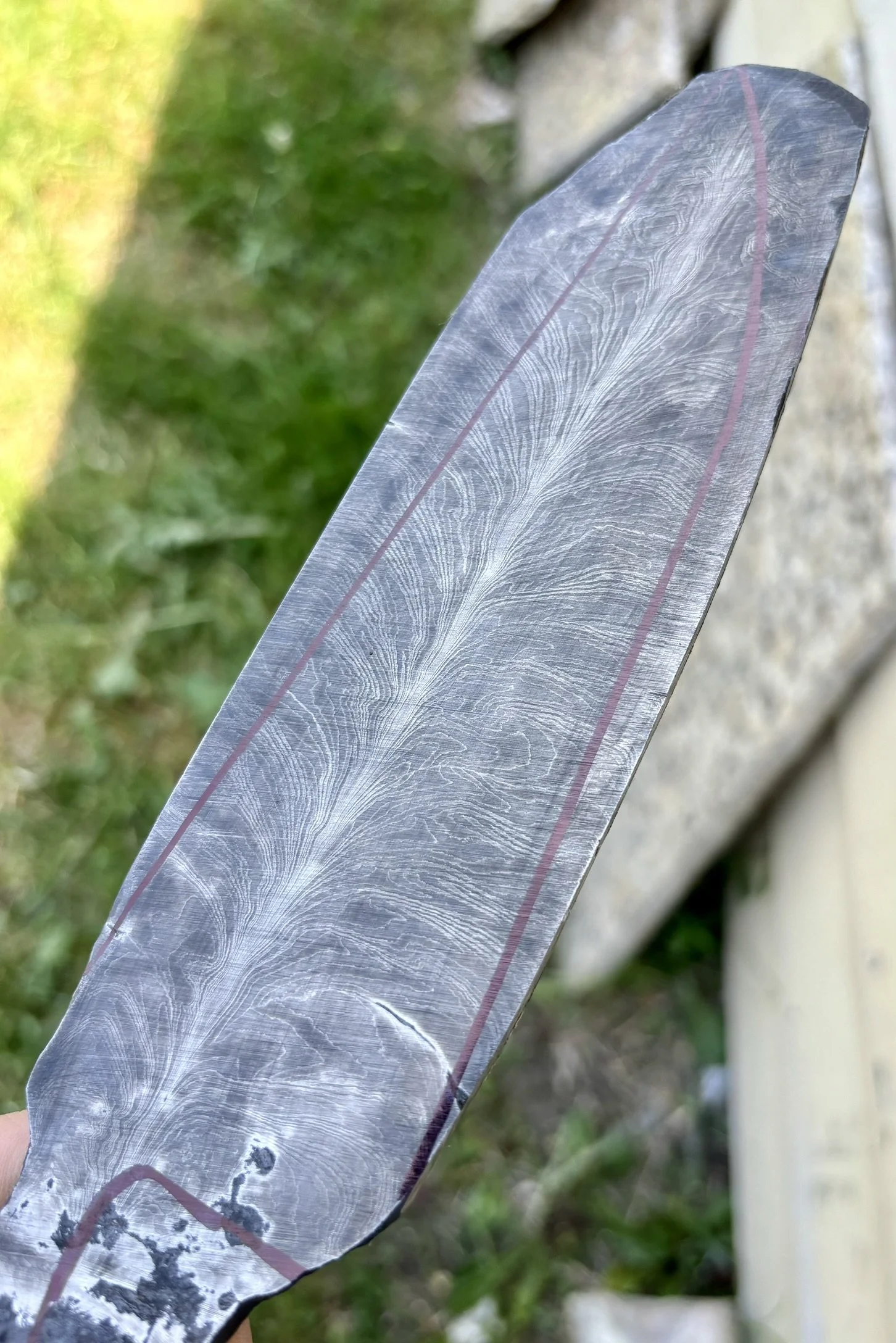
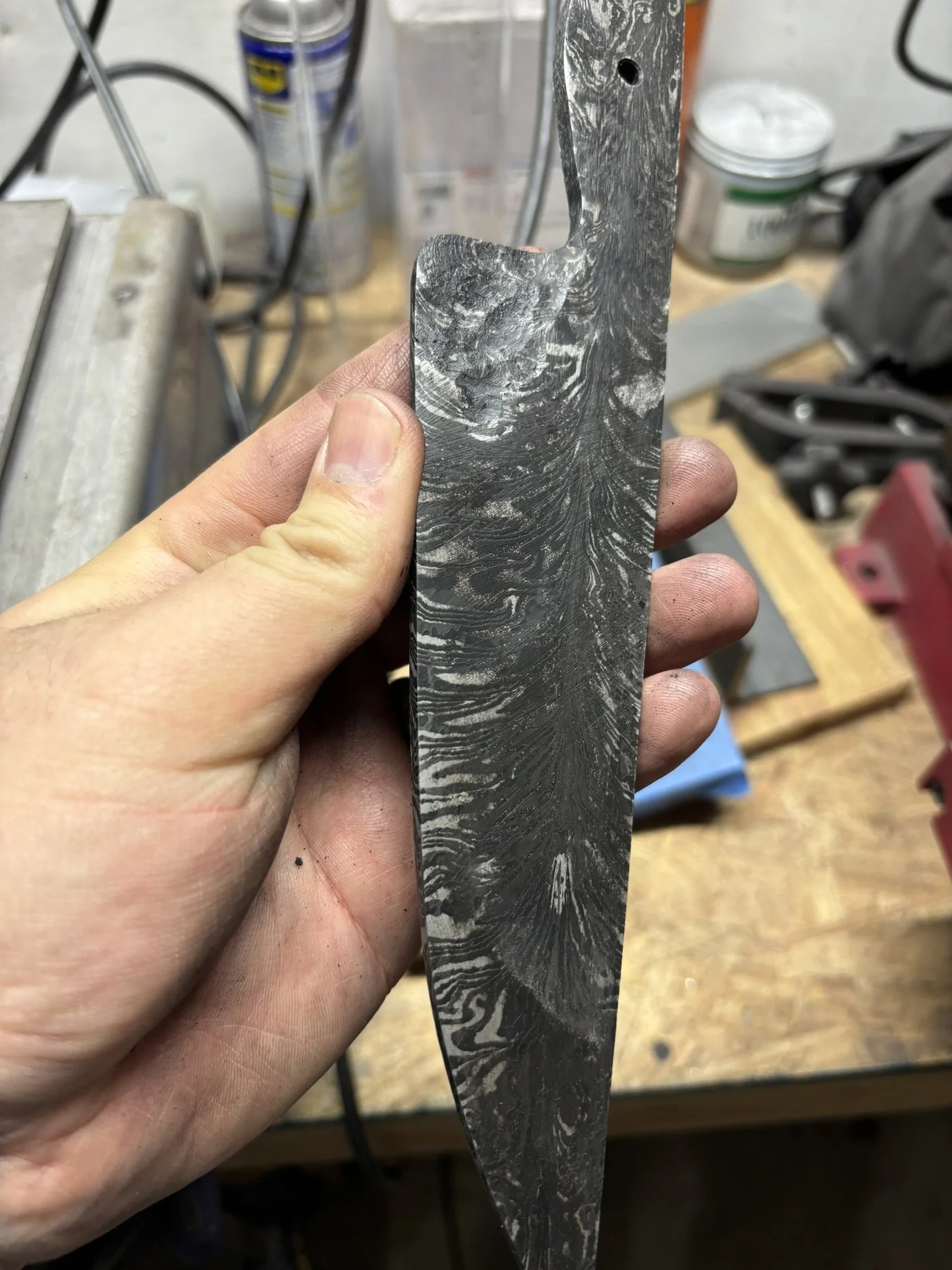
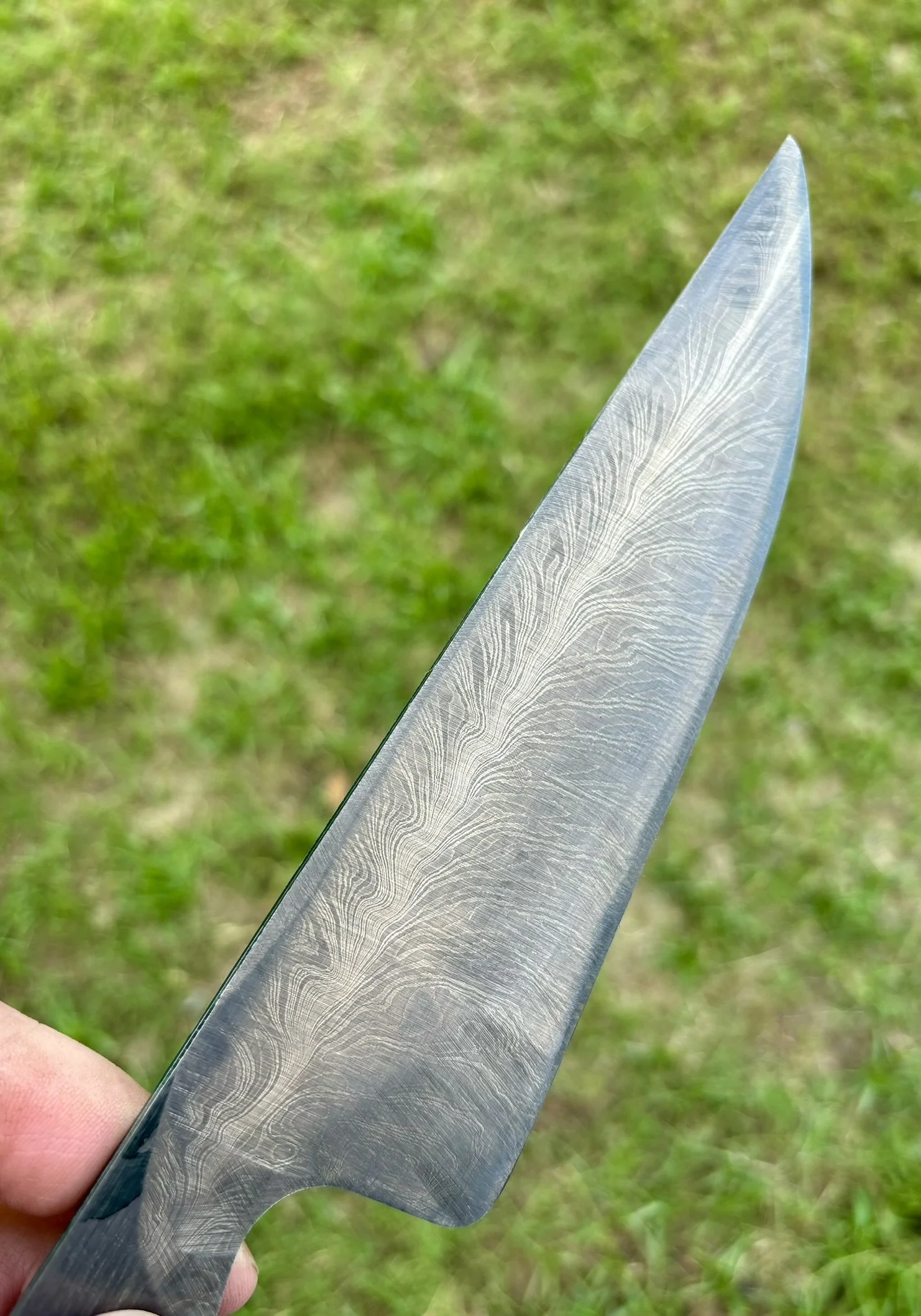
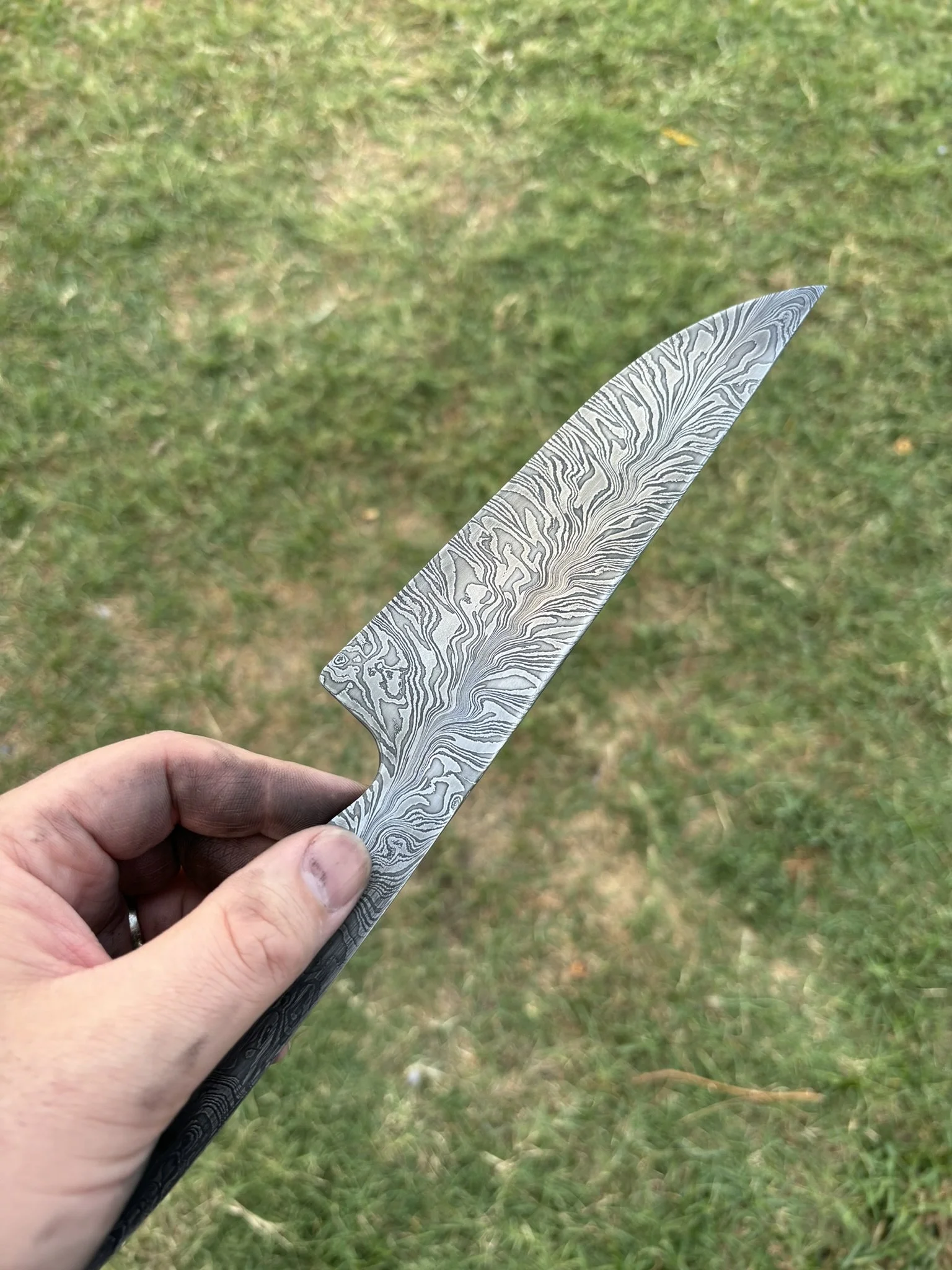
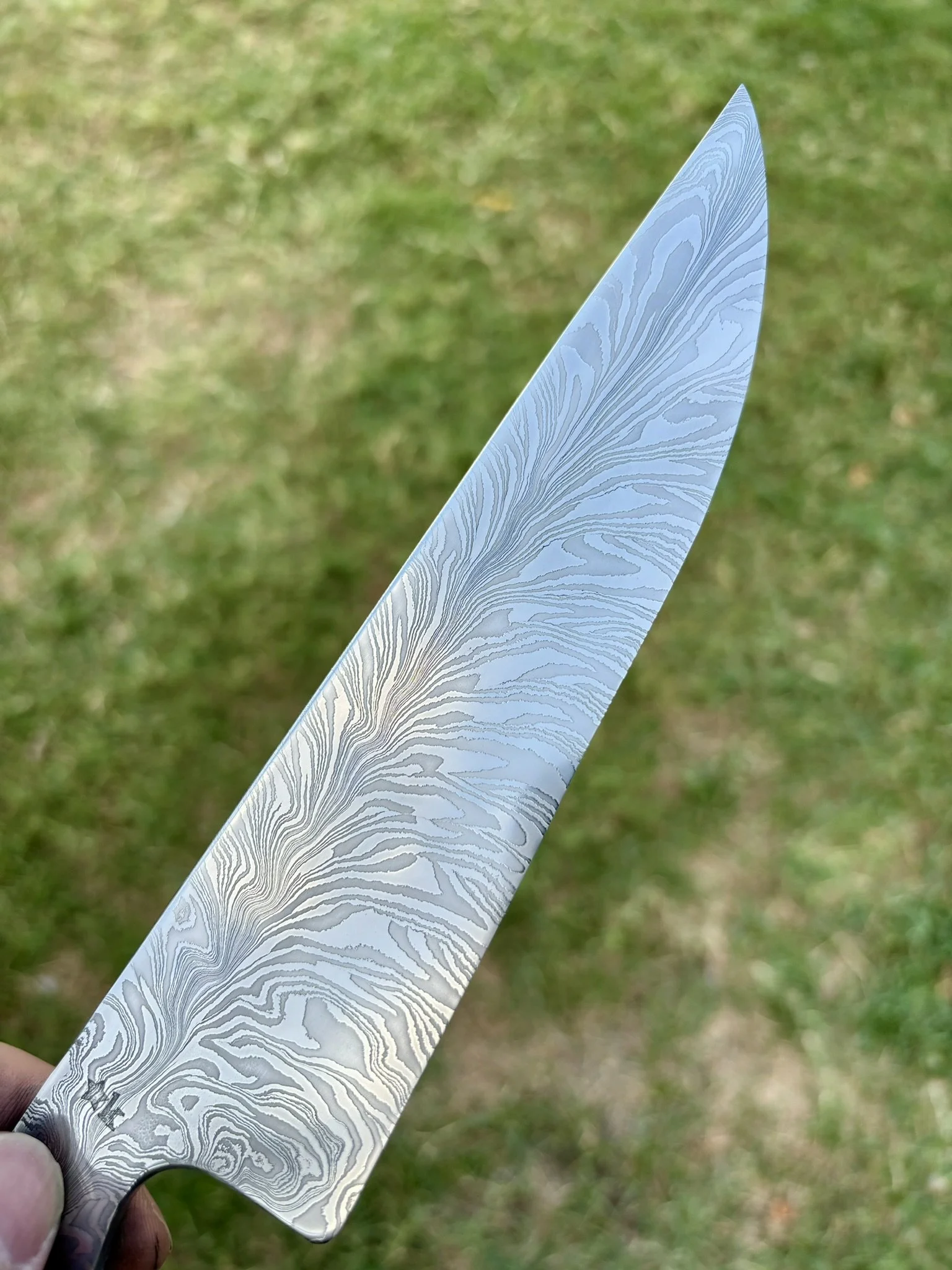
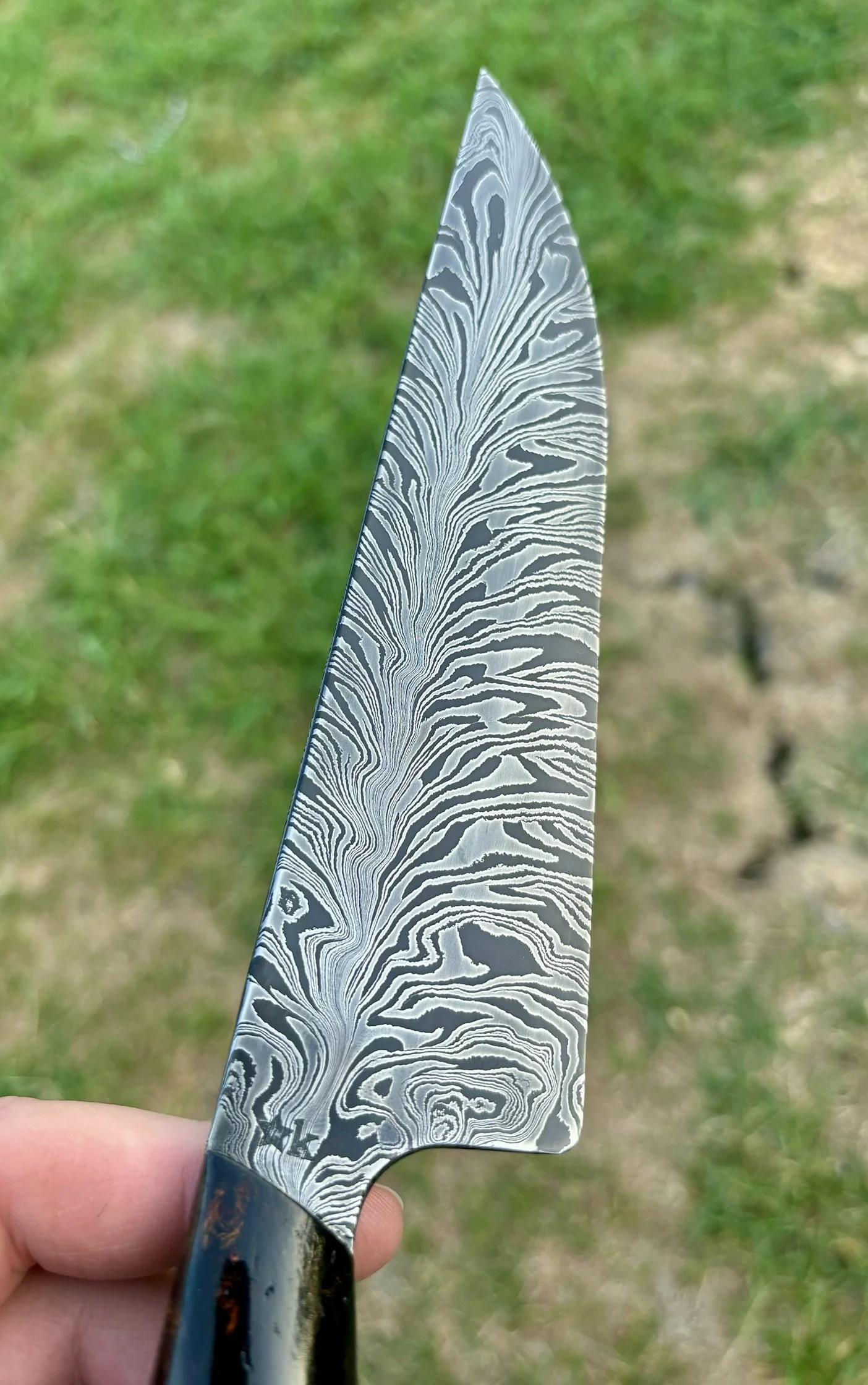
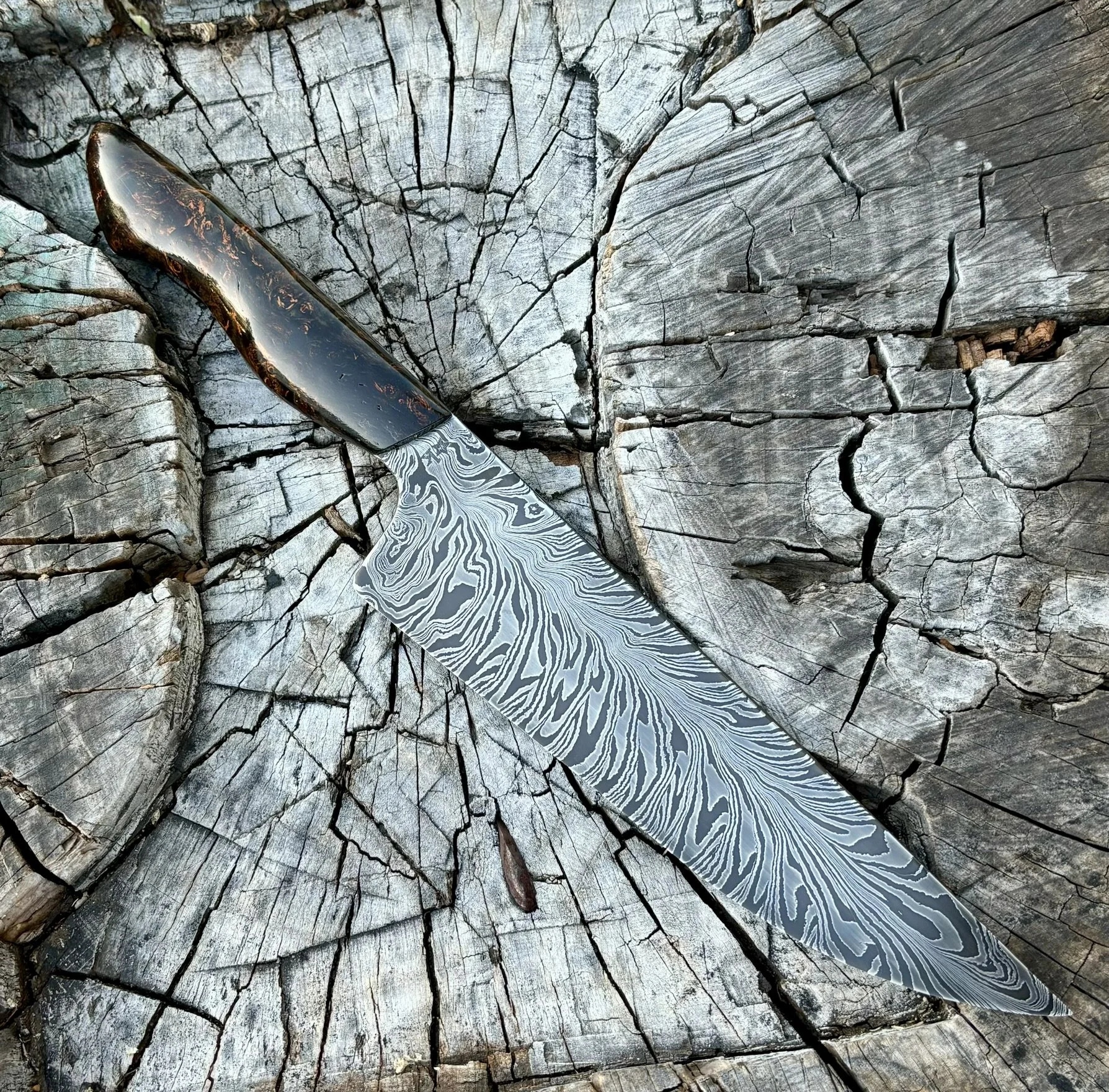
Creating the feather pattern required splitting the billet and forge welding it back together in a way that would stretch the internal layers into the characteristic feather shape. The process was far more challenging than anticipated, and the billet fought me at nearly every step. Delaminations had to be chased, material had to be removed, and mistakes along the way became valuable lessons for future projects. Despite the setbacks, each cleanup pass revealed more of the emerging feather pattern hidden inside the steel.
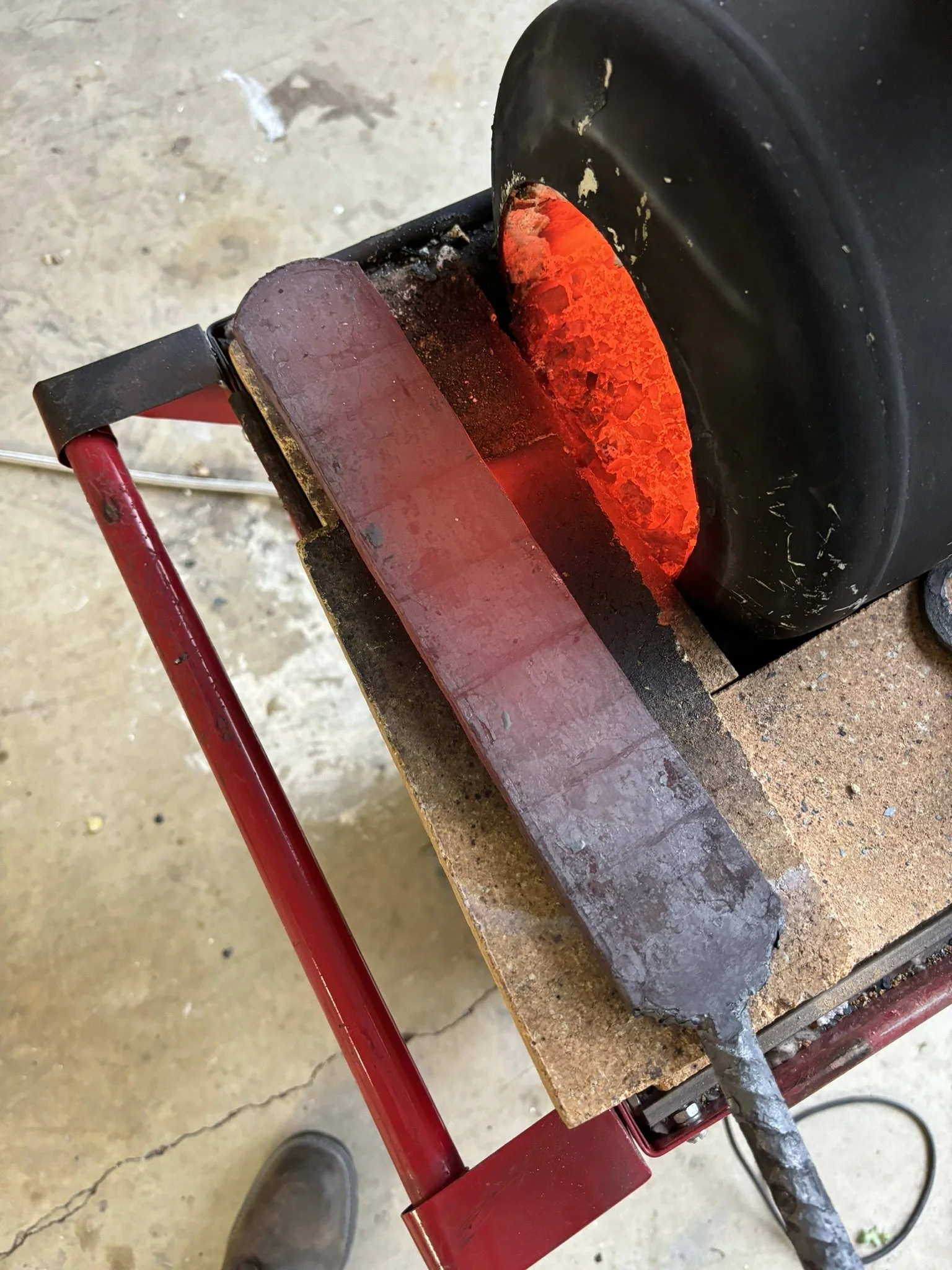
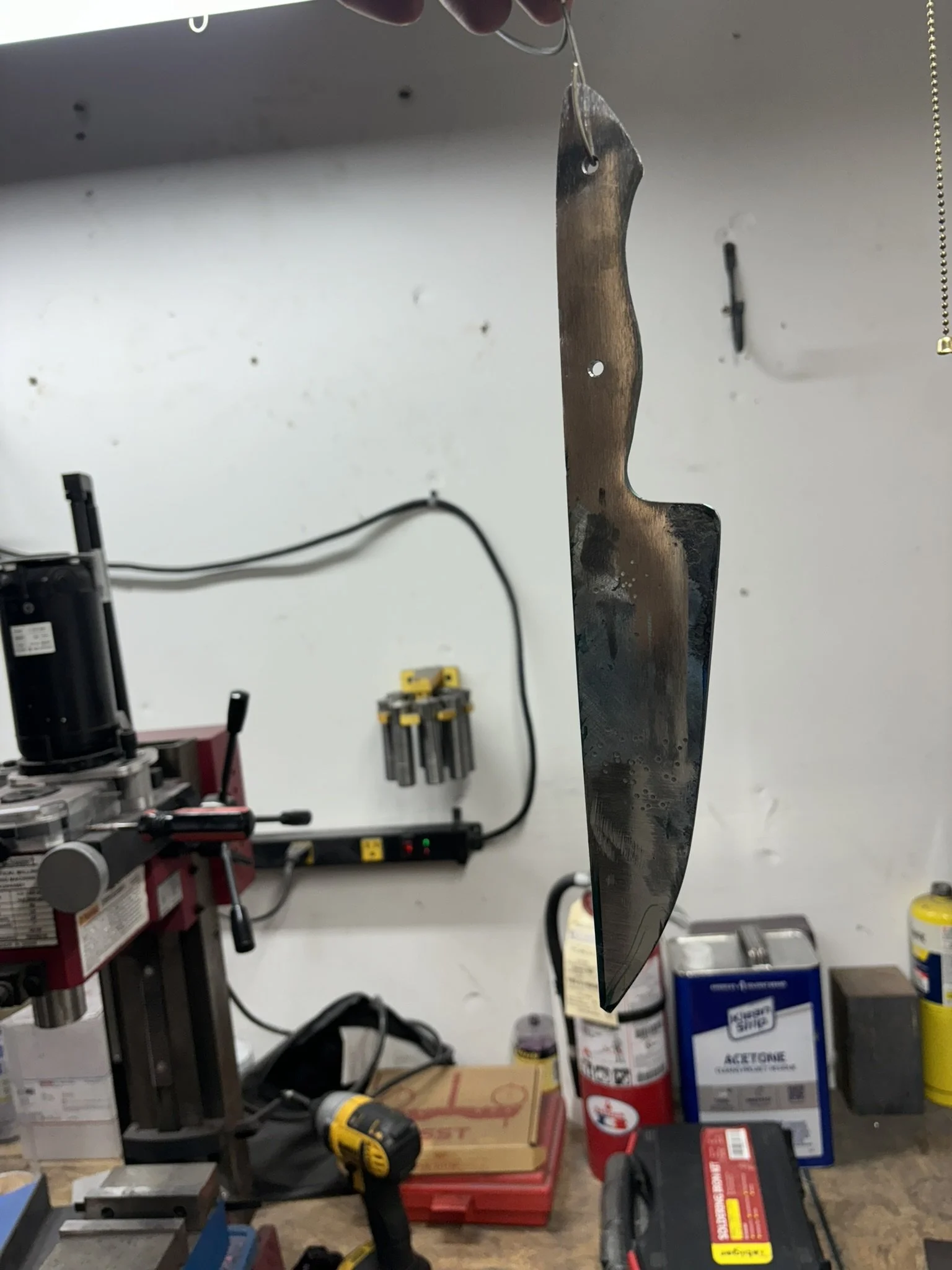
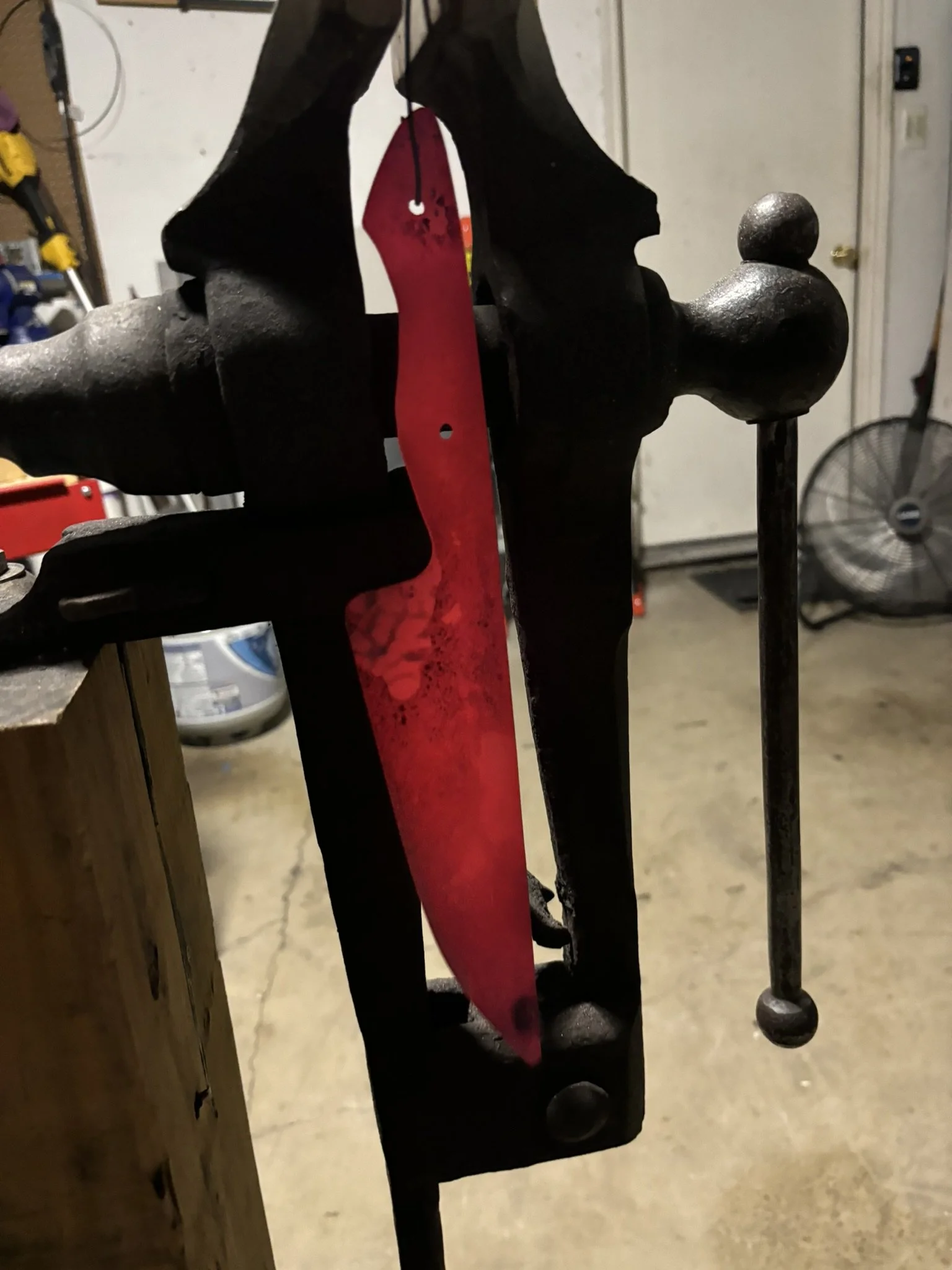
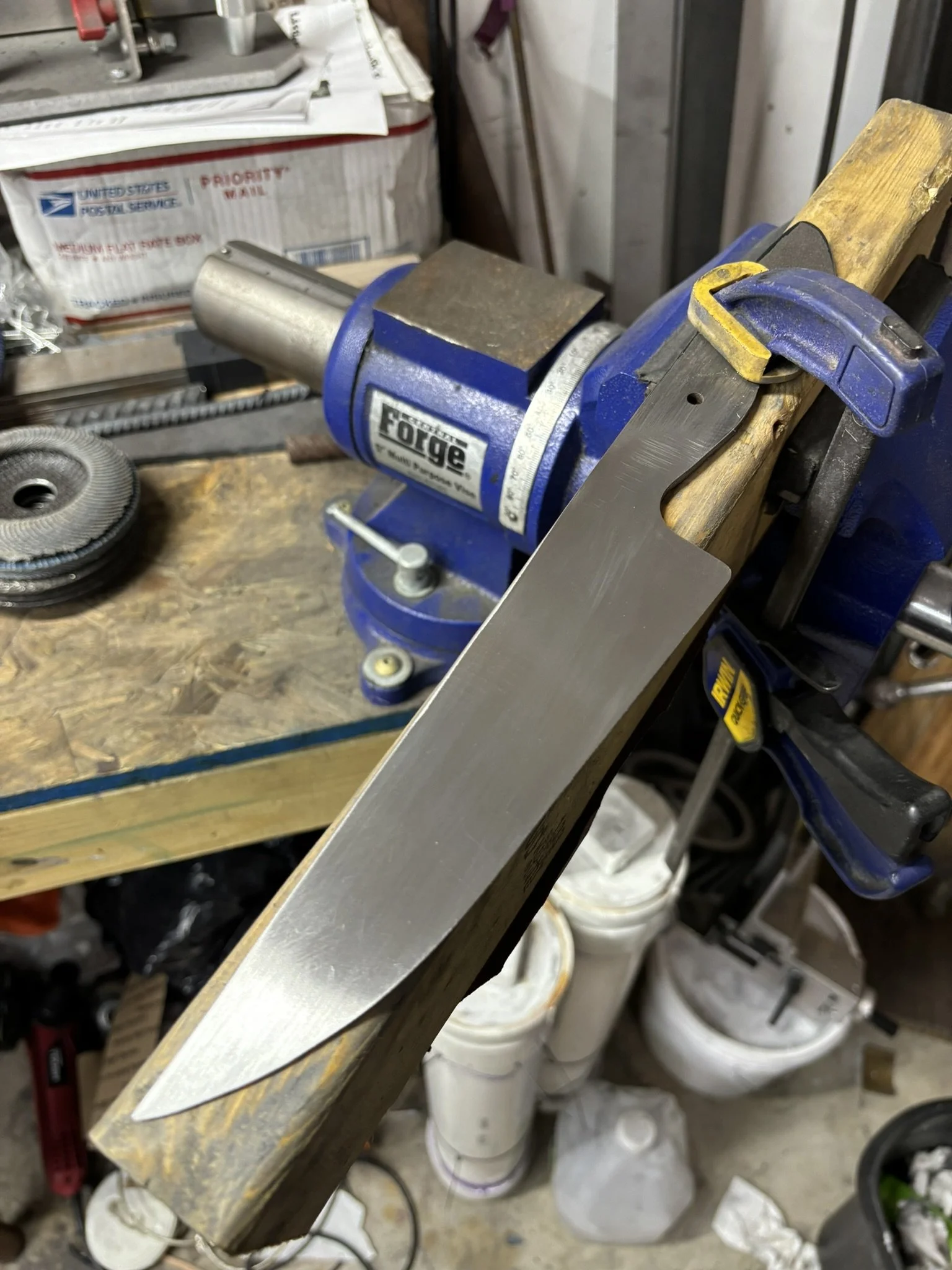
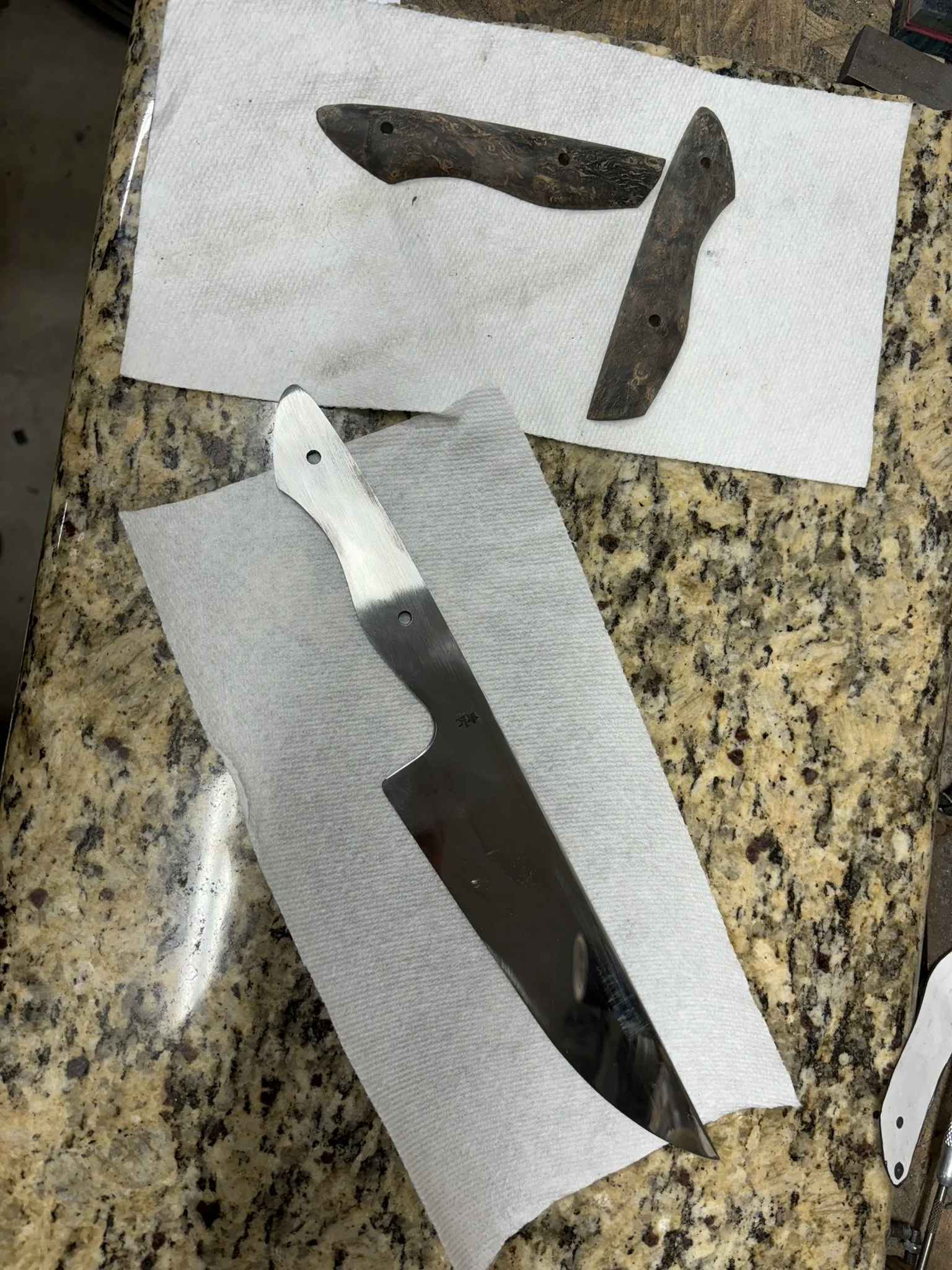
As the blade took shape, I refined it into a chef's knife that reflected the design language I had been developing over several years. During heat treatment, I was treated to one of the most memorable moments of the build: watching the recalescence move through the blade during normalization cycles. The glowing wave of transformation looked almost like a heartbeat moving through the steel, serving as a reminder of the remarkable changes taking place within the metal.
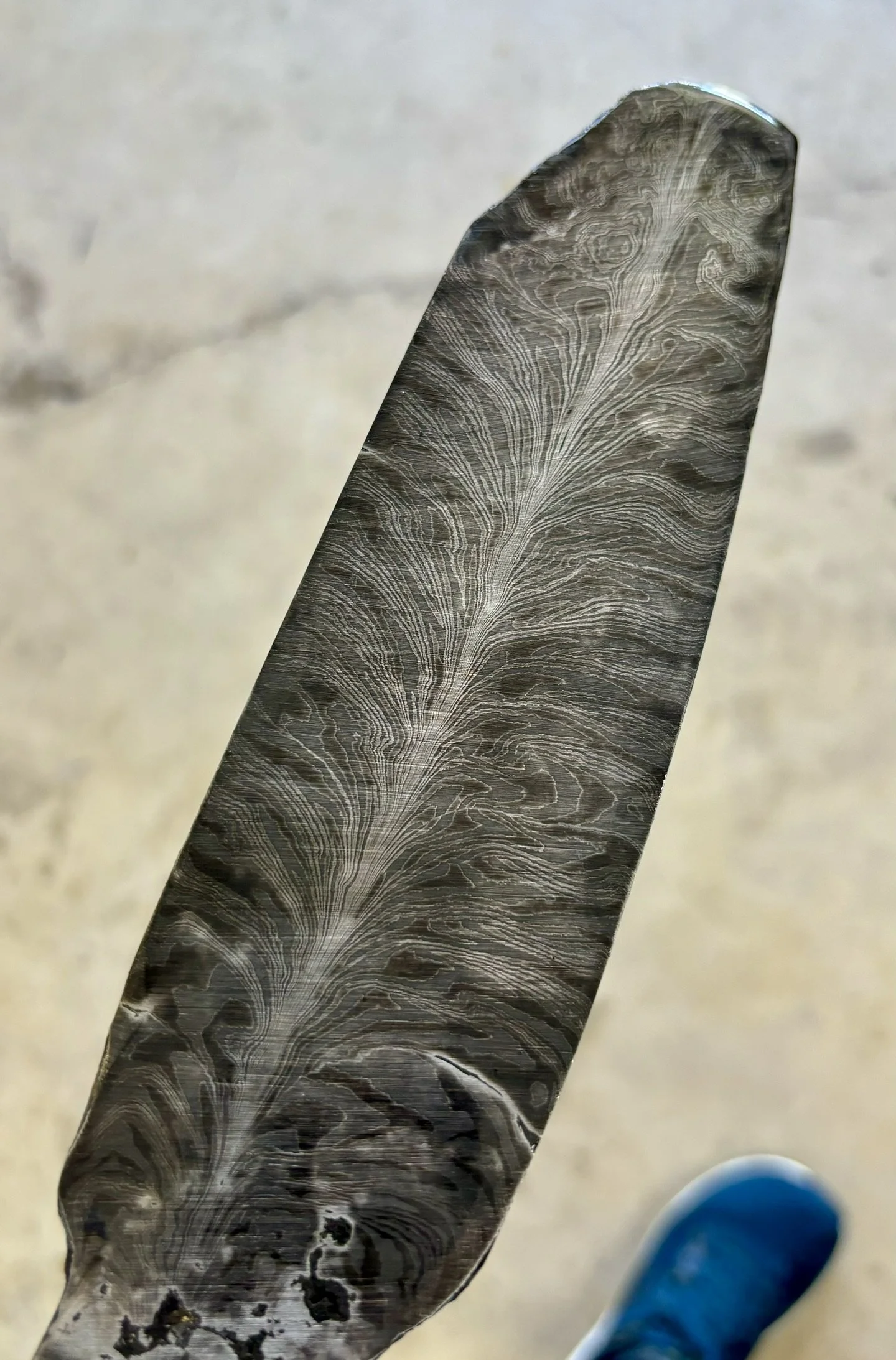
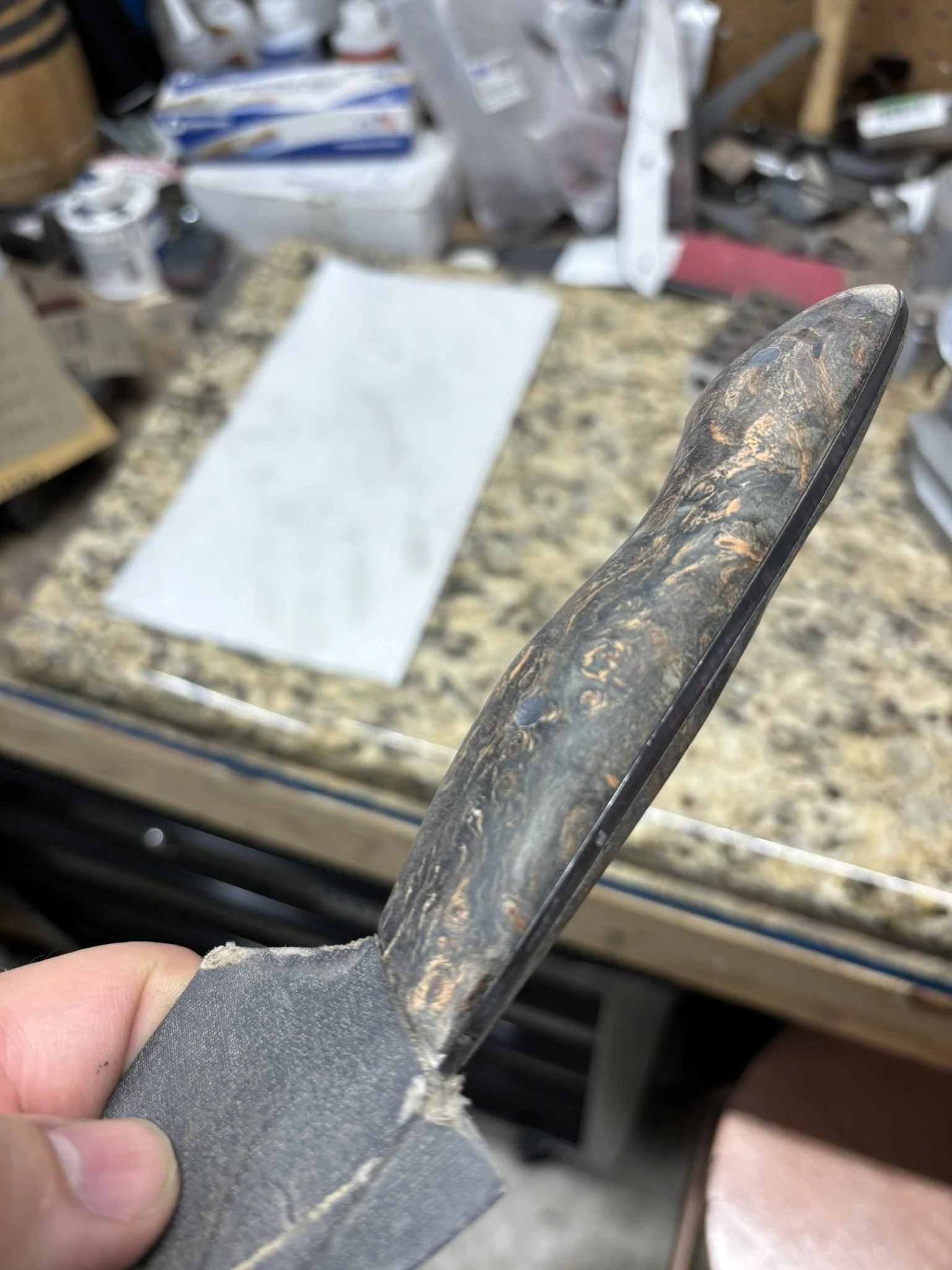
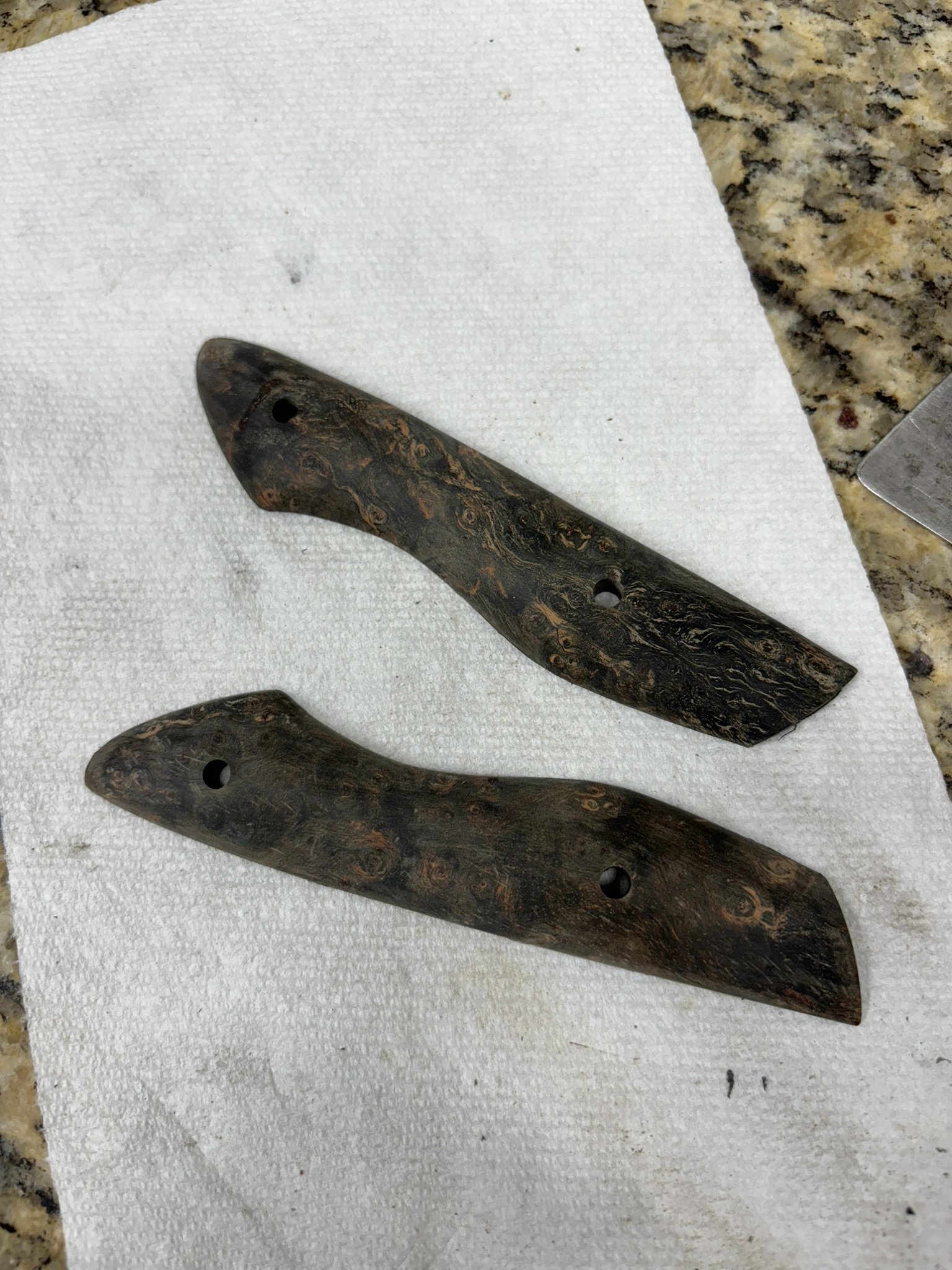
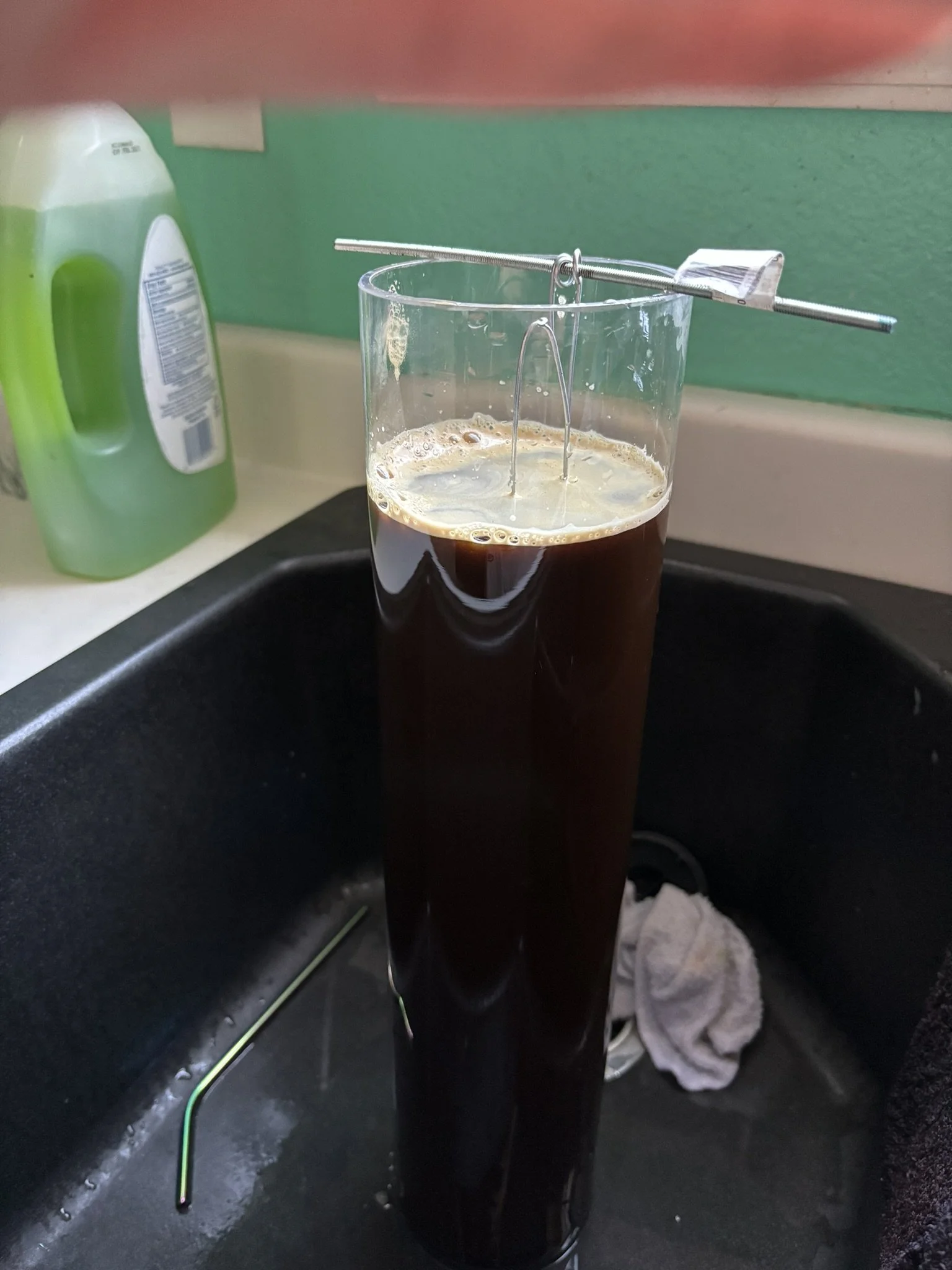
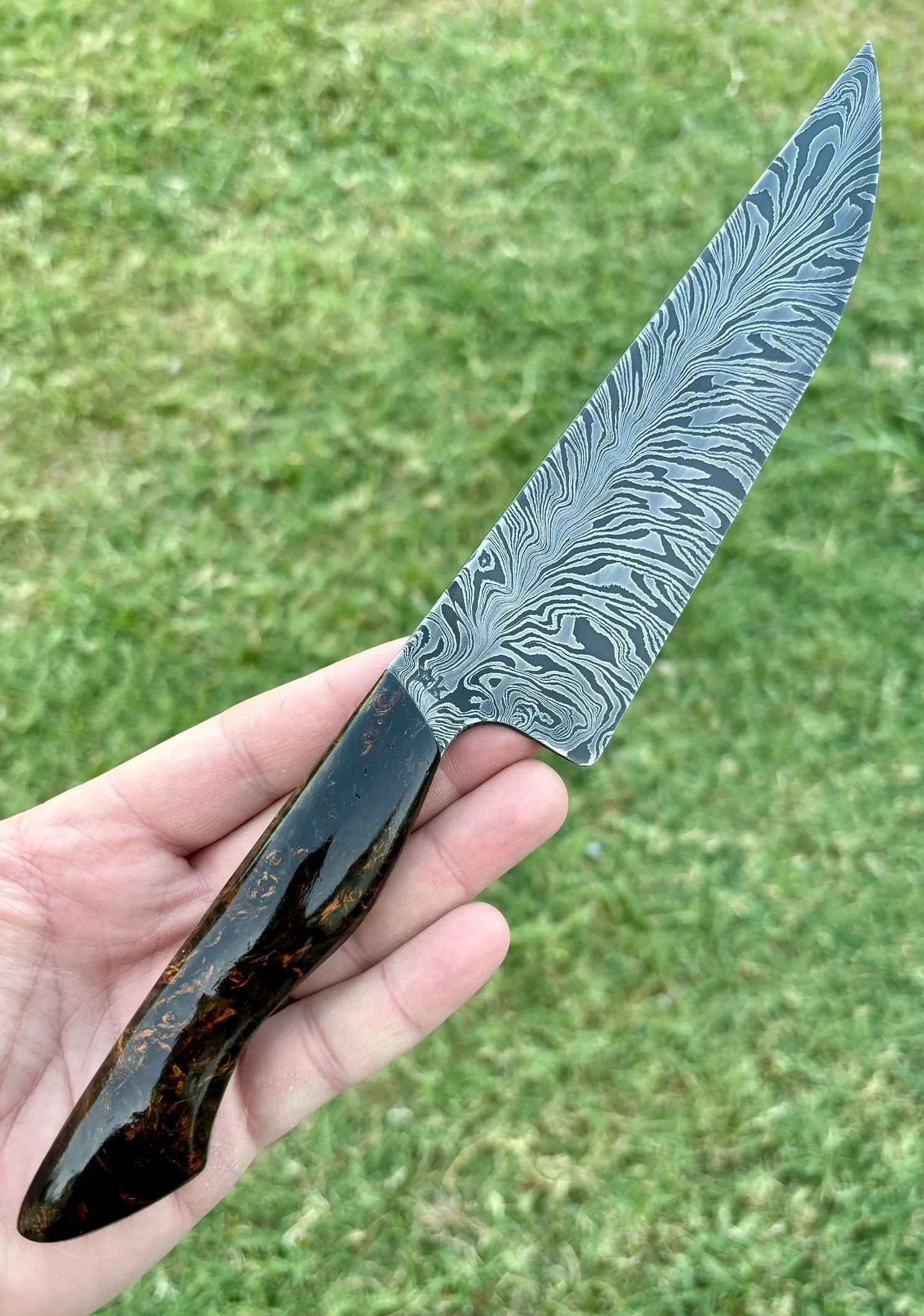
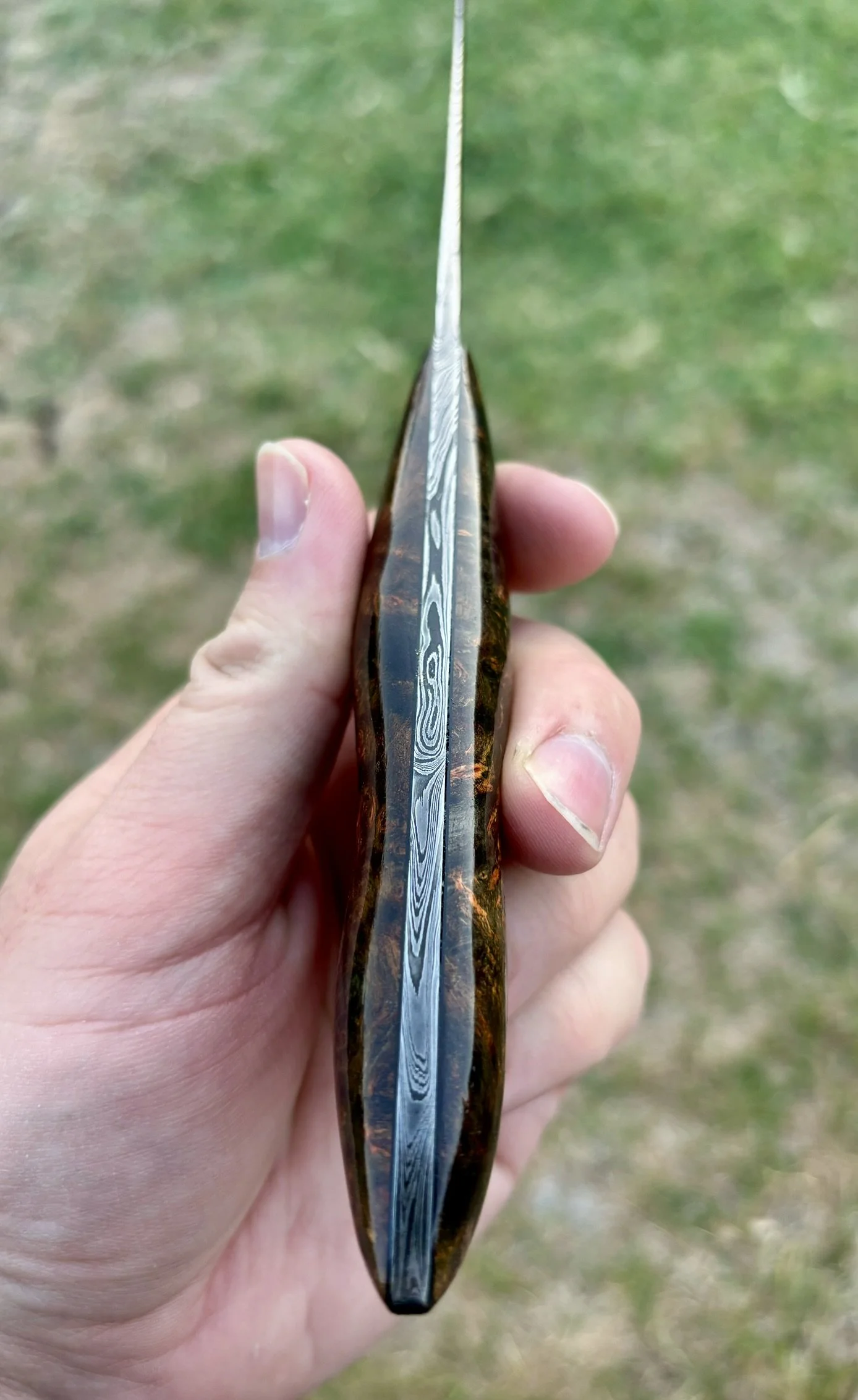
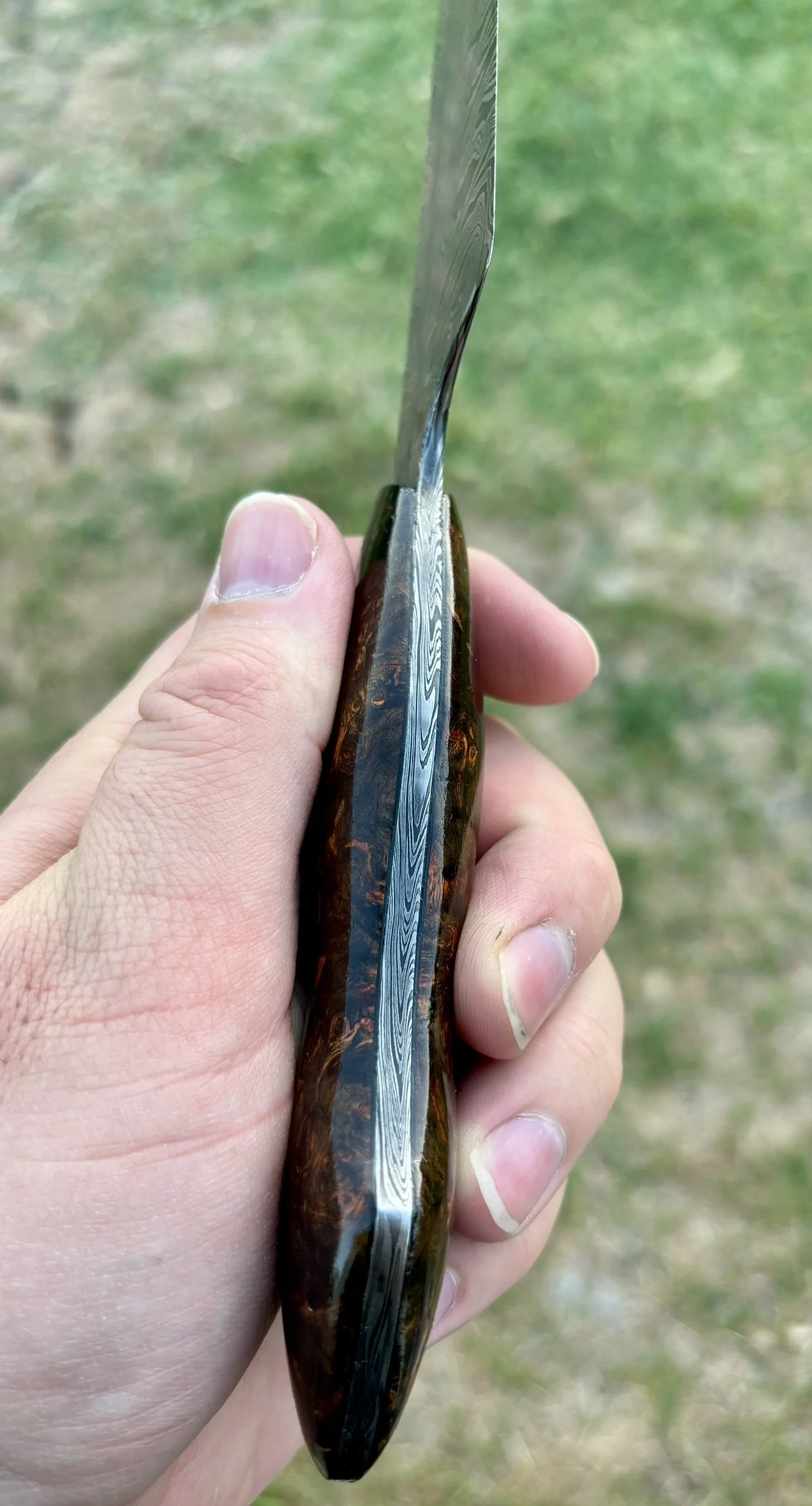
The finished knife was paired with a richly figured burl handle whose dark, smoky appearance complemented the dramatic Damascus pattern. After extensive hand sanding, etching, and coffee treatment, the feather pattern finally emerged in all its complexity. While the blade ended up darker than I originally intended, I ultimately accepted it as part of the knife's story. This was a project that demanded patience, perseverance, and a willingness to adapt when things didn't go according to plan.
More than any other knife in my personal collection, this chef's knife represents the joy of pursuing a difficult challenge simply for the sake of learning. It pushed my Damascus skills further than ever before, helped refine my approach to knife design, and produced a blade that remains one of the most visually captivating pieces I have ever created.